 |
 |
 |

|
|
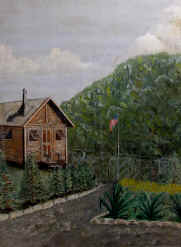
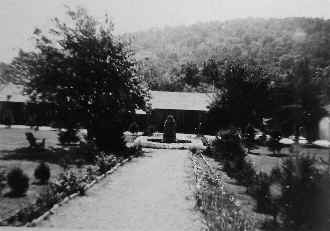
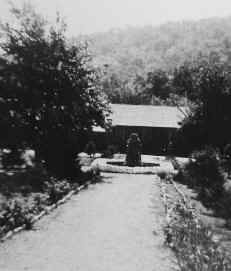
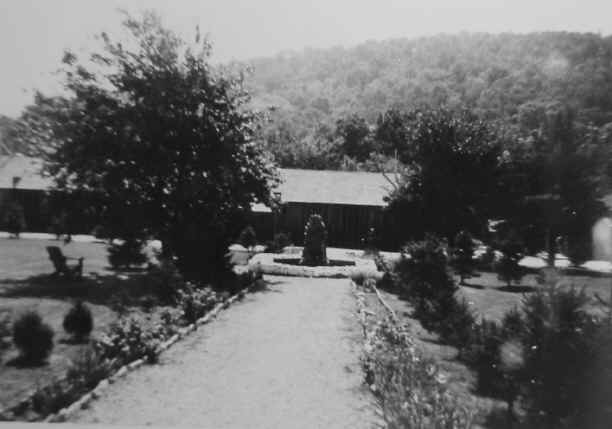
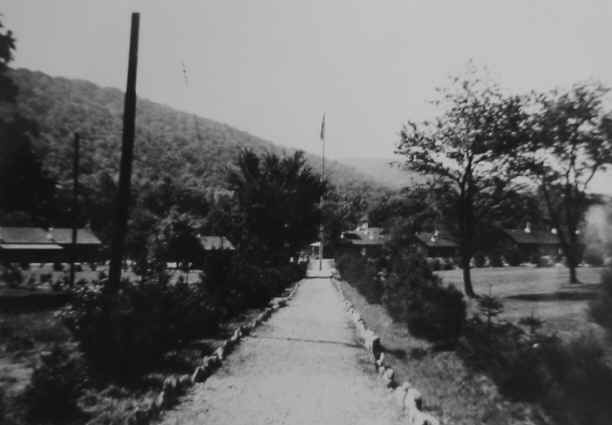
Bunker Hill Farm 1700's-1919 |
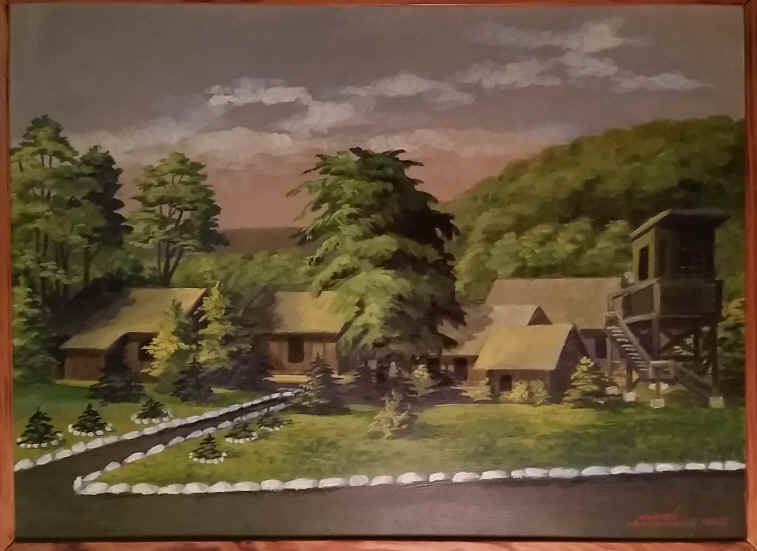
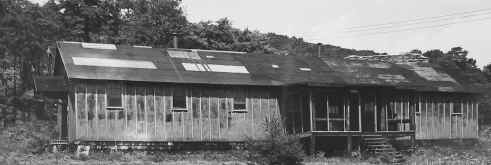
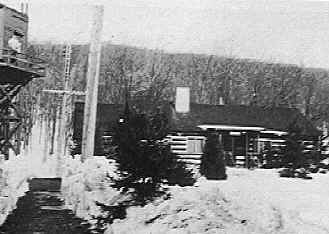
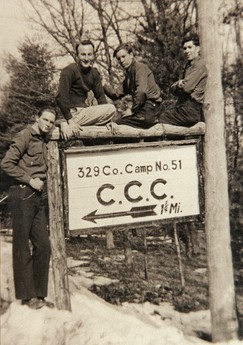
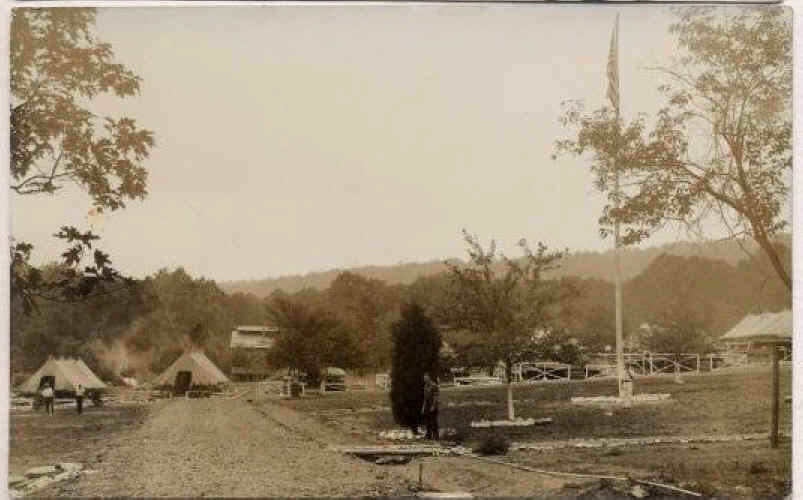
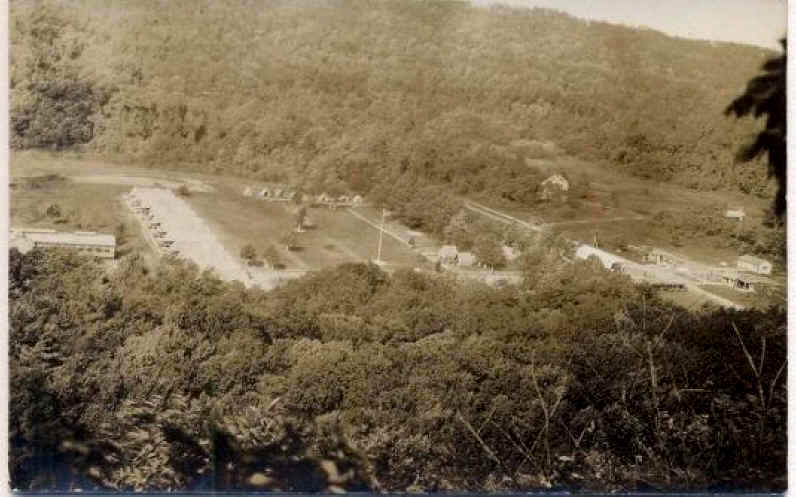
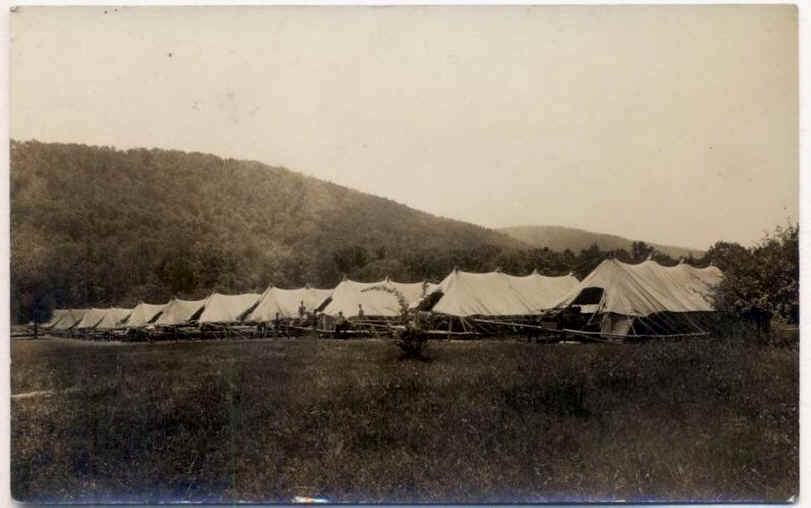
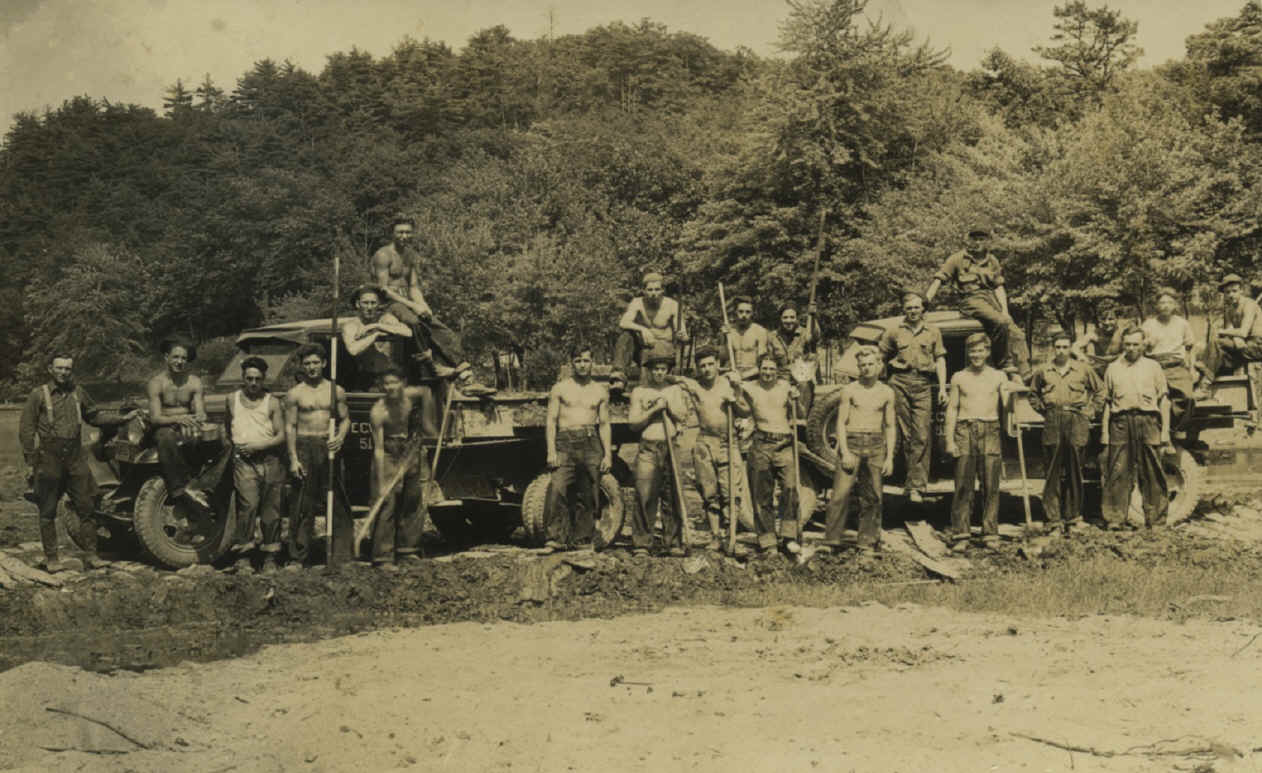
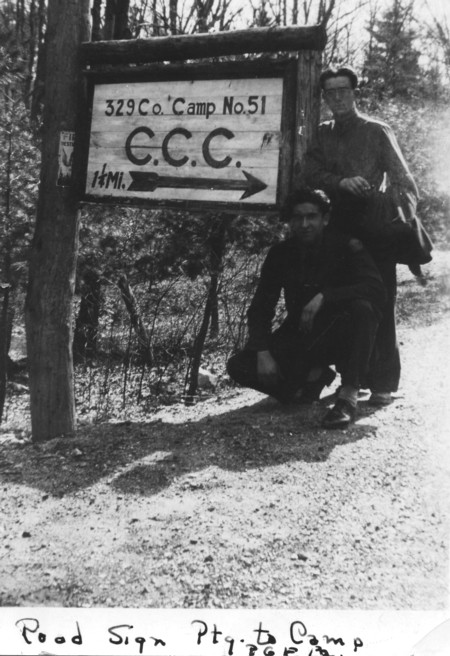
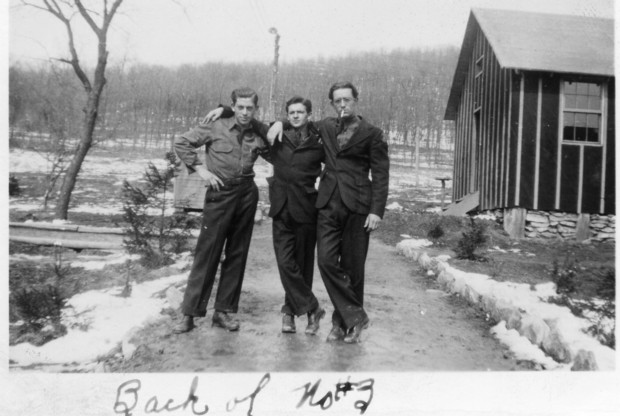
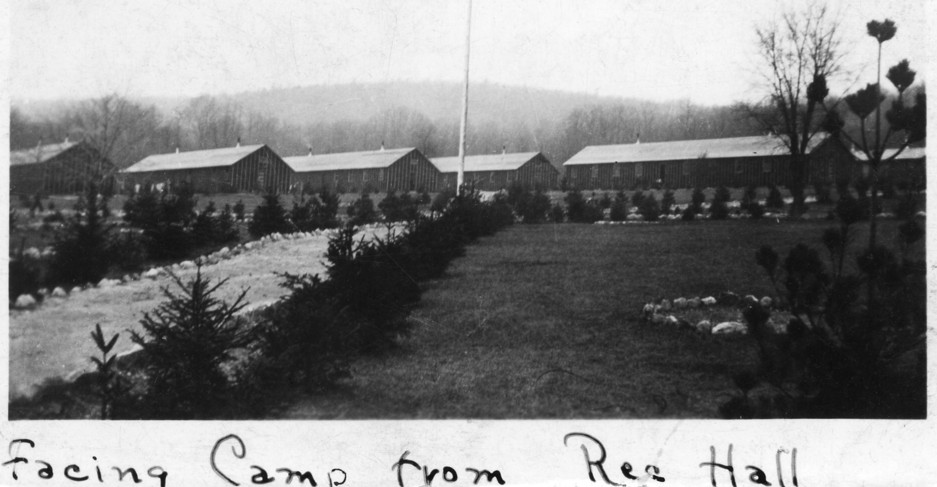
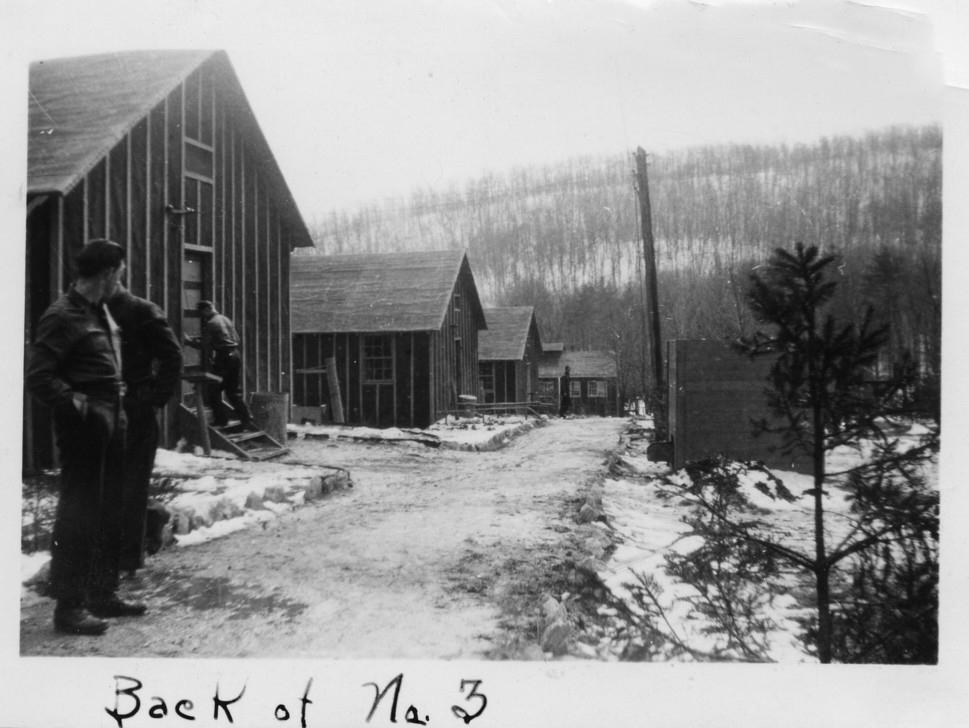
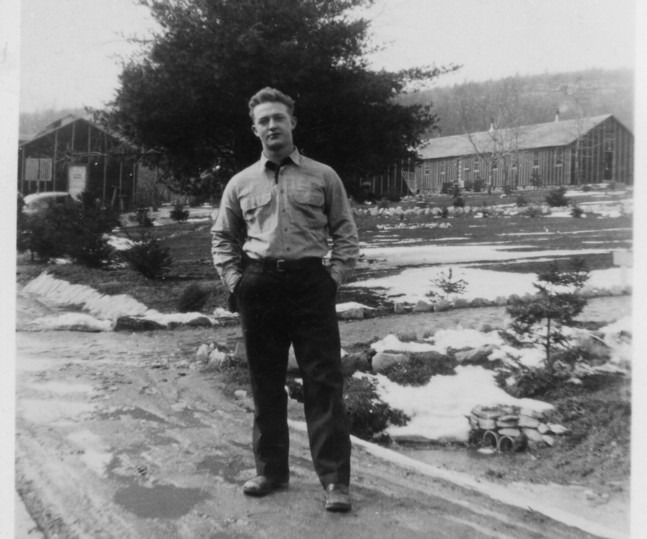
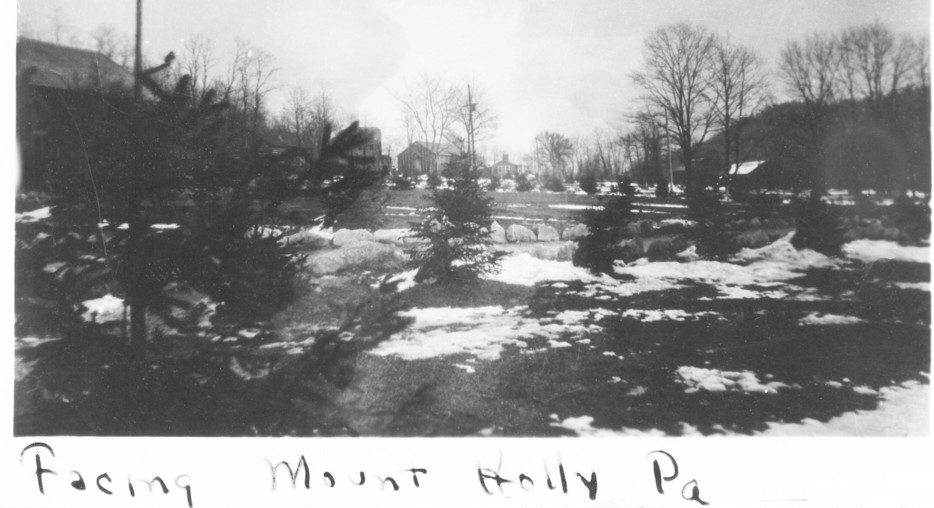
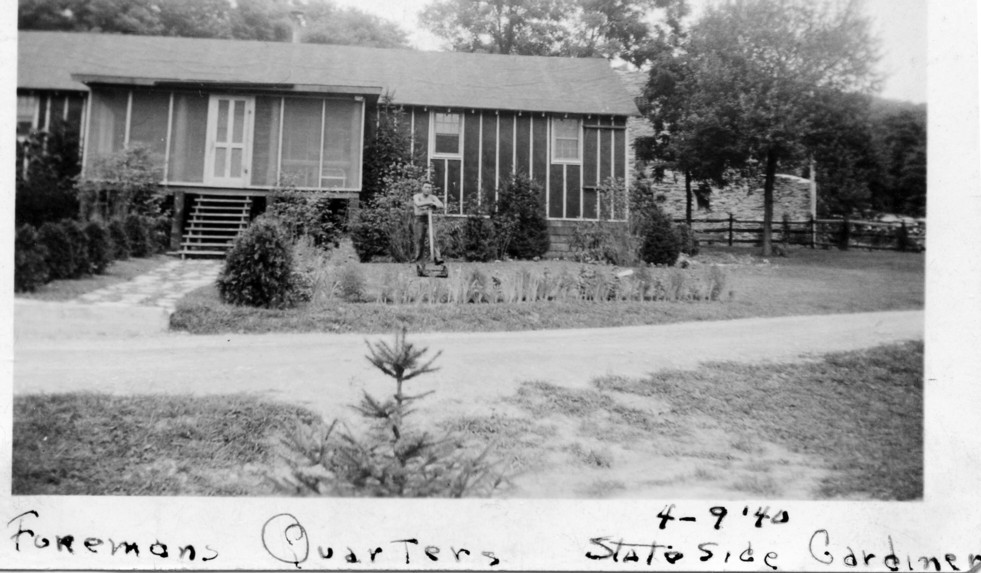
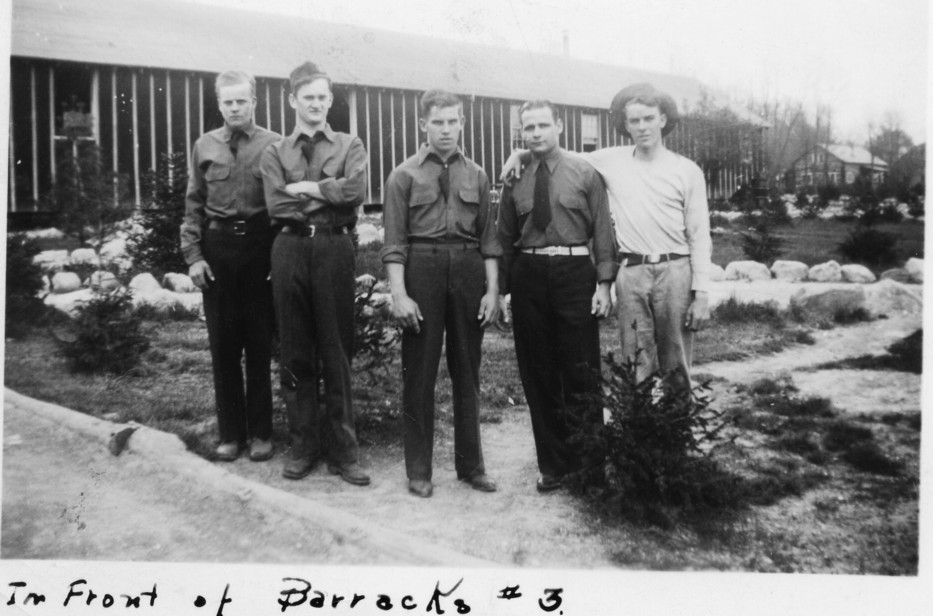
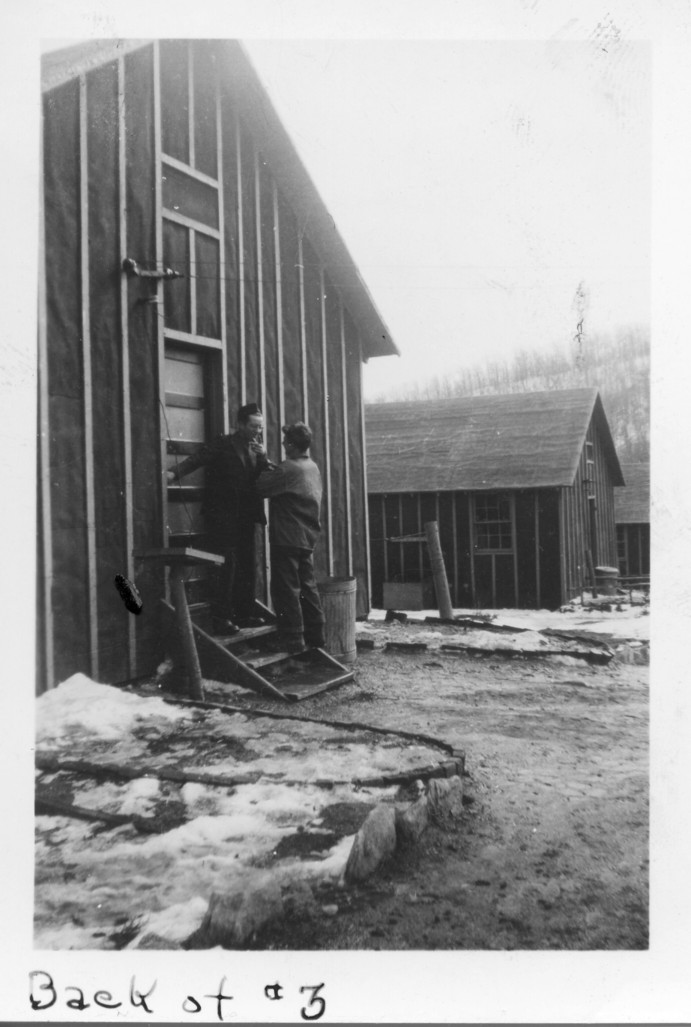
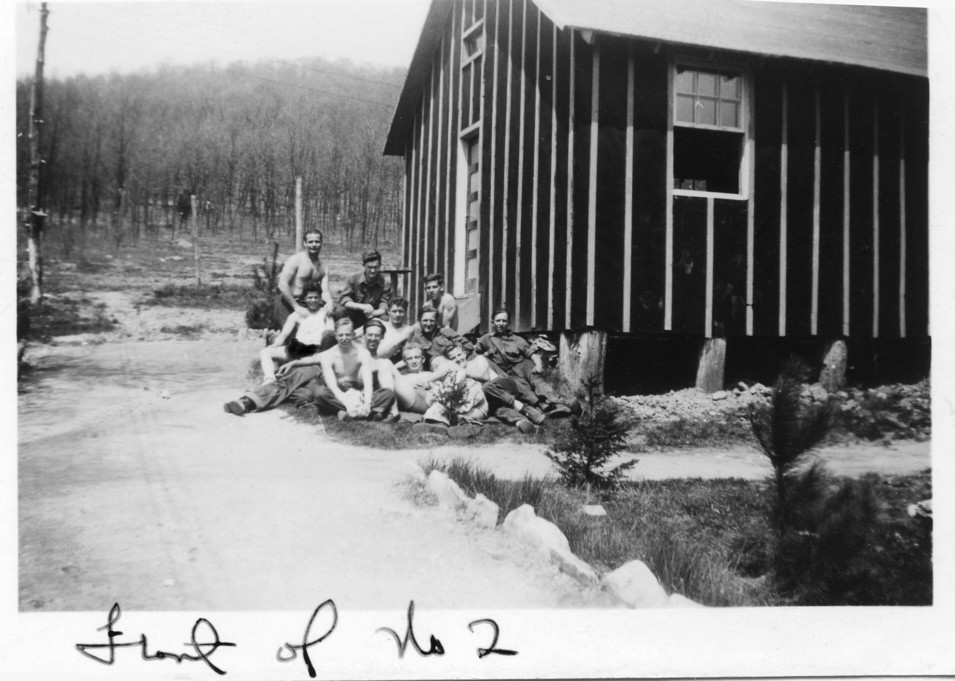
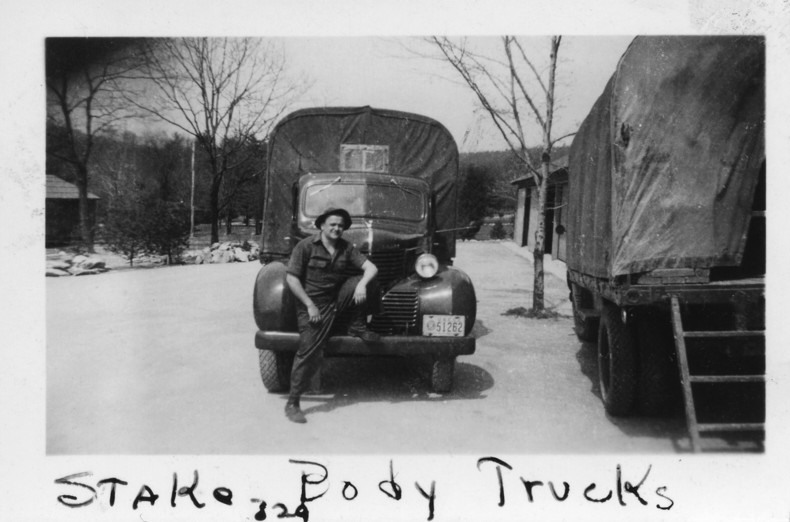
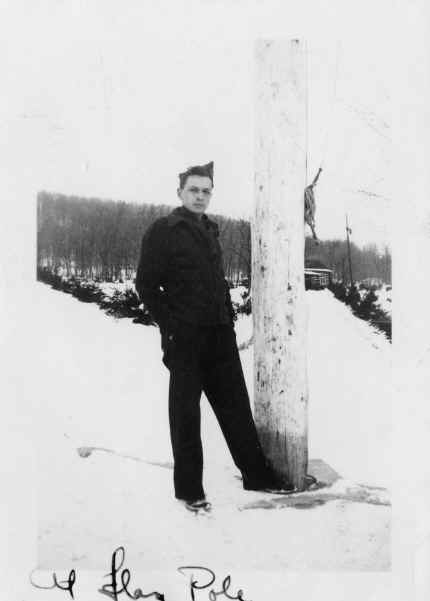
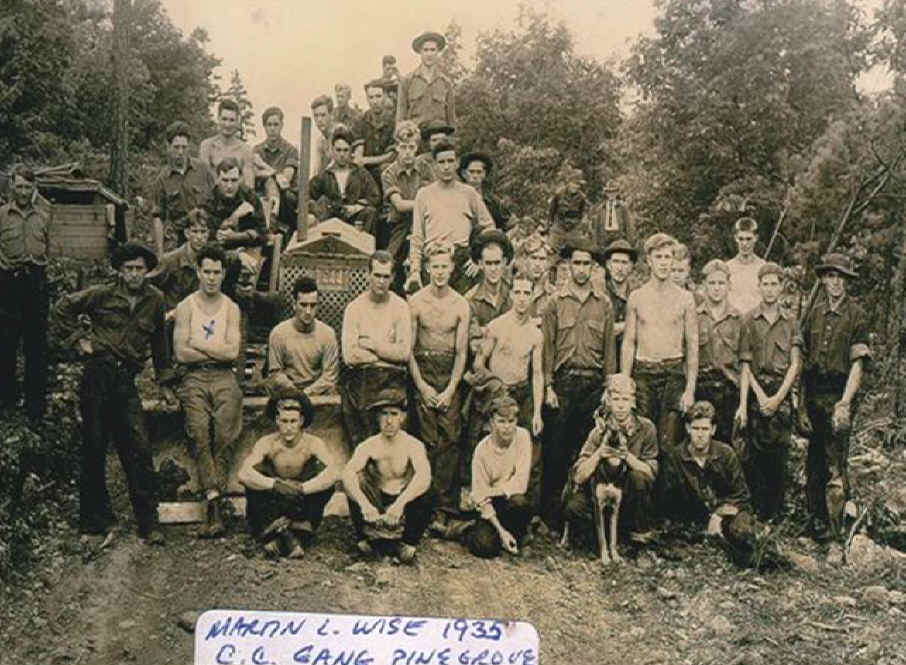
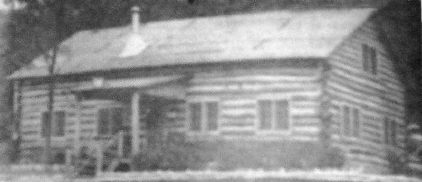
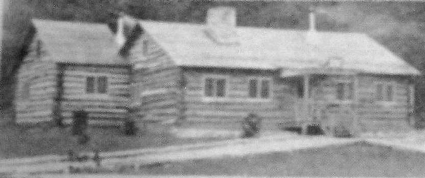
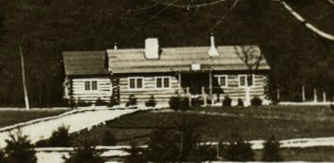
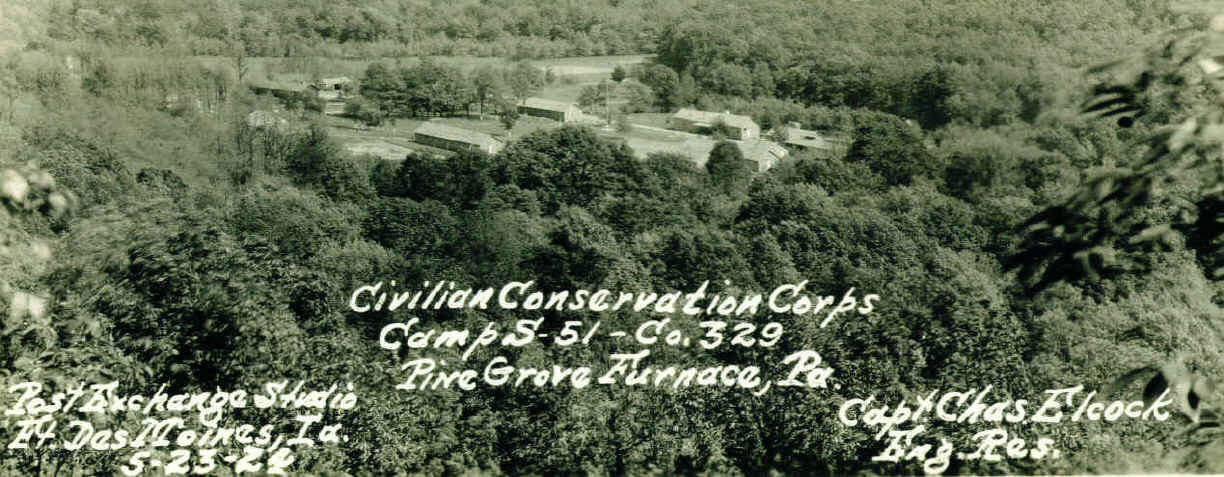
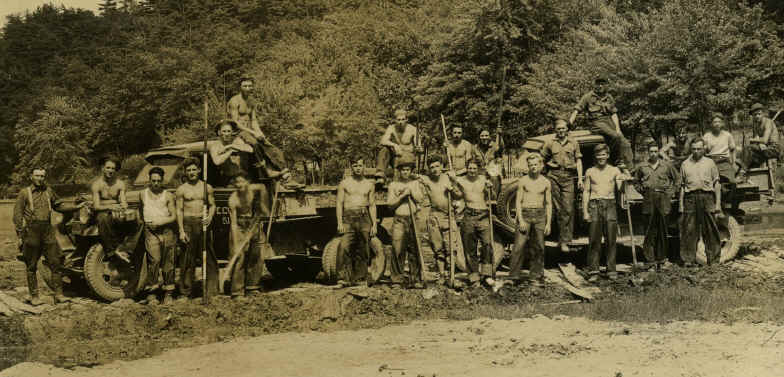
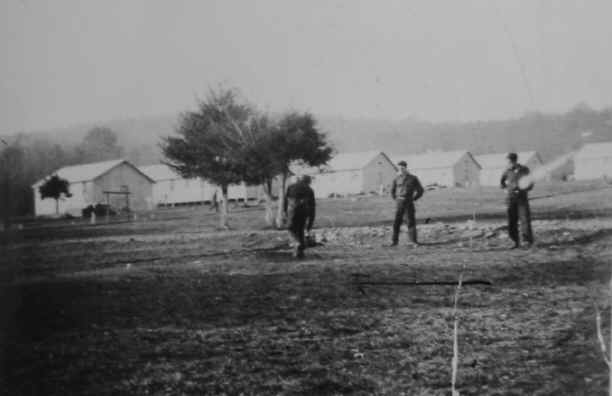
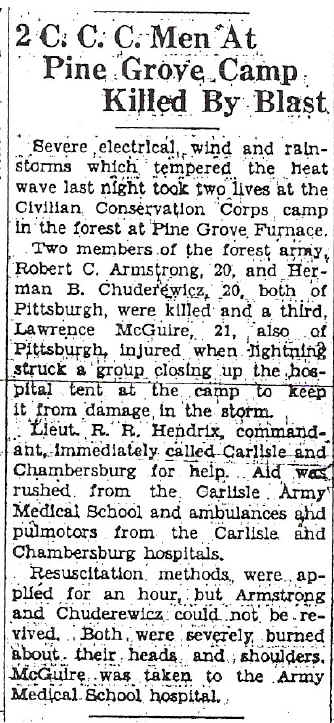
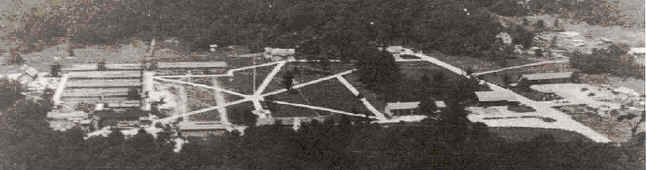
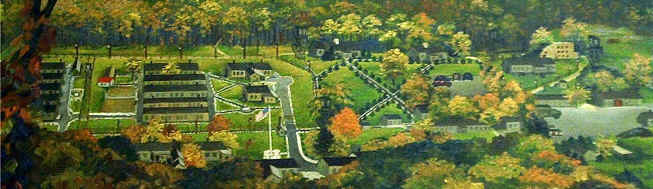
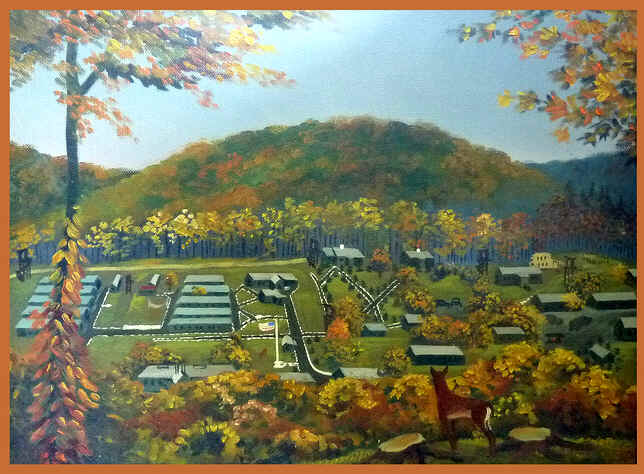
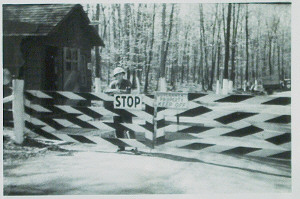
CCC Camp S-51 Company 329 1933 – 1941 |
Pine
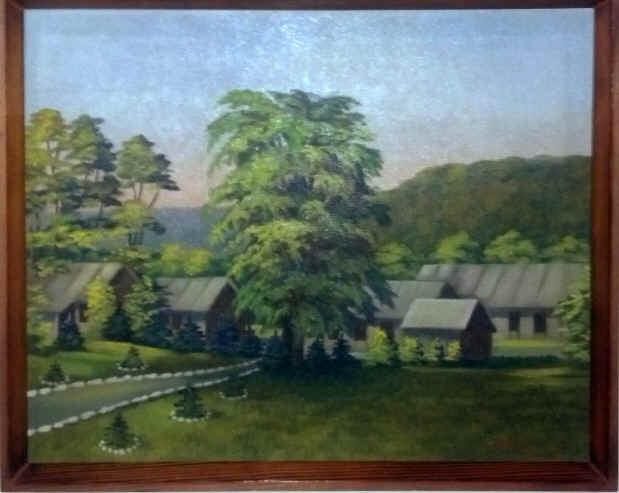
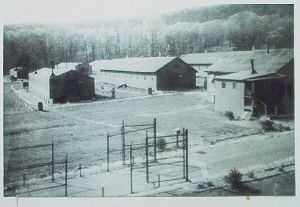
Grove POW Camp 1942-1945 |
Church Camp
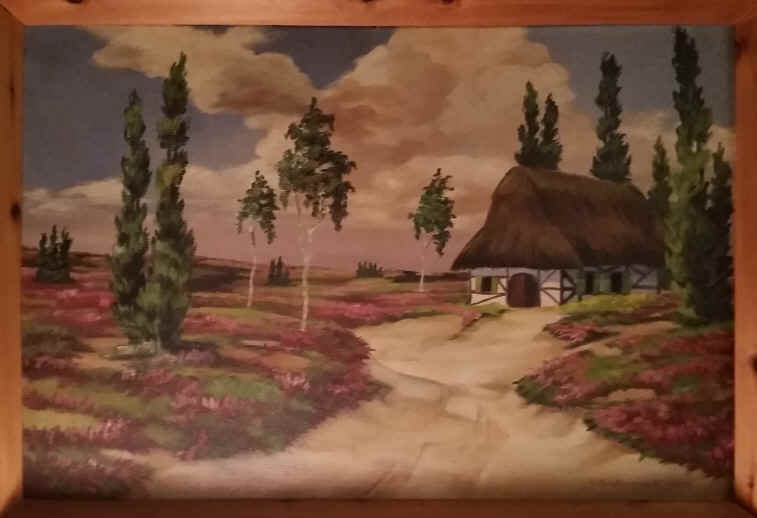
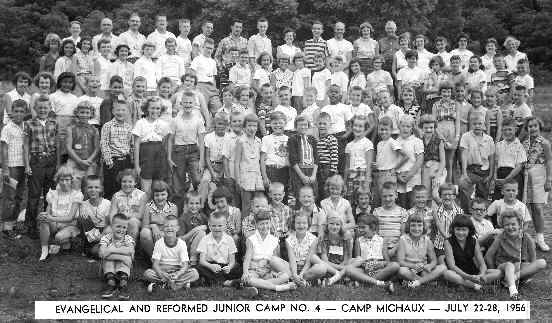
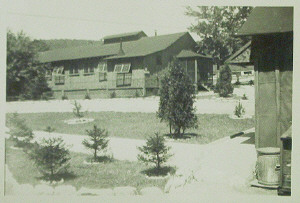
Michaux 1947 - 1972 |
|
|
|
|
|
Bunker Hill Farm 1700's-1919 |
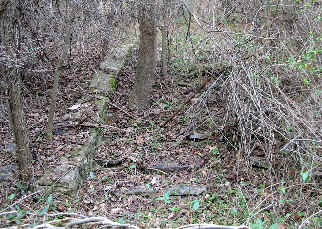
CCC Camp S-51 Company 329 1933 – 1941 |
Pine
Grove POW Camp 1942-1945 |
Church Camp
Michaux 1947 - 1972 |
|
ENJOY BUT DO NOT DESTROY Camp Michaux is an official Pennsylvania historic and archaeological site. The site is protected by state law. To protect this special part of the Michaux State Forest, please do not deface structures or remove artifacts. METAL DETECTING IS NOT ALLOWED. The Camp Michaux Recognition and Development Project over the past 10 years has developed the trail system that exists today along with signage at the former camp.
The Cumberland County Historical Society
has a self-guided walking tour book that can be used to tour and
understand the site. If you explore
the site, please keep in mind that archaeology is a careful, precise process. Web
page created and maintained by
Lee Schaeffer Many photographs we have found were published by the
Post Exchange Studio Des
Moines, Iowa. CCC Camp Postcards - CCC Camp Photos - POW Paintings - Church Camp Photos - Camp Maps Read e-mail feedback from readers of this page. Remains of secret WWII P.O.W.
interrogation camp still lie deep in Cumberland County forest Vince Montano Found this film from the church camp, only a minute long but interesting. https://www.youtube.com/watch?v=yGTaAeATYfo Latest April 2026
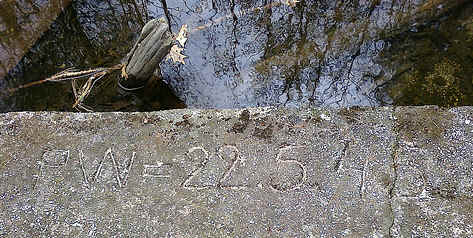
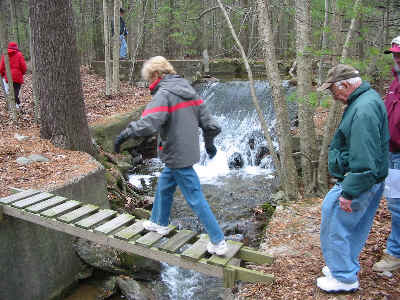
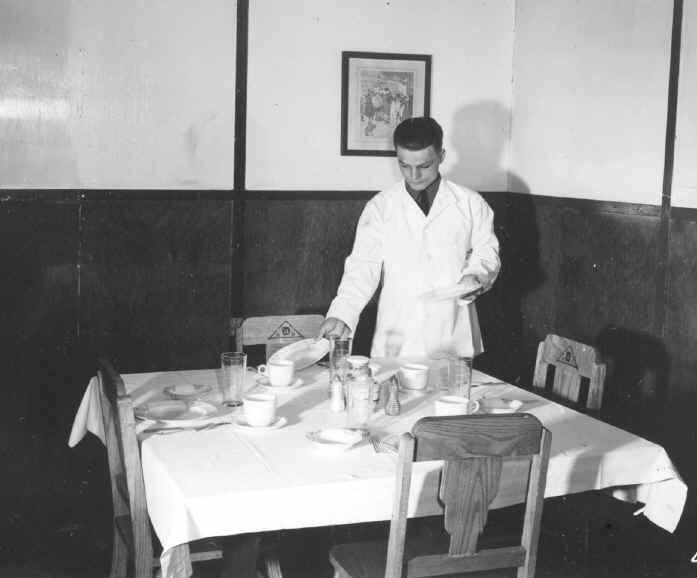
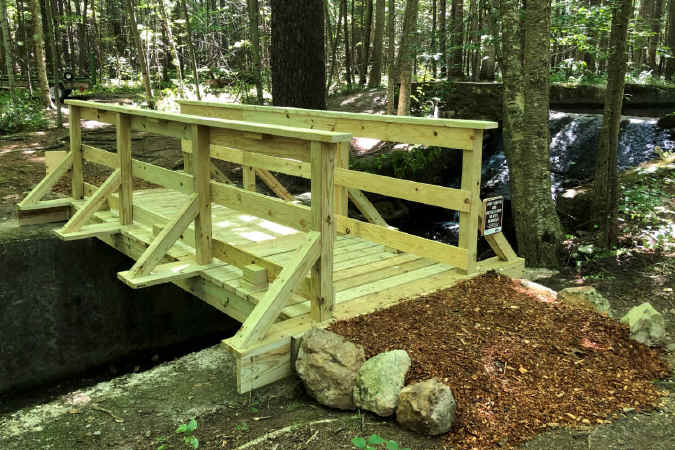
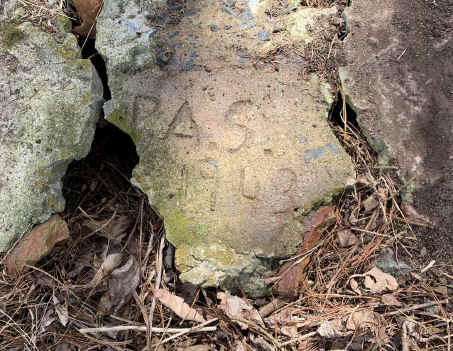
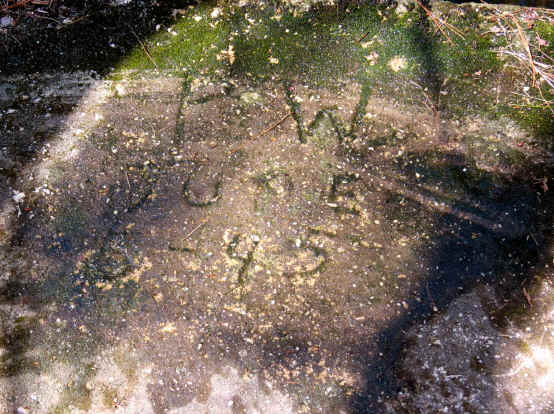
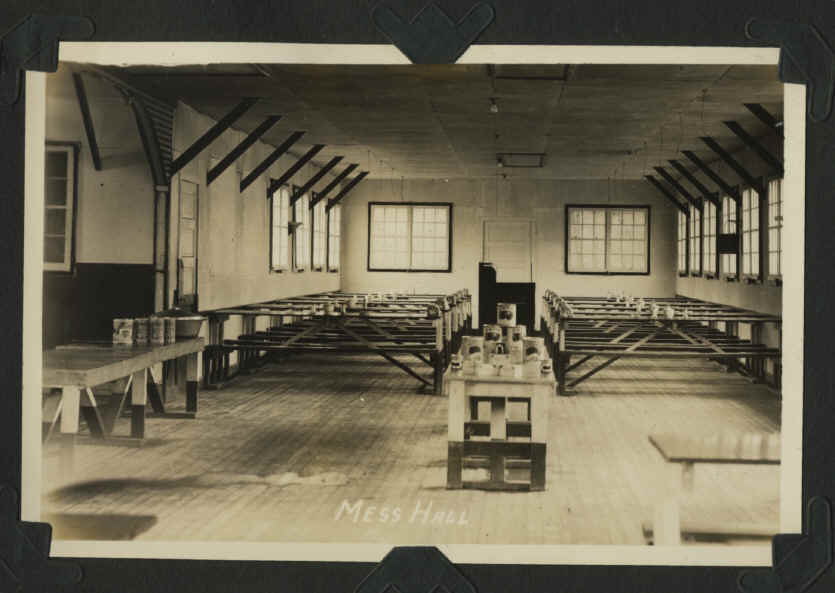
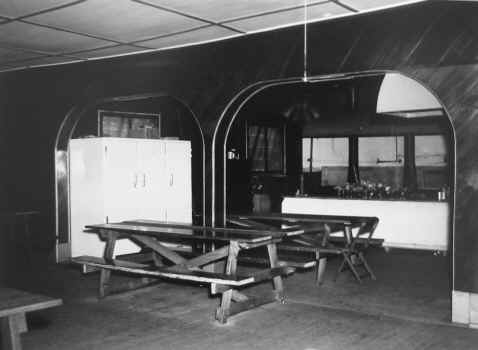
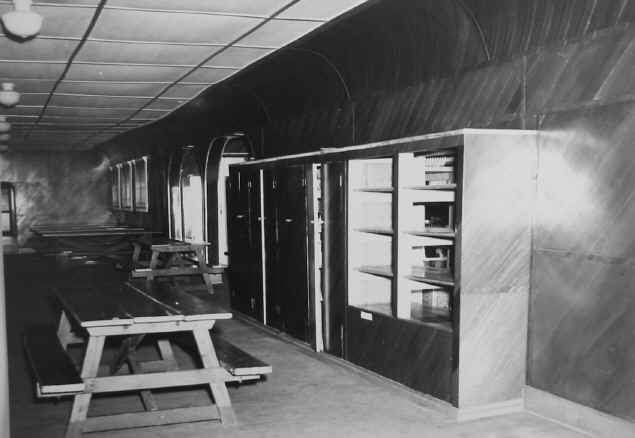
Thanks to six stalwart volunteers we completed a significant amount of work at Camp Michaux on Saturday. The trail from Stop 28 to Stop 30 was cleared and the sites at the Water Tanks and Vesper Hill 2 were cleared. Thanks to the volunteers - Vince Montano, Sue Honeyman, Monica Cornett, Joshua Capp, Kathryn Starner and David Smith. Also, special thanks to Tom Reed for reopening the path to the incinerator. The camp is in good shape and ready for visitors. This 1941 photo is from CCC Camp Riley Creek, Park Falls, Wisconsin. Since we have no photos of the interior of the CCC officers mess at Pine Grove Furnace, this is a great representation of how the officers likely enjoyed their meals. Improved seating, window curtains, designer flatware, CCC issue table linen and their own orderly to attend them. Vince - 1/13/2023 Volunteers from the Friends of Michaux State Forest, thanks to a grant from REI, designed and installed a new safe bridge at the Upper Dam on September 1, 2022. The previous narrow bridge -- parts of which had been out there almost two decades -- was repurposed to cross a shallow gully a few yards away. 4/18/2022 A new inscription found is from the WWII era. It is located just off the upper service road (near the remains of a recent campfire) and north of the German barracks. The writing reads "P.A.S. 1943". Can we see if there are any prisoners in the database with these initials? A fascinating new film of Camp Michaux has been found on
YouTube! - Vince Montano
What
I Learned at Church Camp - Sharon
Watts The CCAC recently obtained a set high quality photographs from the CCC era. YouTube Video with Dave Smith by Noah Shatzer Exploring
Camp Michaux Exploring Camp Michaux's Historic Periods - - ArcGIS StoryMaps
|
|
Bunker
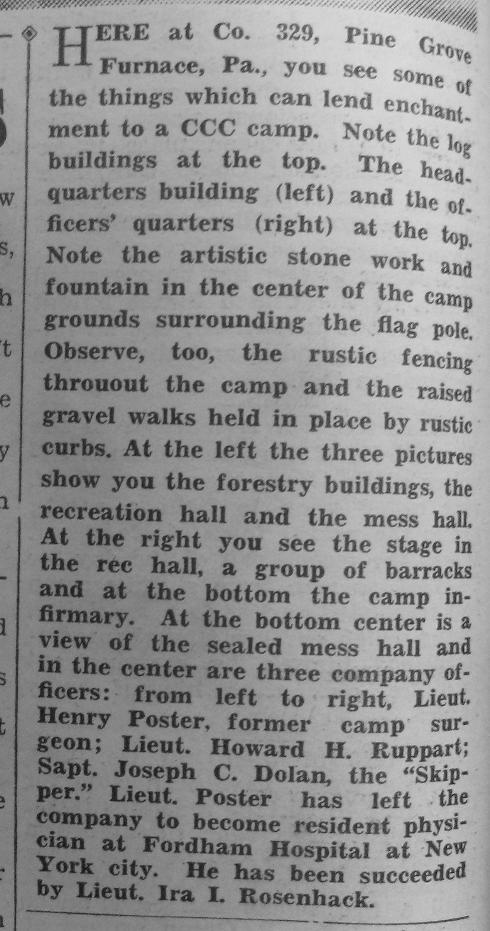
Hill Bunk CCC Company 329 News Papers |
||||
|
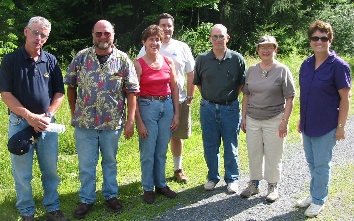
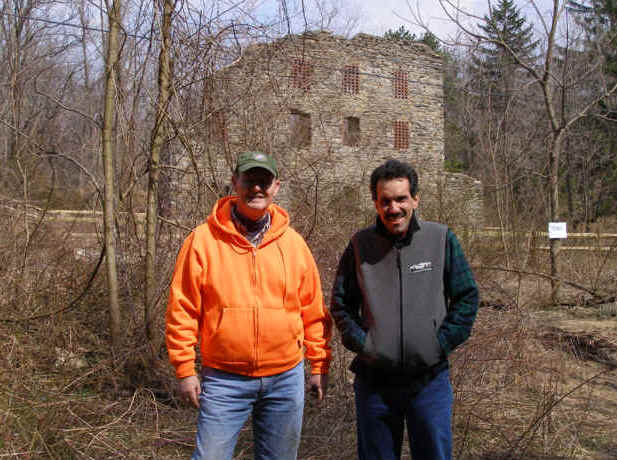
Oct 1, 2019 - Vince Montano, Andre
Weltman and Lee Schaeffer made a pilgrimage to Laurel
Hill State Park to study the CCC buildings.
|
||||
|
|
|
|||
|
|
|
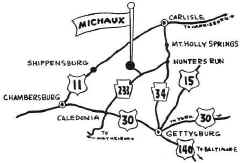
Directions for finding the camp.
|
"Michaux 79"
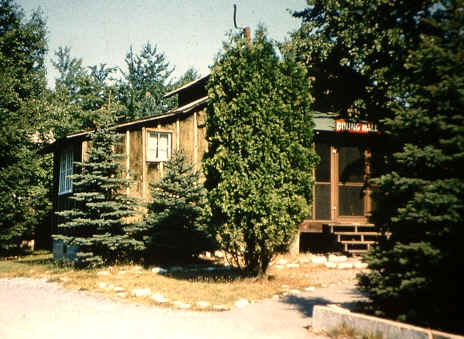
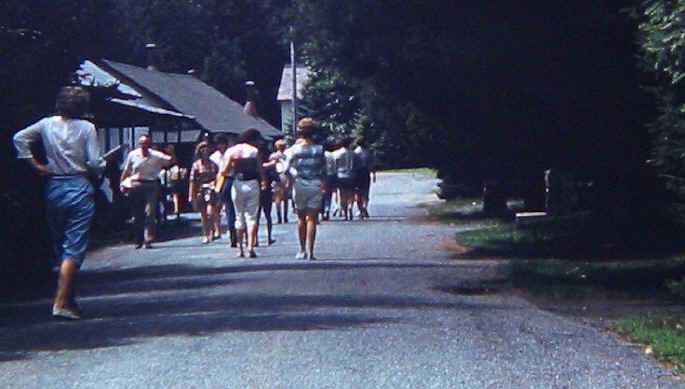
Vince Montano received these slides from David Smith, they were donated by Dan Sheaffer.
They were taken about six years after the church camp was bulldozed and overgrown.
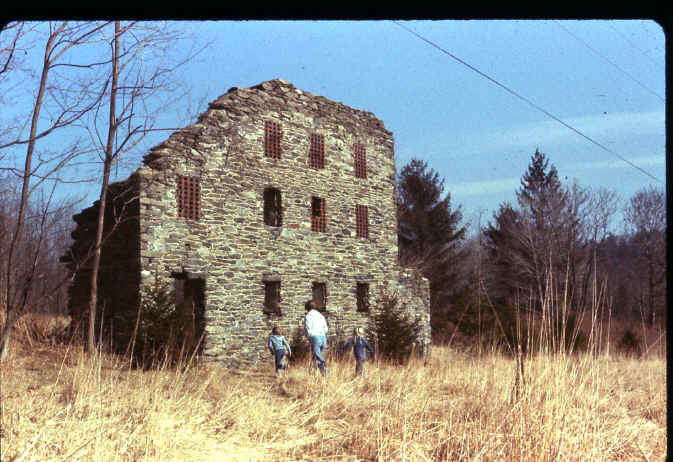
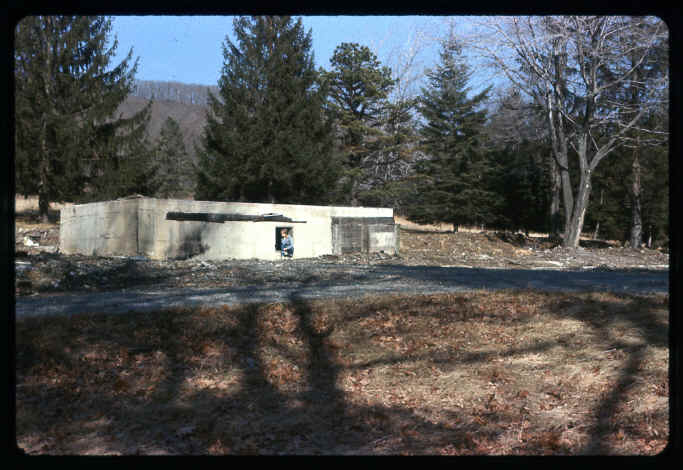
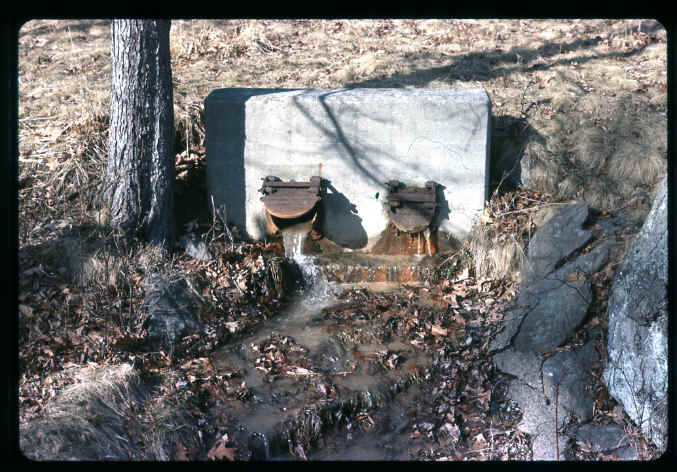
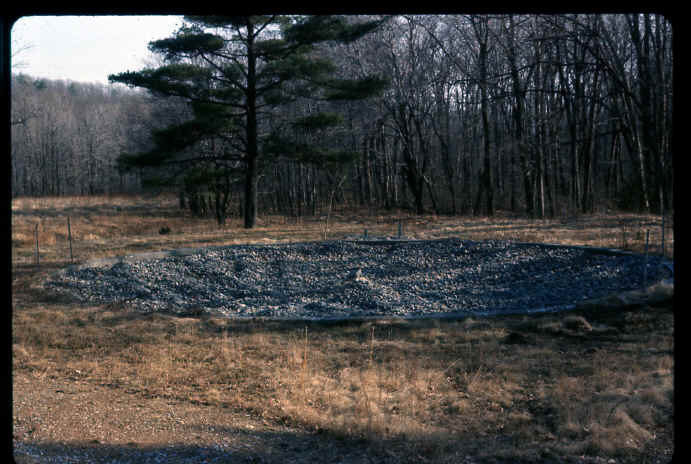
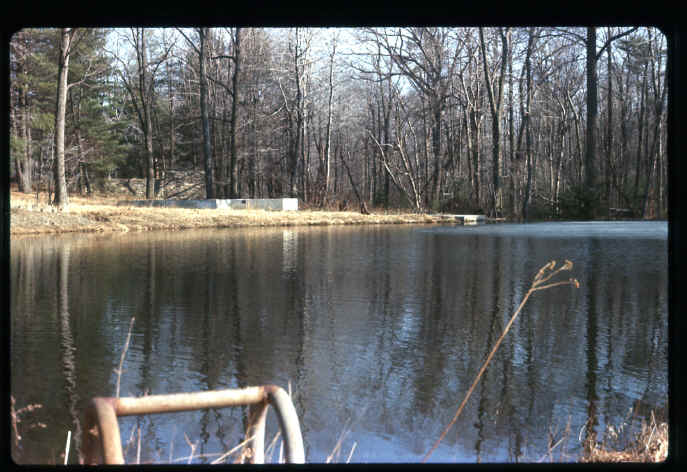
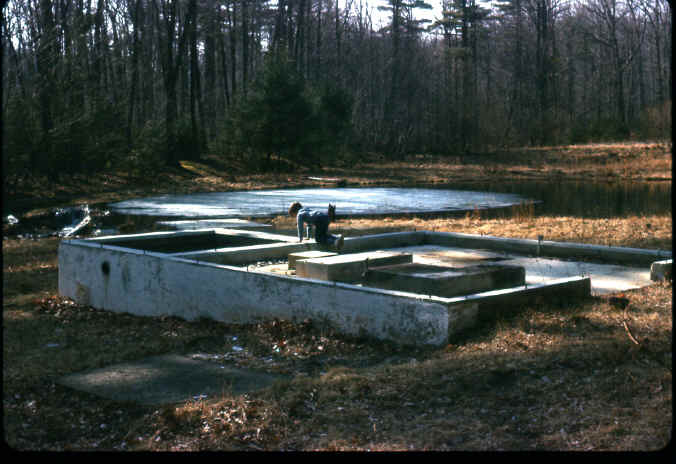
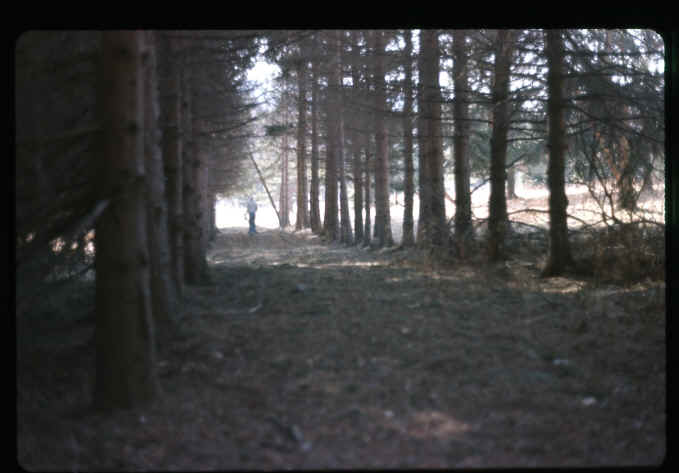
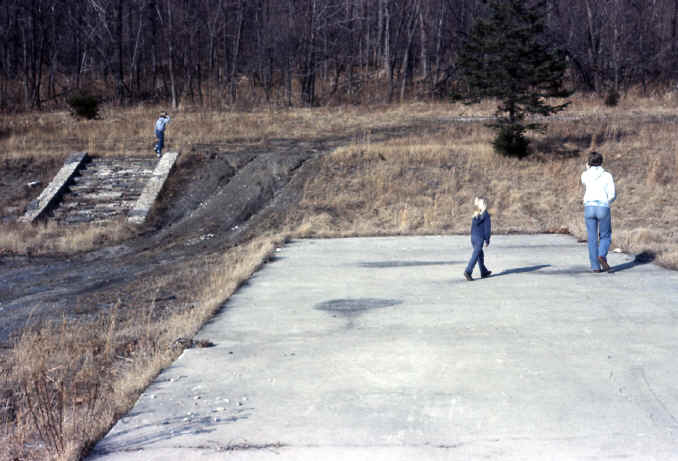
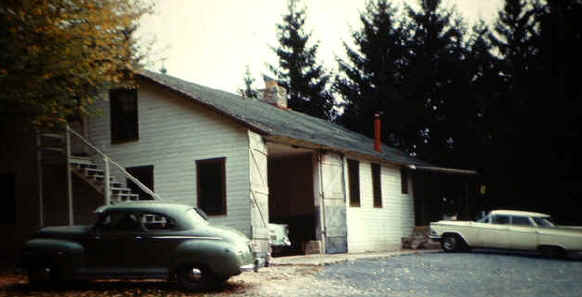
Barn
=
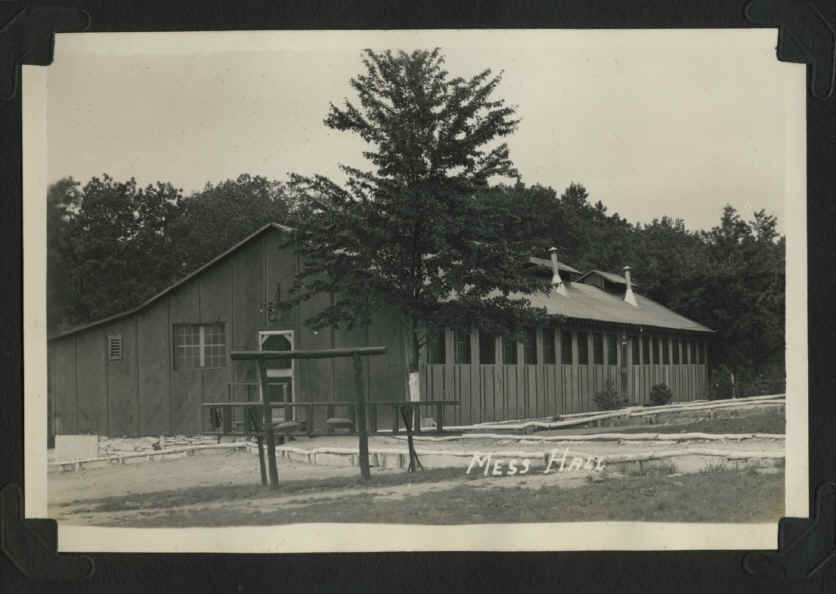
Dinning Hall
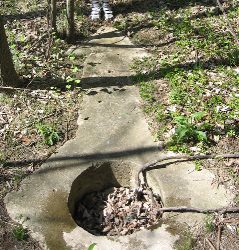
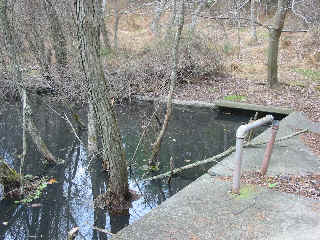
Drainage
Pipes
=
Sewage Treatment Basin
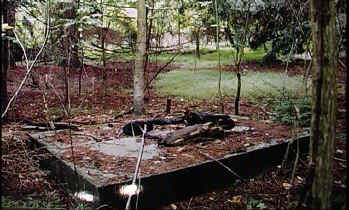
Old Swimming Pool and Pump
House
= Pump
House and Old Swimming
Pool
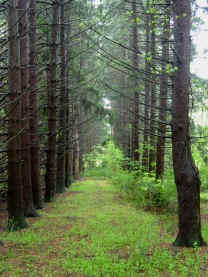
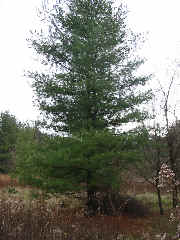
Spruce
Avenue
=
Steps to Nowhere and Pavilion
Iron Industry and DeforestationA talk
presented at Dickinson College by Andre Weltman, From
Andre Weltman, Chairman, Friends of Pine
Grove Furnace State Park Two
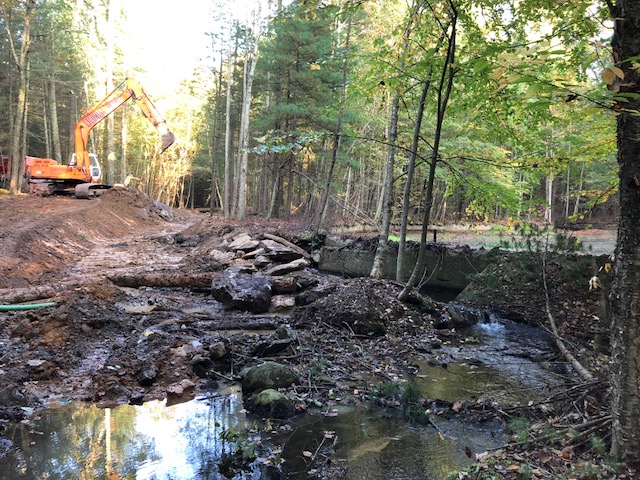
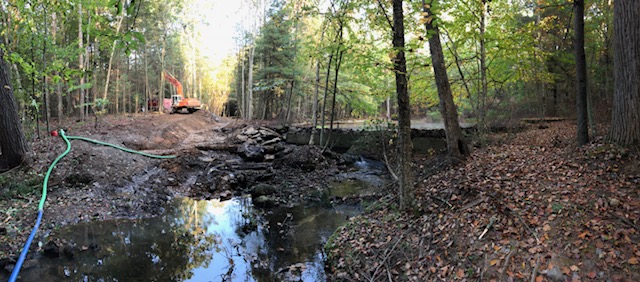
photos taken 9/26/2017
of work is in progress to remove
the swimming hole’s concrete channels and bypass the lower dam. As
you can see, a DCNR contractor is using rather large equipment. The
green hoses visible in one photo are attached to pumps -- it appears
the intent is to keep the newly created streambed (passing next to the
dam) dry until work is completed, by dumping the water back into Toms
Run just below the work area. They are running dump trucks in and out
of the area via the lower service road which has very large gravel
added in places to support the equipment.
--Andre Hi all, - 9/18/2017 Spent a little over an hour at Camp Michaux this afternoon prompted
by an email from Andre Weltman regarding heavy equipment at the
entrance to the lower service road. Work has started on the
lower dam project. It is currently focused on removing trees, I
assume so they can get access to the concrete structures along Toms
Run. While I was there I walked the camp to examine the results of
herbicide treatment over most of the area west of Michaux Road.
What a difference to see the camp with the barberry and some of the
other invasive plants all dead. (Vince will be happy to know
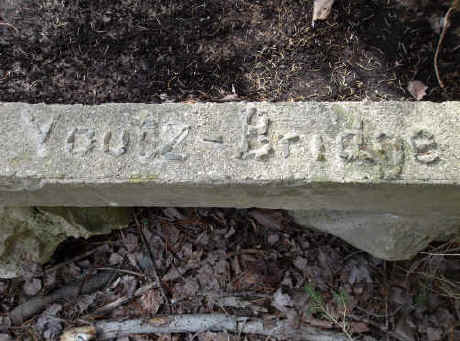
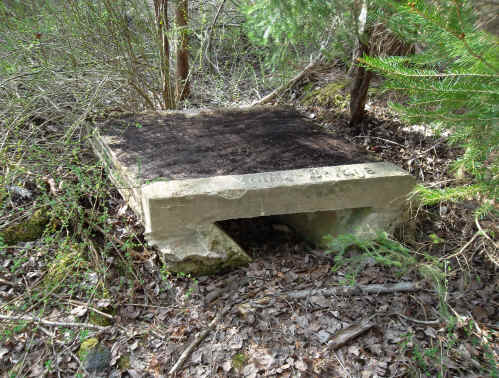
that Yountz Bridge is now visible.) The shrubs and stalks are
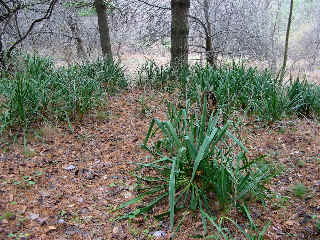
still there but no greenery. The herbicide did not kill the
yuccas, in fact you can see many more of them with the other shrubbery
gone. It also did not kill several other woody plants including
bittersweet. Seeing the camp with so many dead plants is a
little disconcerting, although this will make maintenance of the site
much easier. It also reveals more of the foundations and other
remains of the old camp buildings. I am fairly certain the
footprint of the barracks building farthest to the northwest is now
visible. Andre and I will keep you posted as work progresses on the site of
the lower dam. --David From David Smith - 2/14/2017 I did my annual walk through Camp Michaux this week. I noted
several areas that need attention and am proposing that those who are
available assemble at the camp on April 22
at 8:30. Most of the work involves brush removal
at some of the sites that have overgrown since last year. Tools
needed will include loppers, trimmers, saws and chainsaws. Hope to
see you then. For any of you who would like to go up on your own
the following areas need attention:
Old Barn
Wall Collapses
3/28/2016 Vincent J. Montano
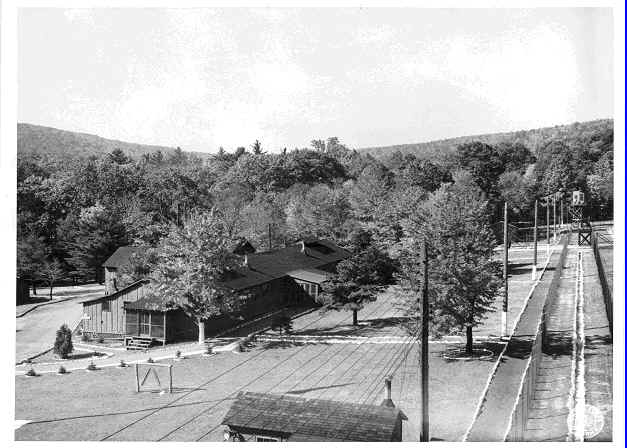
The double fence erected in 1945 for the Japanese prisoner compound has been discovered southeast of the church camp swimming pool.
This fence ran south to north directly to the new guard tower added at that time.
I was searching this area for possible post-hole plates at the entrance gates to the Japanese compound similar to the ones at the German entrance.
Photos show the Japanese gates were a different design and I found no evidence of plates.
The area has overgrowth and fallen trees, so if there is anything there, it would take clearing work to look further.
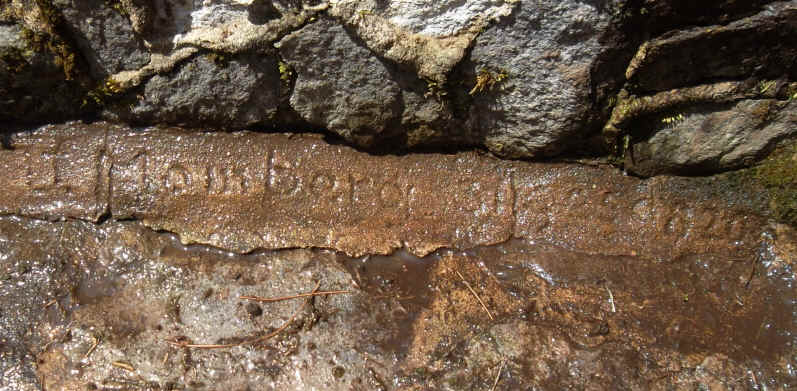
Altenritter is a suburb of Kassel in the Northern Hesse region of central Germany.
Kassel was the location of the Wehrkreis IX Military Headquarters and was one of the most heavily bombed cities during WWII.
In April 1945, just weeks before the Tom's Run bridge date of May 25th, General Patton's Third U.S. Army won the Battle of Kassel and many Germans surrendered.
According to the German Military Abbreviations Handbook issued 1943 by the Military Intelligence Service,
I can find nothing on "Prolg" or their military unit name "Ovenecol 35". On 3/29/2016, Vince Montano updated the above: We have a correction
and exciting update on the Tom's Run inscription. December 2017 Holiday Greetings everyone, My understanding of the use of horses at PGF is that they
were stabled to search for escaped prisoners and used by officers for
recreational riding. However, Hess states that upon his arrival
"the M.P.'s all had horses" and he and the other
interrogators visiting from Fort Hunt were offered horses for
themselves if they were needed. It appears from his statements that
horses were being used as a regular means of moving around the camp.
Two German prisoners at the stables helped him learn to ride. One was
a Major or Colonel from the German army. The other was an SS Colonel.
No names mentioned, could one of them be Willie Schurig? I did
find a horseshoe in front of the German POW mess hall a few years ago. During a visit in June 1945, Hess states that "they
didn't feed the prisoners very well" and they wanted to work in
the American kitchen because they would eat better. The food in the
American mess hall was excellent because they had professional cooks
among the prisoners. Hess's statements may help answer a question I've had about
PGF for some time. When the Holocaust came to light, many Americans
were angry about the way German POW's were eating and being treated so
well. One of those Americans was Eleanor Roosevelt. She had food
rations drastically reduced for German prisoners in POW camps across
America. I've always wondered if that reduction affected PGF. June
1945 would place Hess there right at the time that such food rationing
would have occurred. In a letter to Diane Reed from former prisoner
Paul Gross written in the 1980's, he talks about how they had to eat
margarine sandwiches. So, just a couple notes to possibly reveal new details
about Pine Grove Furnace. Merry Christmas and Happy Holidays,
The
Best Discovery of Camp Michaux Just published by the Cumberland County Historical Society in the 2015 Historical Journal. Mr. Stasky's story provides us with a wonderful personal view of life at the Pine Grove Furnace CCC camp, |
|
In Memory of Obituary for Dr. Richard Sigler
|
|
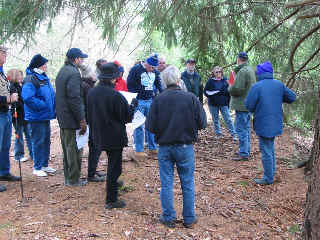
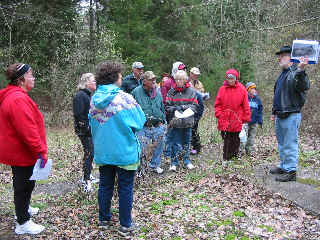
CAMP WALKING TOURS Michaux Historical Display at CCHS Dave Smith's History of the Camp Karl Smith's Poster of the camp Archeological work at Camp Pine Grove
|
|
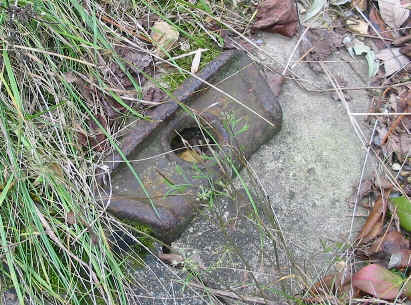
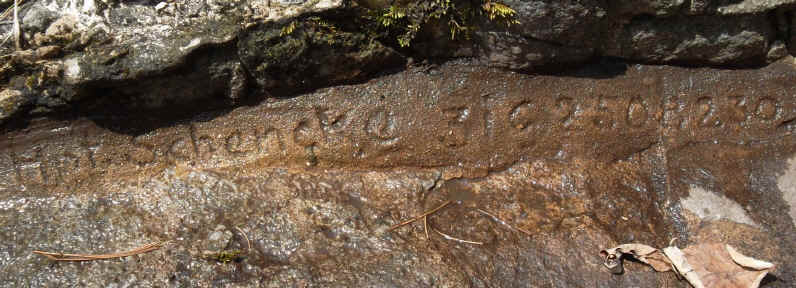
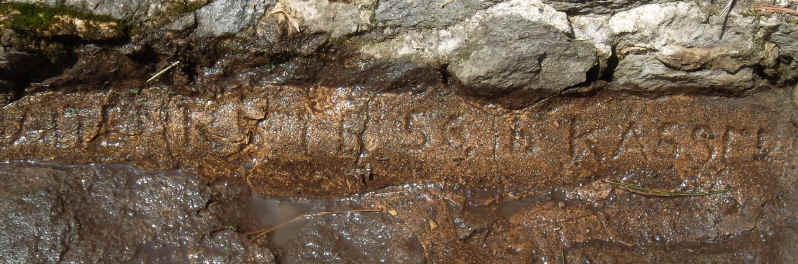
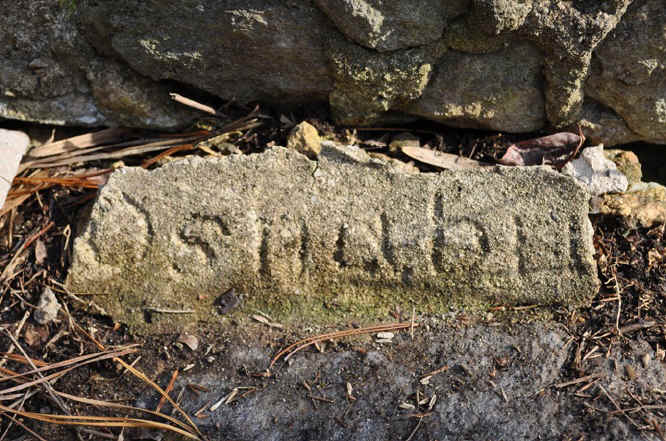
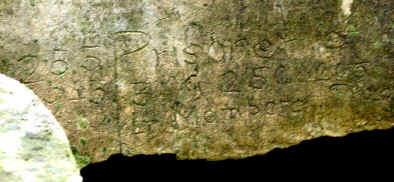
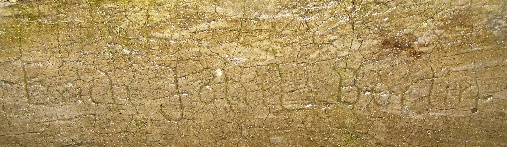
POW Inscriptions found
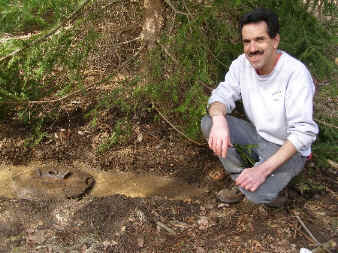
by Vince Montano Almost everything was unrecognizable
except for "KASSEL" at the top step, so I decided to try
something I've done in the past that works well... fine dirt, a little
water, and a gentle brush to bring out the impressions.
It worked like magic. There is no longer any question the
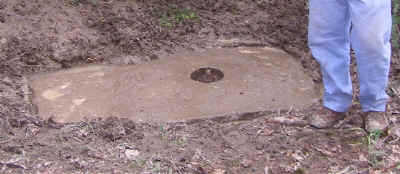
repairs are POW made. One additional discovery today - the
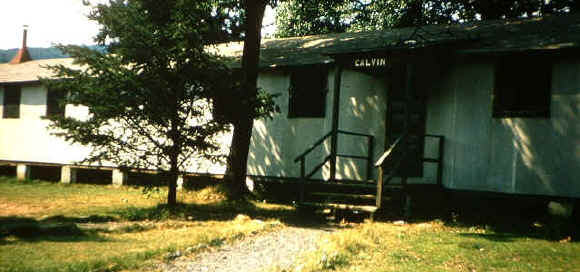
concrete front step to the boys dorm (Calvin) directly behind the POW
Marker.
New Inscription Found on Upper Dam
|

|
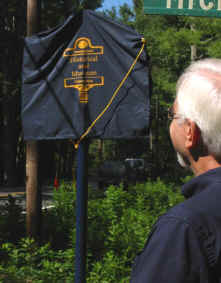
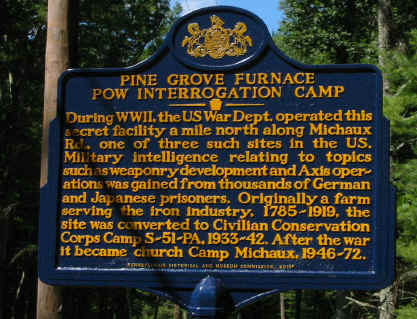
Historical Marker
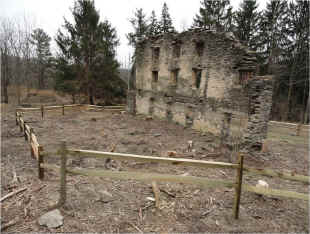
The area around the Old Stone Barn had been cleared for trees and brush
which has regrown as shown below.
Work day at Camp Michaux - Pictures and Text Zion Arendtsville United Church of Christ |
|
Link to other finds by Vince Montano A New Bridge to Nowhere Found
|
From David Smith: He has completed the prisoner database and now we have information on Lt. Momberg whose name ins inscribed on the Tom's Run bridge, and Erich John whose name is on the Deer Lodge farm house
|
|
Interesting Links and Finds
John Bland - the author of The Secret War at Home... has moved to Texas. Before leaving, he turned all his files over to the Historical Society. Dave Smith is continuing a project begun by John Bland to create a database of all the prisoners who passed through Pine Grove Furnace POW Interrogation Camp between May of 1943 and the end of 1945. At present, effective July 15, 1945, the list contains 7,400 German names. I suspect that by the time the list is completed with the remaining German names and the additional Japanese prisoners that came in that fall, there will be over 8000 names in the database.
7313 Germans |
AUTHORS NOTES about the history of this Web page:
Many places and events of minor historical importance that pre-date the World Wide Web are not on-line!
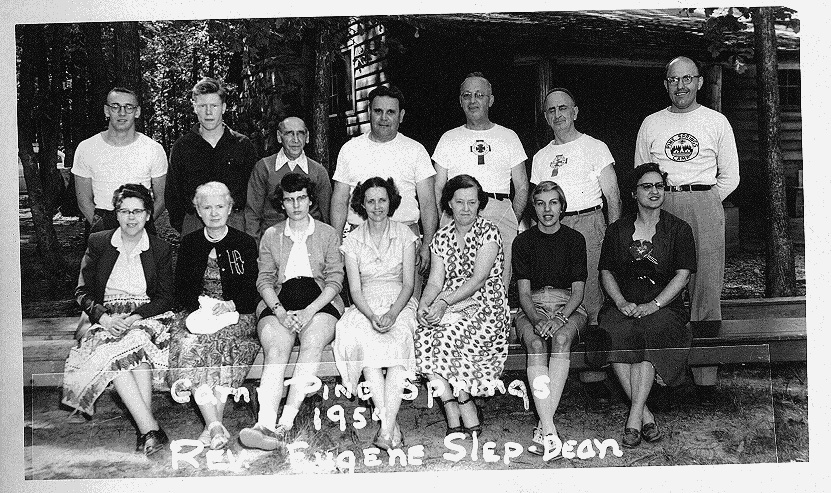
The exceptions to this rule are those pages created as labors of love such as this and my other page for another little known place - Jackson Falls.In 2001, while creating the church camp links on the Beulah Presbyterian Church Web site, I added Pine Springs Camp. It was here that I began my church camping experience in 1951 and attended every year till 1959 when I was a counselor. I was surprised to find pictures of both my father and myself on their 1954 Memory Lane page! I'm the dorky kid with glasses on the right edge of this picture and my father is third from the right in the back row. I then began a fruitless Web search for information about another special place of my youth - Camp Michaux. Finding nothing online in 2001 was the inspiration for creating this page.
I first saw this region of Pennsylvania in the 1950s as a grade schooler attending Wilson College for women in Chambersburg. Not as their first male student but as a preacher's kid at a summer church conferences with my parents. It was there that I taught myself the art of canoeing while they were attending classes.
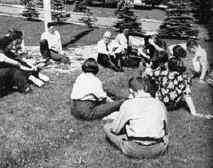
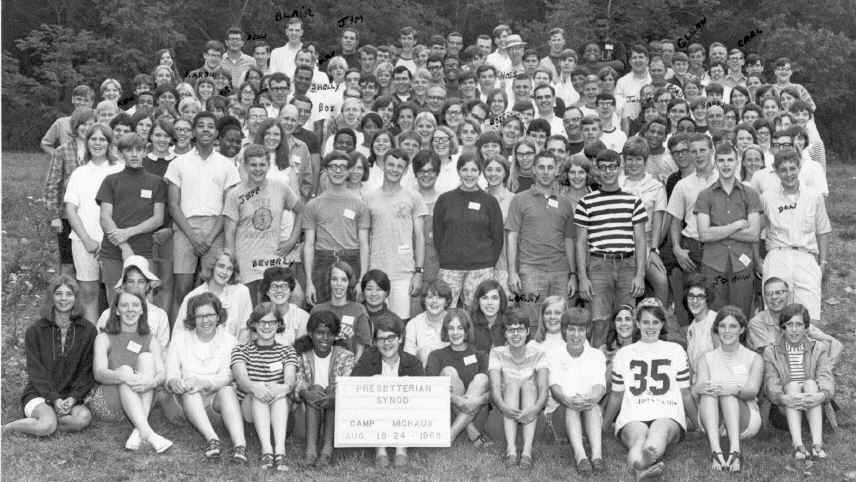
In 1959 and 1960, I was a delegate from Blairsville Presbyterian Church to the Synod of the Trinity's Youth Leadership Conference held at Camp Michaux. In 1961, during a brief interlude between high school, my first job and college, I was invited to return again as an ex-officio delegate with no responsibilities other than to make friends and take pictures.
Color prints were expensive so I was saving money by shooting color slide film. Very few people were into slides back then, so mine may be some of the few that exist. I used some cheep ANSCO film and it has faded but the KODAK slides still look good.
If you would like to see all my old slides as full screen images, I would be delighted to send them on a CD along with the current pictures from the camp walks and other documents about the camp. Send me your address and I'll drop you one in the mail.
Then as now, the Appalachian Trail (AT) passes through the camp and it was here that I first hiked on it in 1959. After graduating from Monmouth College in 1965, I began my career teaching the Physics at Churchill High School (now Woodland Hills after a merger.) Before I was married, I was the leader of the Explorer Scout Post at Beulah Presbyterian Church. In the summer of 1966, we were driven to Caledonia State Park and from their hiked the AT north. I made a short detour to revisit Camp Michaux on our way to the Camp Grounds at Pine Grove Furnace State Park.
"The Ash Grove" is everyone's favorite camp but its meaning only becomes clear with age. I still recall fond memories of these mountains and the friendships they once nurtured. So, forty years later in 2001, I made an attempt to go back to the past in spite of Thomas Wolfe's admonition that "You Can't Go Home Again." After all those years, I was still able to find this place. We exchanged e-mail addresses with a hiker on the AT near the camp and she contacted a friend who sent me a copy of the ACHS article about the POW camp.
In May of 2002, I returned to the camp for a Cumberland Co. Historical Walking Tour of the camp. Much of this page is based on the information gathered on that walk. While I was at the park office, I obtained a copy of “A History of Camp Michaux” by M.S. Reifsnyder. (View in HTML format or download as Microsoft Word Rich Text with other information.) I have converted a Site Survey Summery Sheet from a hazardous waste site clean up document that gives a detailed history of the POW camp. I received another “A History of Camp Michaux” buy Helen Louise McAdoo. (see note from her brother) As with any research project, you find more questions than answers so I need to go back in the winter when the leaves are off the trees and make some accurate measurements!
I just could not stay away and returned again for the 2003 walk. It rained the day before and by the end of the walk we were all cold and wet! But I did get a lot of detailed pictures with my new digital camera which I will be glad to share with you on a CD. Because of the weather, I didn't fulfill my prime objectives to hike up to "Vesper Hill" and back the lower service road to see the remains of the camp buildings. Perhaps next year...
In June, 2003, my wife and I traveled to Europe. While on our cruse of the Rhine River, we met a German gentleman who's U-boat crew was captured off France and he was interred at a camp near Tampa Bay. His captain was also interned in the US but he did not know where...
On our way to a short vacation in the Poconos in July, we planed our route to visit the UCC Hartman Conference Center in Milroy, PA. In the living room of the Michaux Lodge are four POW paintings from Camp Michaux. The camp director, Rev. Bruce Druckenmiller, assisted me in taking digital photographs of the paintings which are displayed below. We returned on the picturesque US Route 6 to see the Pennsylvania Grand Canyon, in Potter County we visited the Pennsylvania Lumber Museum. At the visitors center, they have an extensive display celebrating the history of the CCC camps in Pennsylvania.
In June of 2004, I attended the first "reunion" of former staff and campers and was able to make copies of their extensive collection of photographs which are available on my CD. We also met with Lisa John, a park ranger, who has an interesting collection of pictures and is planning a brochure and interpretive walking trail if the forest service will give her permission.
November 2006 was cool and damp but when the leaves have fallen is the best time to see the camp so I had to go back for yet another camp walk and finally found the remains of Vesper Hill! I've put that information on another page - 2006 Camp Walking Tour Pictures
While researching the camp, I ran across several references to Kings Gap. I had briefly looked at their Web site but did not study it in depth until I was contacted by their new archivist. The place seemed like an interesting place to visit and there is speculation that several of the highest priority POWs from Camp Pine Grove might have been housed there but no evidence to support the claim. It appears that it was still in private hands during the war. In July of 2007, my wife and I visited the Kings Gap Environmental Education and Training Center. The front porch of the mansion offers a spectacular view of the Cumberland Valley.
For some strange reason, I drove four hours in the rain to attend the 2009 camp walk. The rain stopped as we entered the camp ground and the sun came out for the afternoon walk. It seemed as though every walker had a different interest in the camp. Several complained that it took too much ink to print out this page before they came! :-)
If your Web wanderings have lead you here, please add your memories via e-mail !
Let me know if I can publish your name and e-mail address.
With around 200 hits/month from all over the world, I should be getting more mail!Thanks to all the people who have found this page and have e-mailed me pictures and information from their collections. If you have e-mailed me and changed your address, please let me know.
--- Lee Schaeffer - Home Page - E-mail
P.S. I also spent many weeks at BSA Camp Seph Mack from 54-62 as a camper and as staff teaching Pioneering, Map Reading rowing (which later saved my life) and Morse Code. I also attended the National Jamborees in 1957 at Valley Forge, PA and 1960 at Silver Springs, CO - but that's all for another page! As an Explorer Post leader, I brought a group of scouts through the camp in 1966 while hiking the Appalachian Trail.
Maybe Wolfe was right!
|
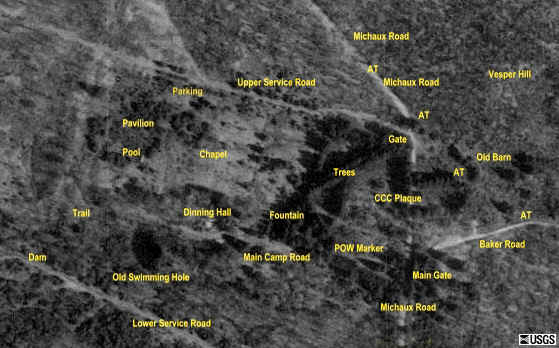
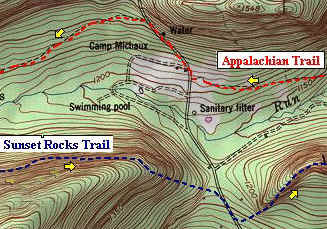
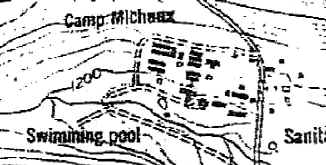
Authors Note: On the maps, you can
see all the mountain roads and the camp's location relative to Pine
Grove Furnace. The camp is located in Cooke
Township in Michaux
State Forest.
The white clearing on the 2002 NGS
topo map is the site of the camp. Michaux Road is the main
road running N/S. The Upper, Main and Lower Service roads are have
gates off Michaux Road and are easy to find. The red dashed line
is the Appalachian Trail.
GPS Coordinates to locations within the camp
|
MAPS, GPS and Arial Views
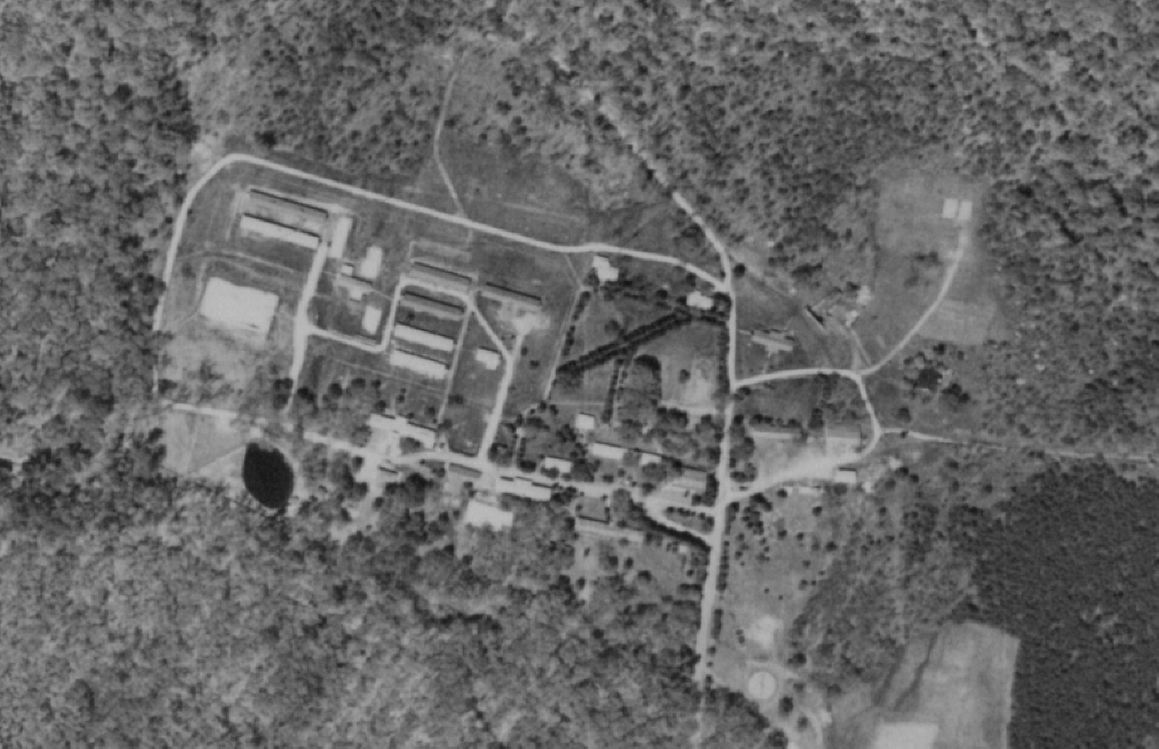
The older aerial images show the area
before it was totally overgrown. Google Earth is the best source for
these maps. The Appalachian Trail (AT) follows Michaux Road cuts across to Bunker Hill Road passing the old barn wall. Directions from Pine Grove State Park:
Landmarks on Michaux Road
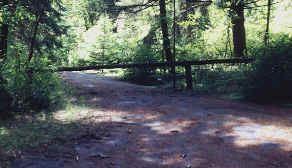
Where the paved portion of Michaux Road ends about 100 yd. past Bunkerhill Road and the old stone barn parking lot, you will find a yellow metal gate on the left which is the entrance to the "Upper Service road." The yellow gate south of the Toms Run bridge is the "Lower Service Road." |
|||||||||||||||||||||||||||
|
Historical Resources and Links
|
On your visit, try to locate the
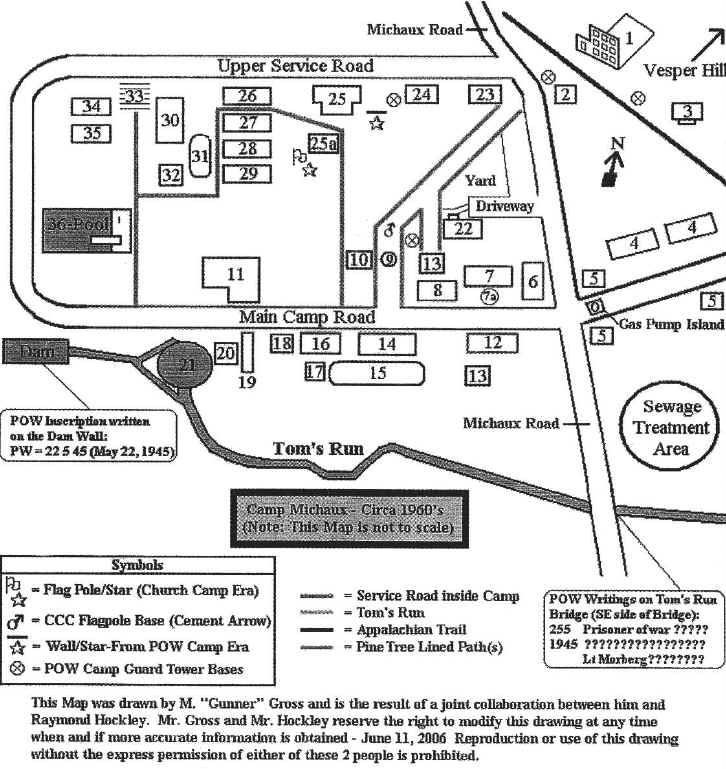
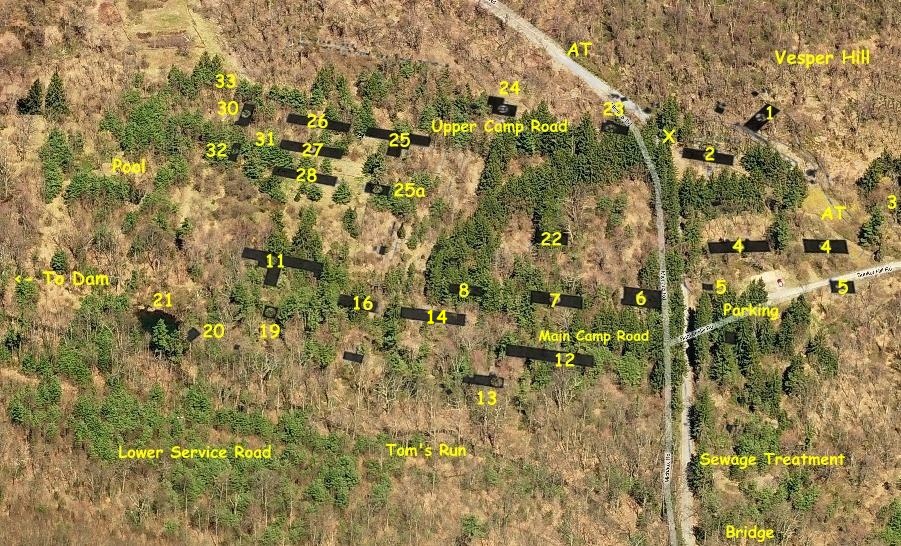
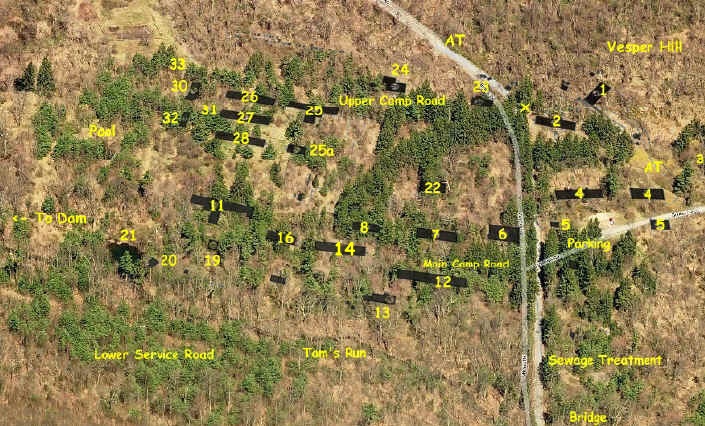
following: See Map Below Map Keys used on this page
A few feet further up Michaux Road on the right, there is the "white blaze" where the AT cuts off from Michaux Road and cuts across to join Bunkerhill Road past the parking area. The foundations for one of the guard towers can be seen at this corner.
Between the upper and lower gates and
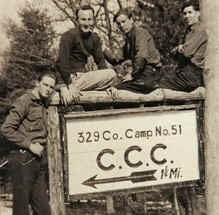
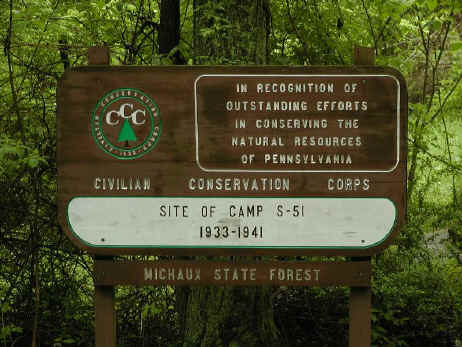
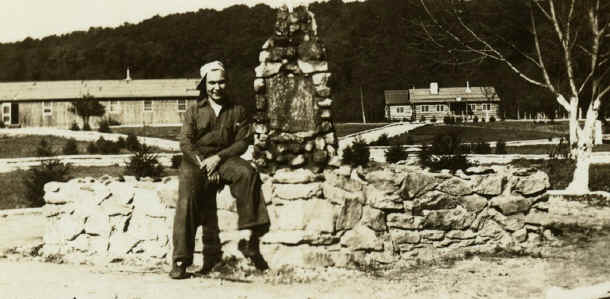
set back off the camp side of Michaux road is a commemorative marker for
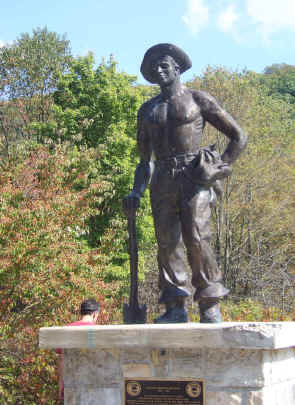
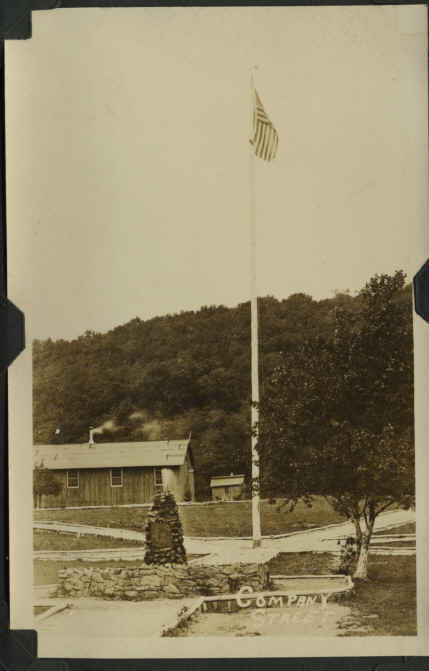
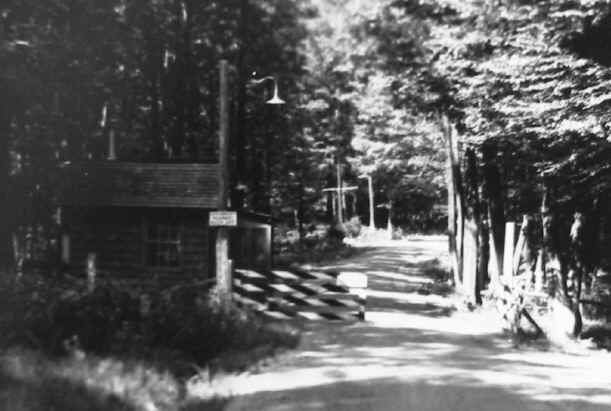
the first CCC Camp S-51 329 Co. in Pennsylvania. "S"
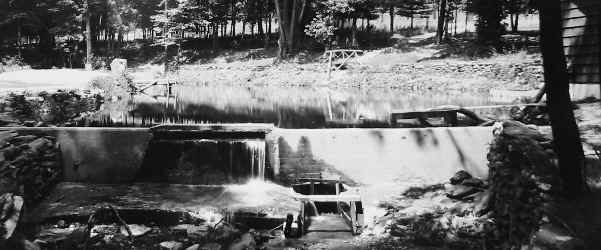
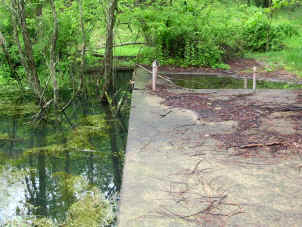
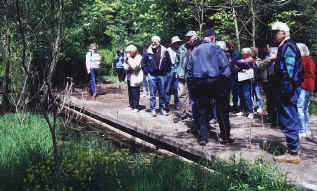
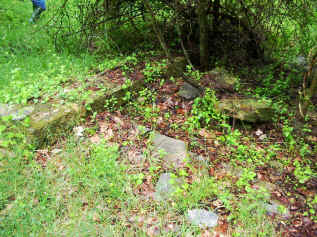
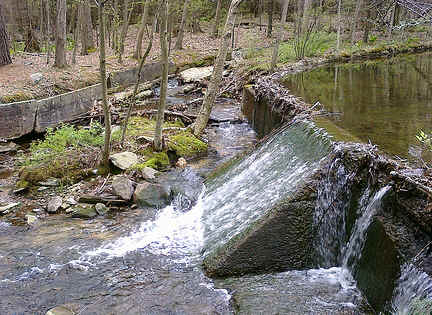
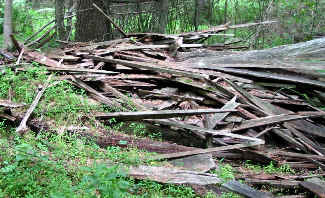
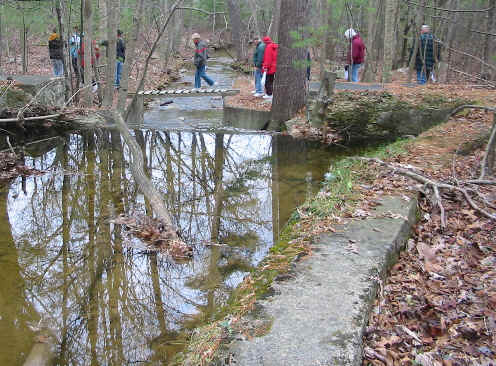
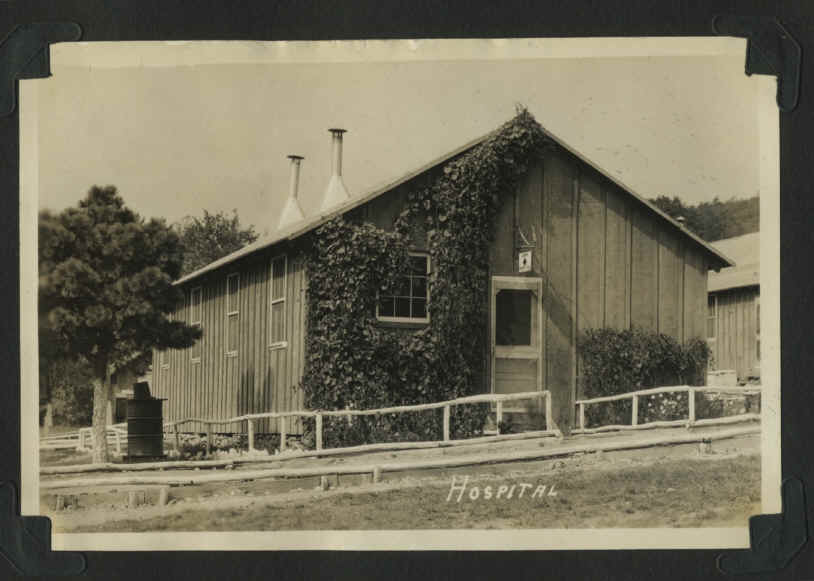
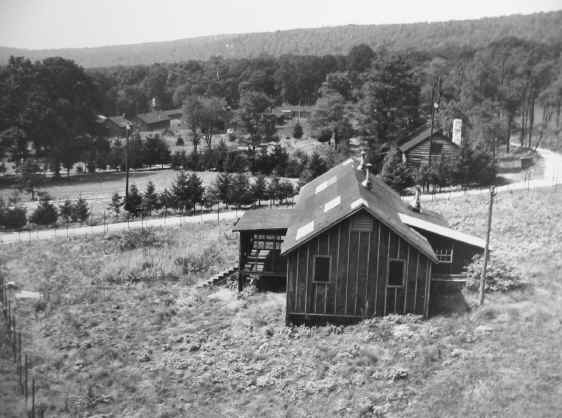
designates the camp is in a state forest. Many of the buildings were sold for their lumber when the church camp closed. The Infirmary was moved to another camp in the area. Cross the bridge, at the dam pictured below, to the Lower Service Road. Follow the LSR a few hundred yards to the right (west) to locate the piles of lumber that are the remains of the camp buildings. Turning turn left (east) on the LSD takes you to the Old Swimming Pool, Dam and Raceway You can also access the Lower Service Road at the yellow gate off Michaux Road south of the main camp entrance.
|
|
Camp Pine
Grove - CCC Camp
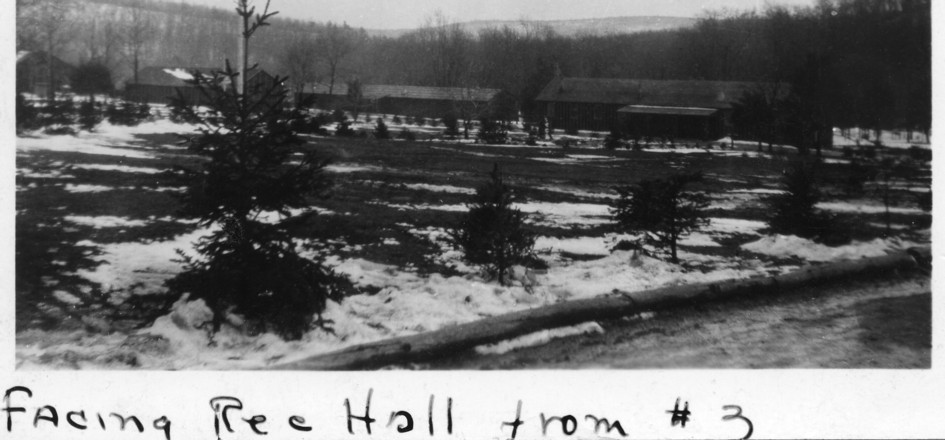
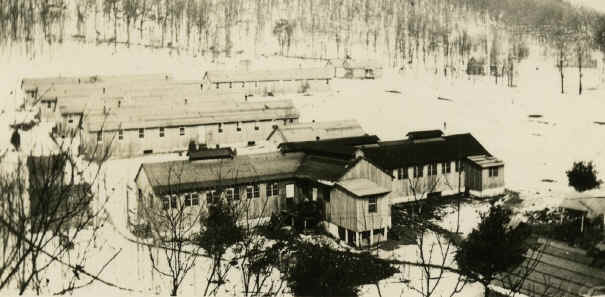
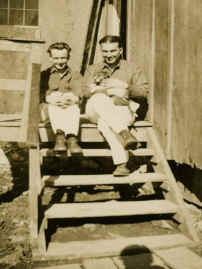
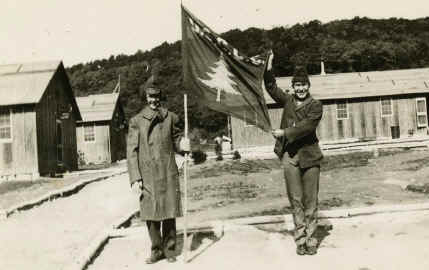
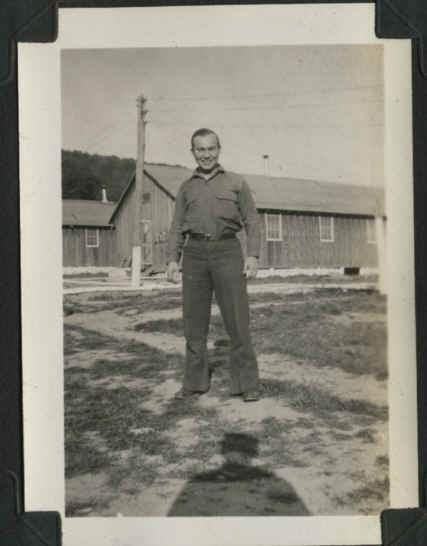
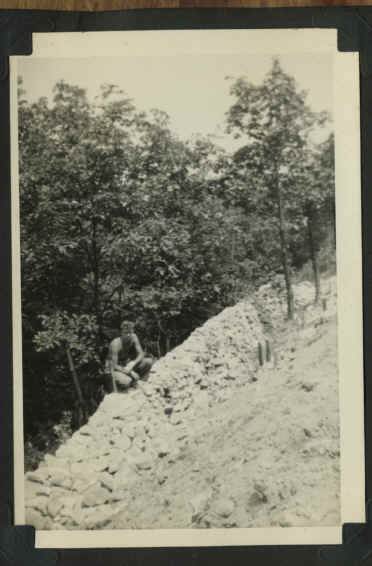
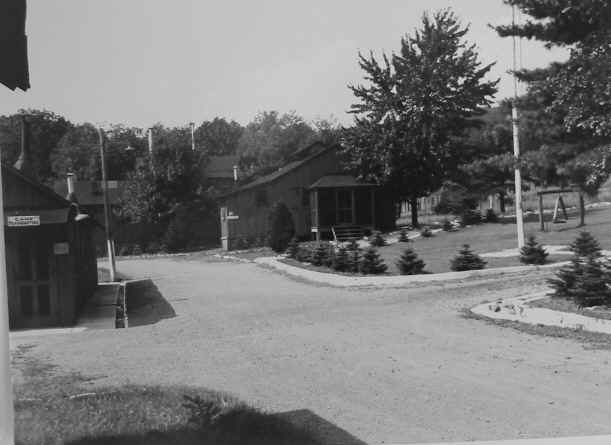
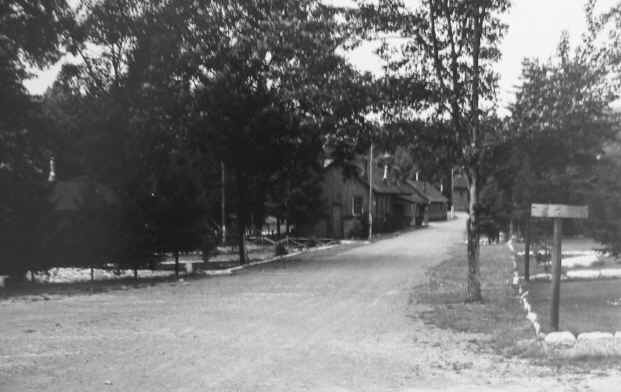
Very Early Pictures of the CCC Camp - 1933
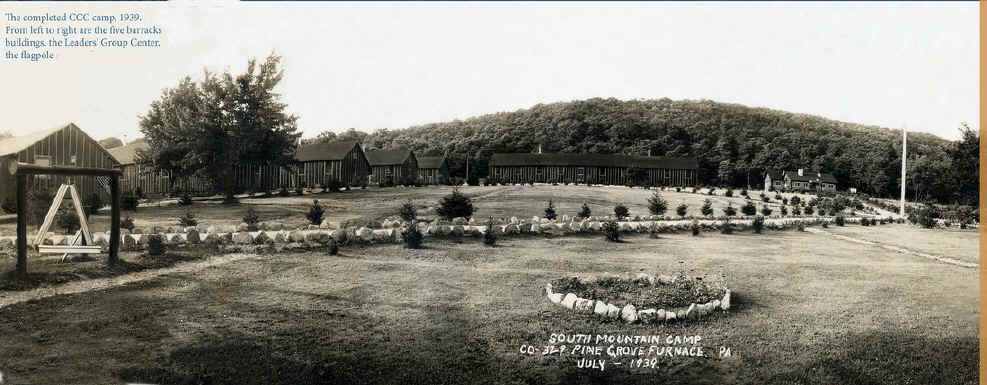
Finished CCC Camp in 1939
Film footage from
Pennsylvania CCC camps that includes the Pine Grove Furnace Camp
S-51-PA is now available online at the
Pictures
of CCC Camp by Kenneth Pyles
On 11/9/2017 11:27 AM, Vince
Montano wrote:
Photographs of CCC Camp scanned from negatives at the PGF Park Office in June, 2004.
Transition form CCC Camp to POW Camp
Camp Pine Grove -
POW Camp 7313 Germans
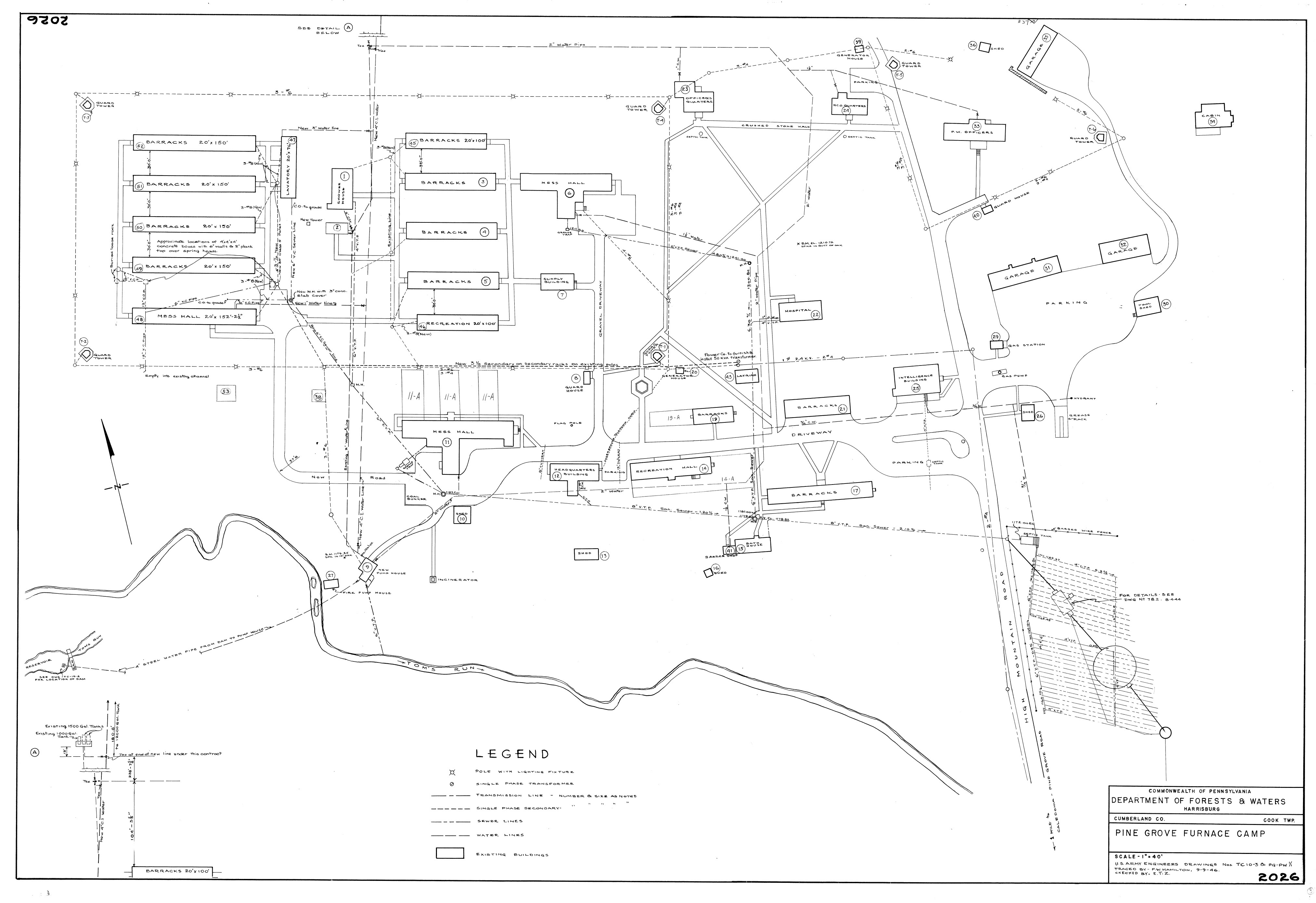
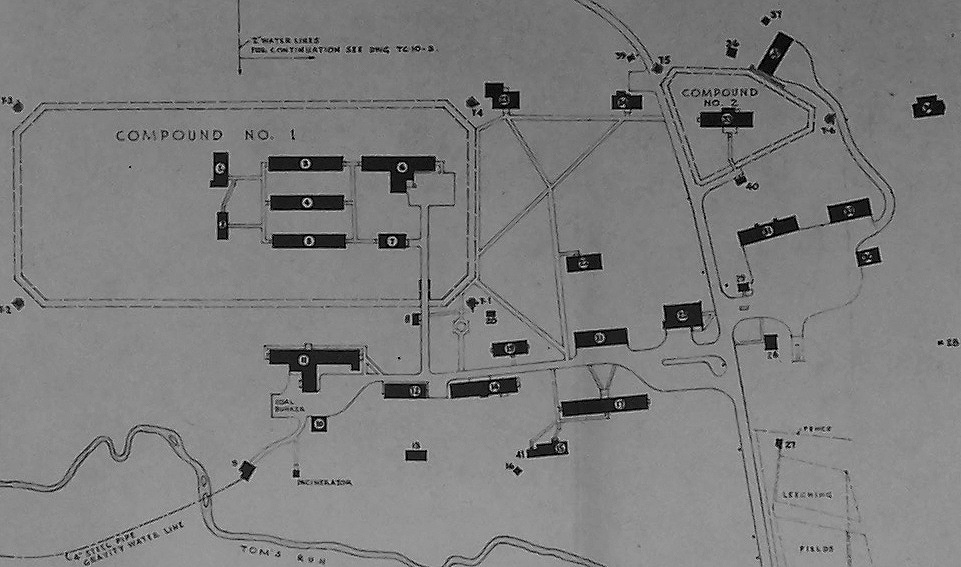
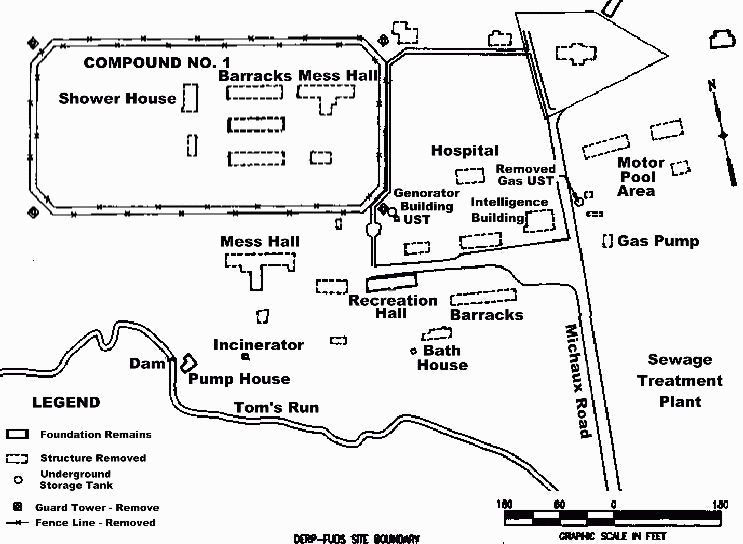
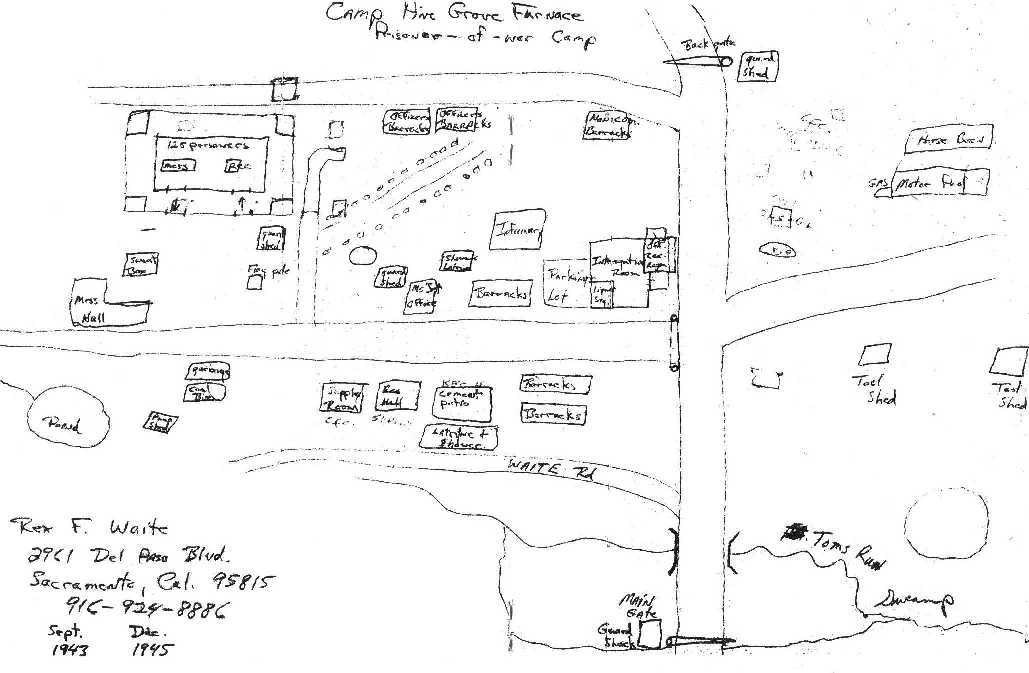
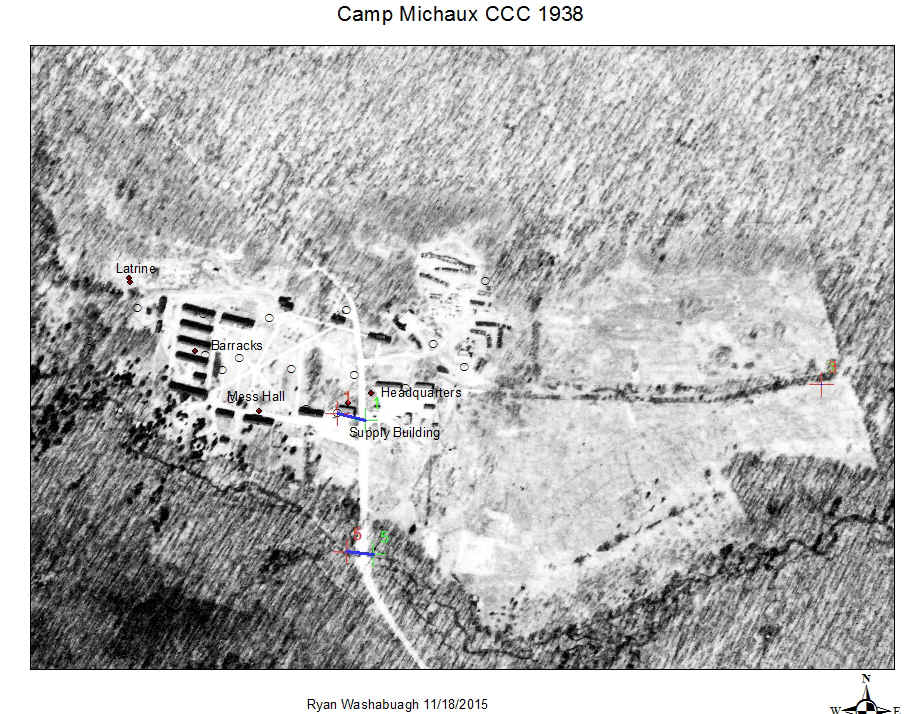
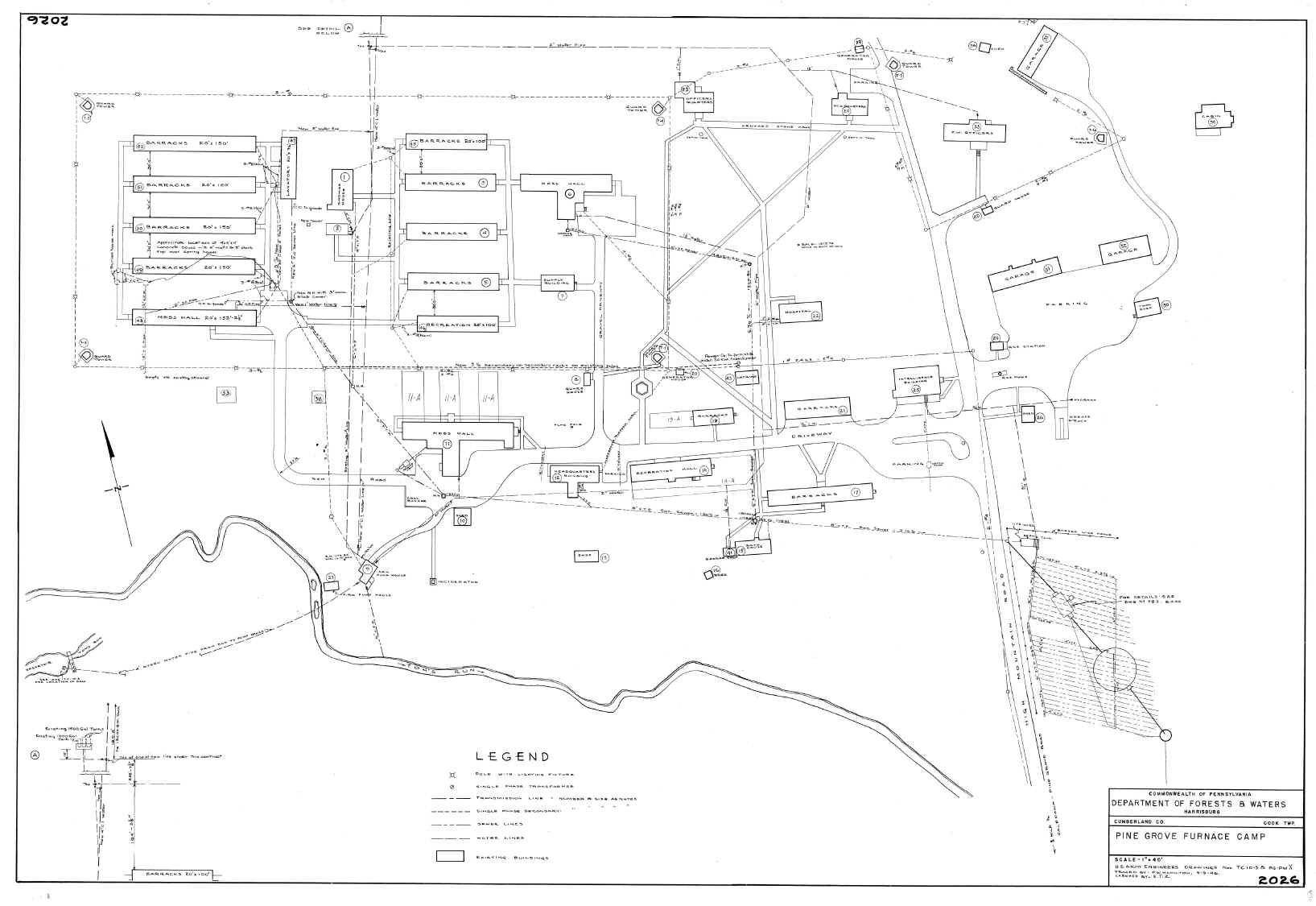
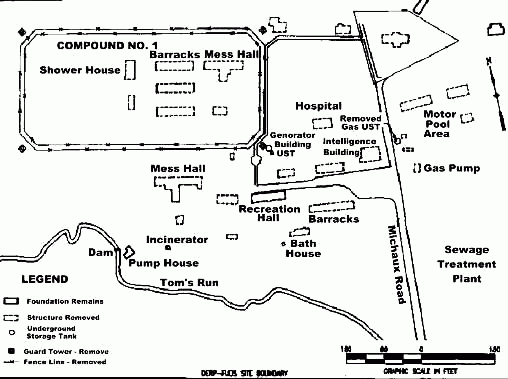
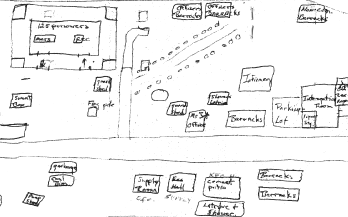
CAMP MAPS
1945 DCNR Map showing
the barracks added for the Japenese prisoners
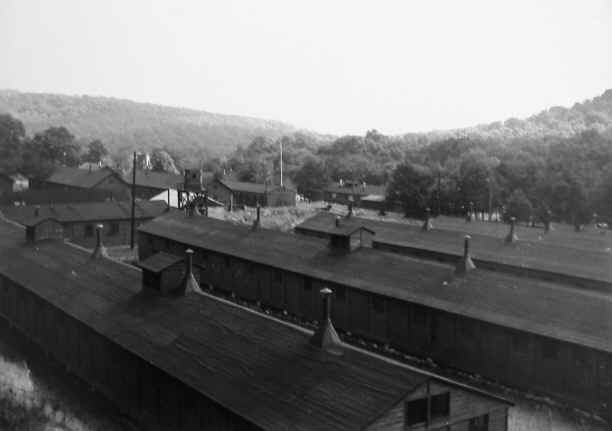
POW Camp photographs scanned from pictures and negatives at the PGF Park Office in June, 2004.
|
||||||||||||||||||||||||||||||||||||||||||||||||||||||||||||||||||||||
|
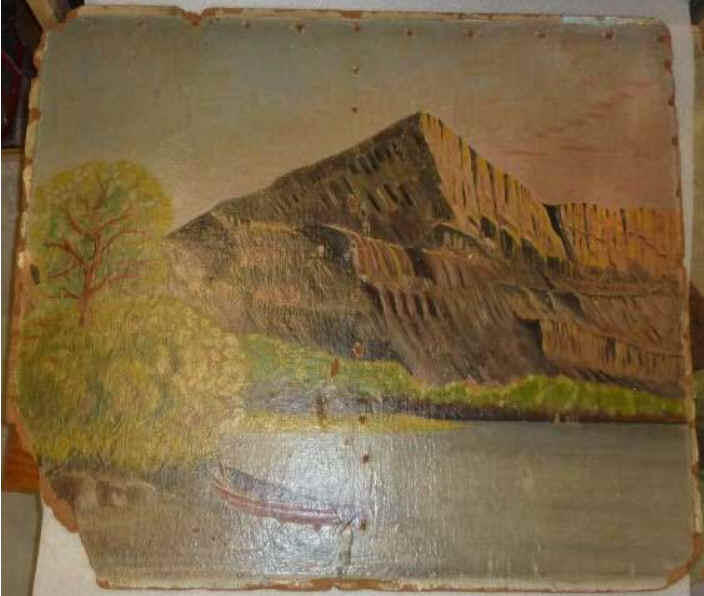
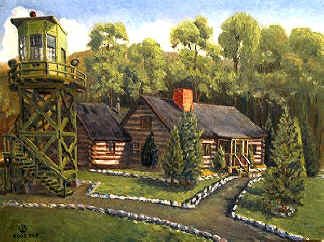
POW Paintings Four of the paintings
done by POWs on the barrack walls still survive in the new Michaux
Lodge at the
1947 - 1972
Definitive
Church Camp Map Legend
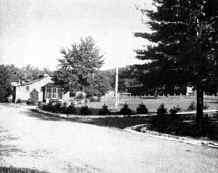
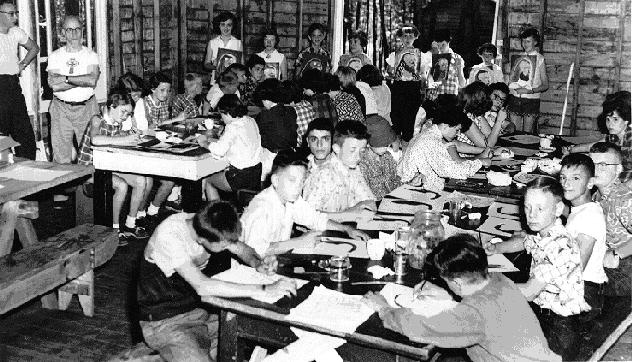
Church Camp Photos
"I found your site after talking to Bruce Druckenmiller at
the Hartman
Center. I believe you have seen the
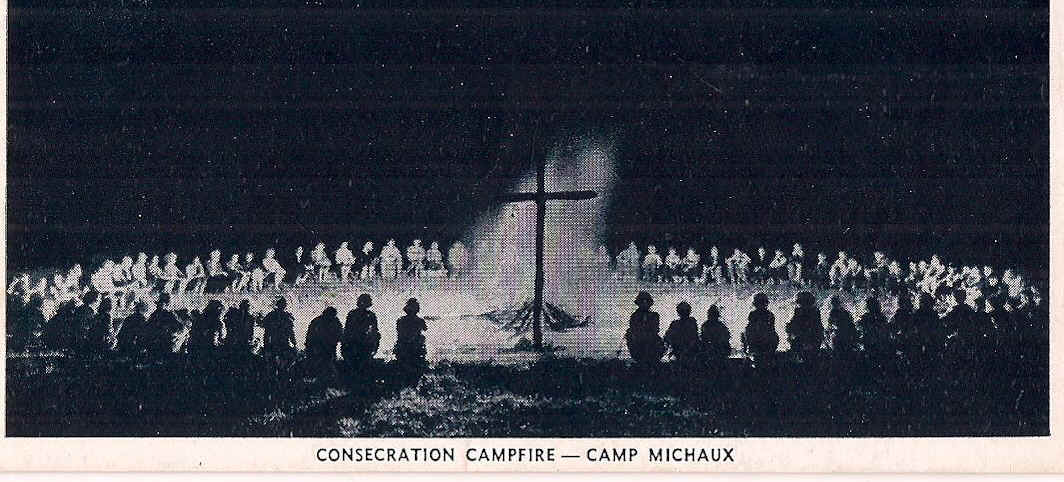
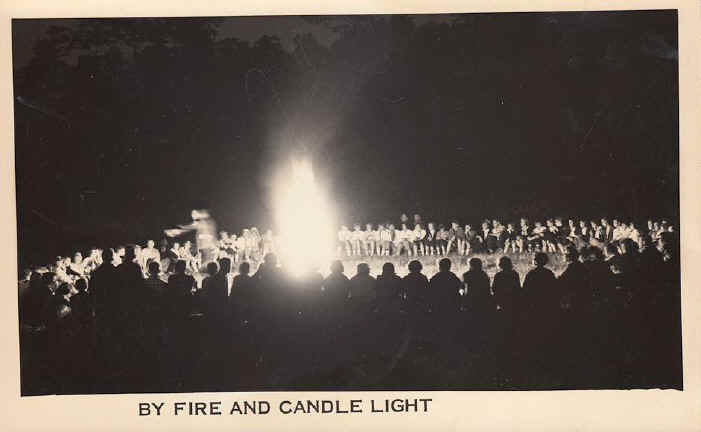
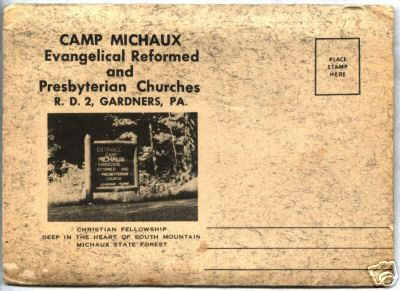
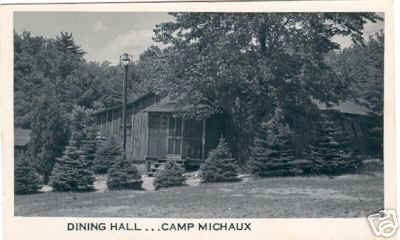
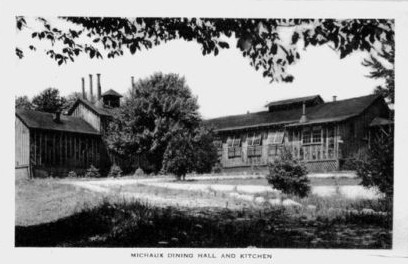
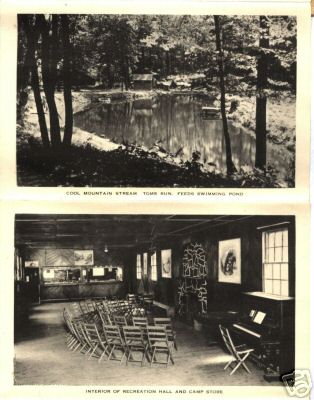
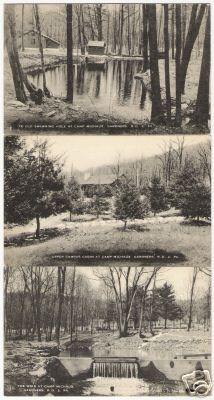
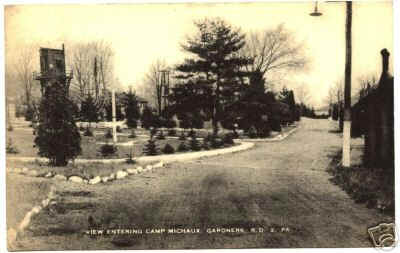
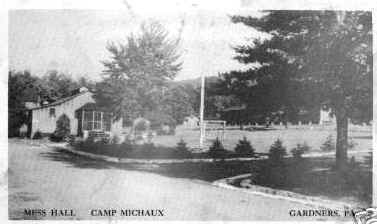
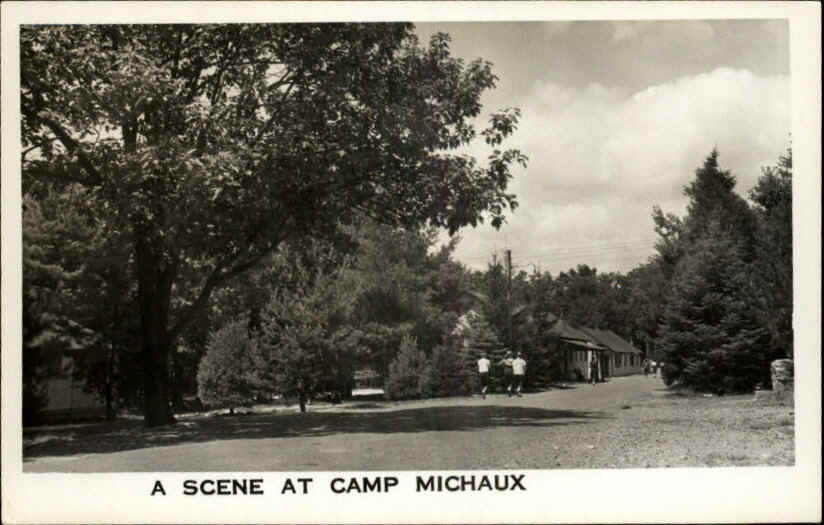
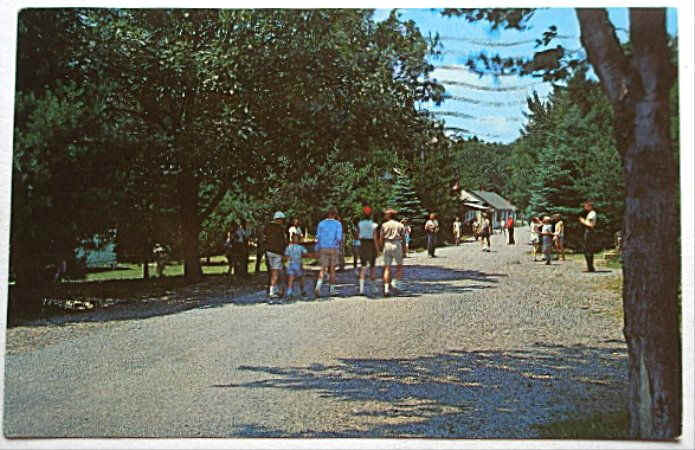
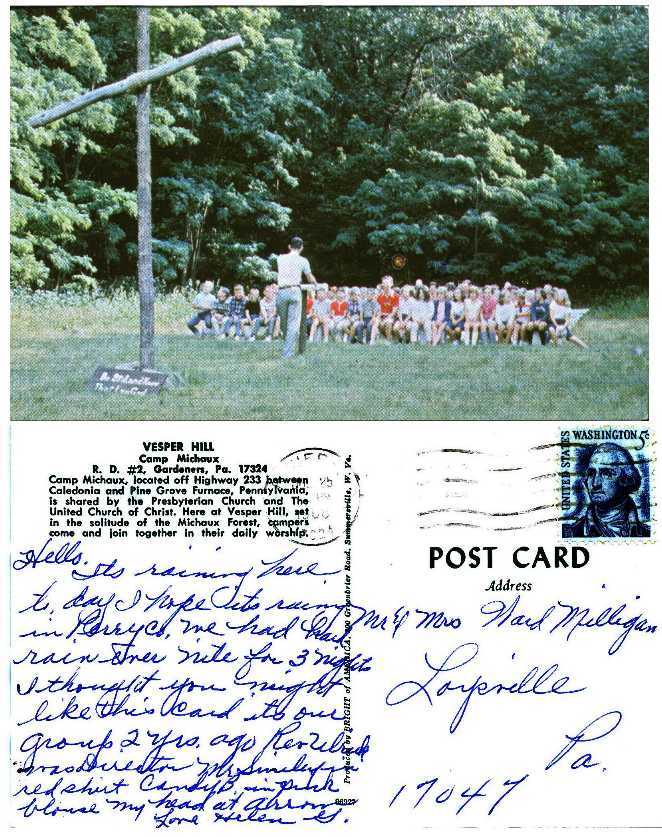
Church Camp Postcards
The following cards
are from a third set with a different style of captioning.
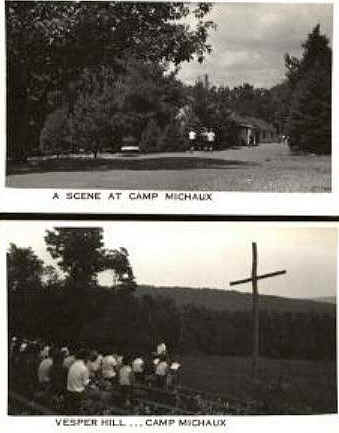
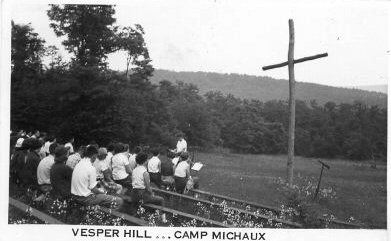
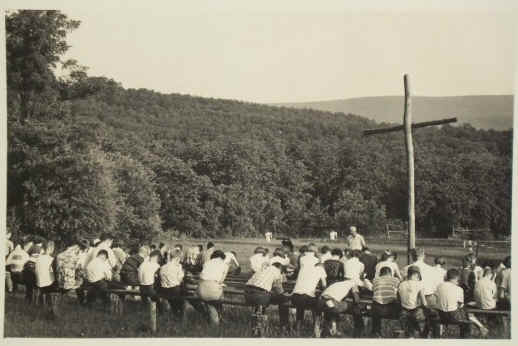
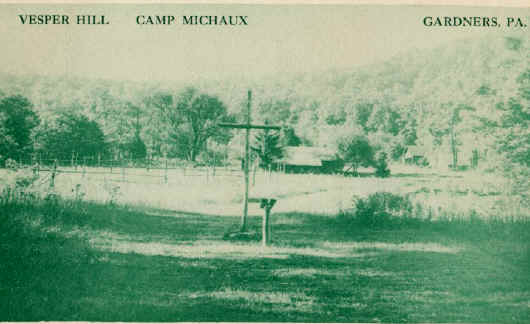
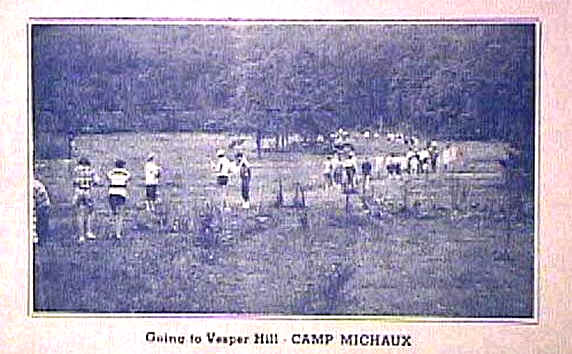
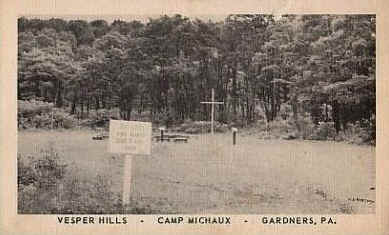
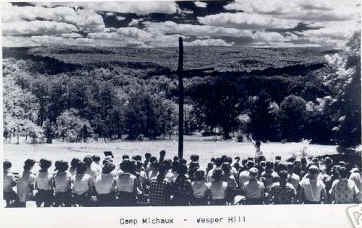
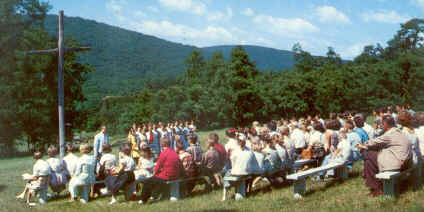
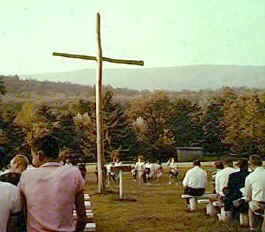
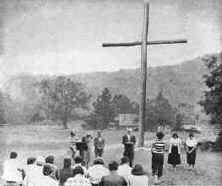
Vesper Hill
|
||||||||||||||||||||||||||||||||||||||||||||||||||||||||||||||||||||||
|
||||||||||||||||||||||||||||||||||||||||||||||||||||||||||||||||||||||
|
Historic
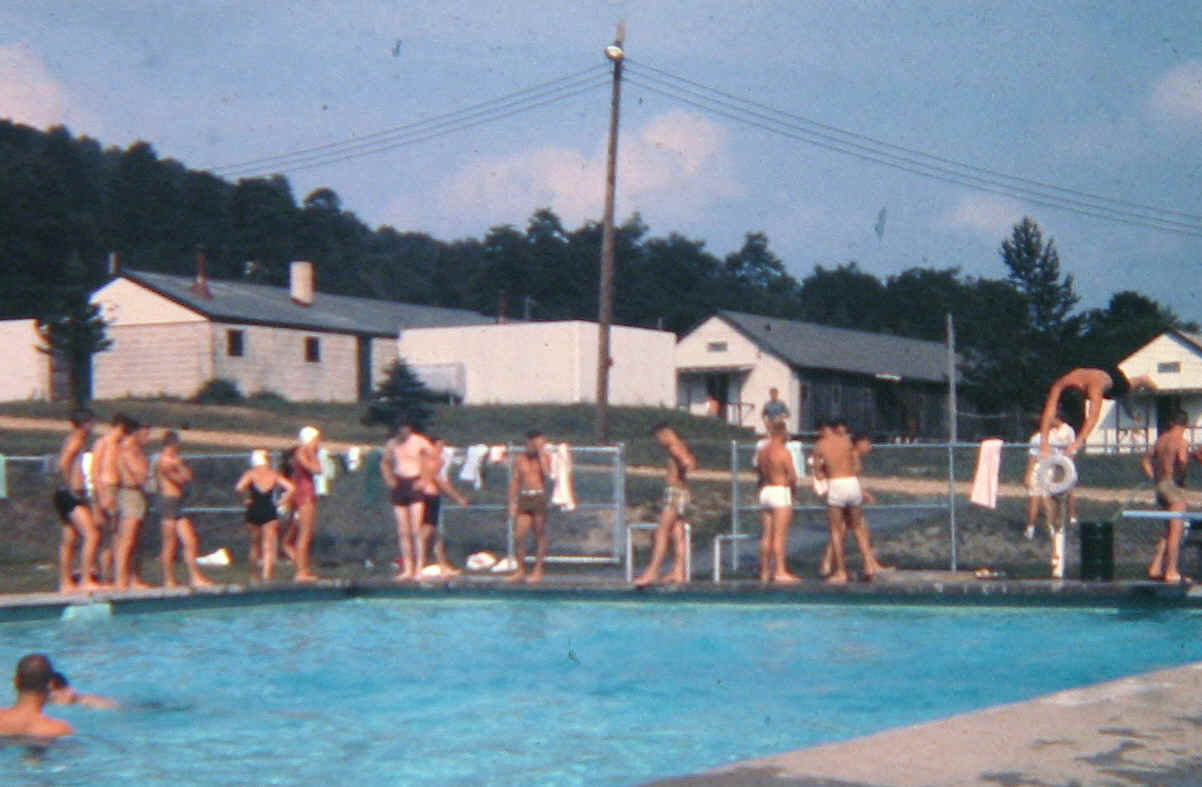
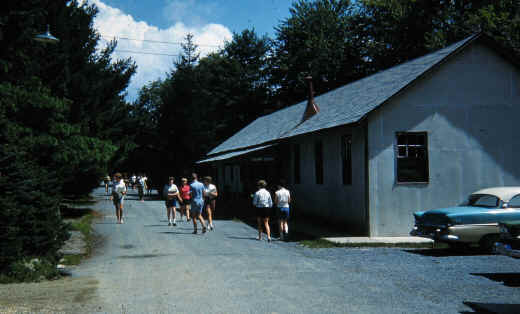
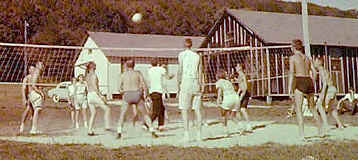
pictures below are from my faded 1959-61 slides. |
|||||||
|
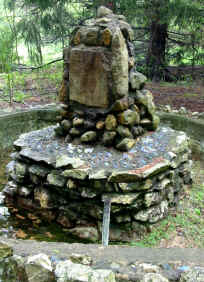
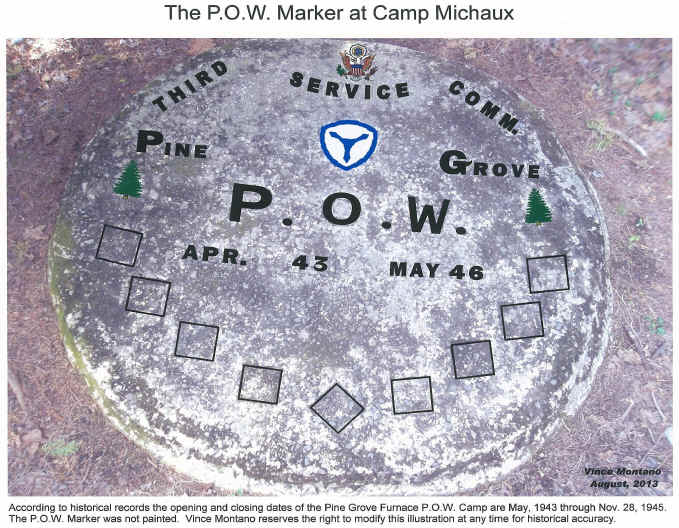
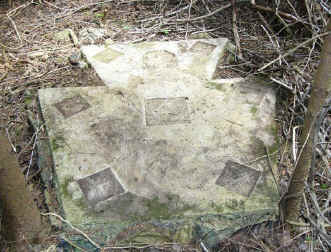
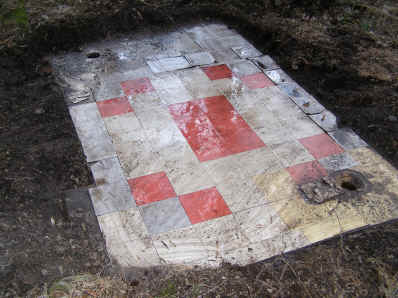
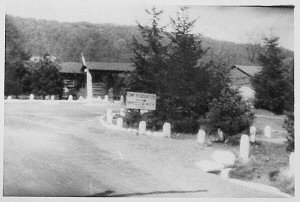
Located on the north side of the main camp road about 150' from the entrance gate. It seems to have been constructed at the end of the POW era since it lists the date the POW camp was closed and contains the emblem of "The Third Service Corps" which ran the camp. The squares may have been just decoration or once contained other emblems that have been removed. |
The marker is now one of the few identifiable
remnants. Note that the shrubs are now trees and the
marker has sunken into the ground! In a few years it to will
probably be totally overgrown. |
||||||
|
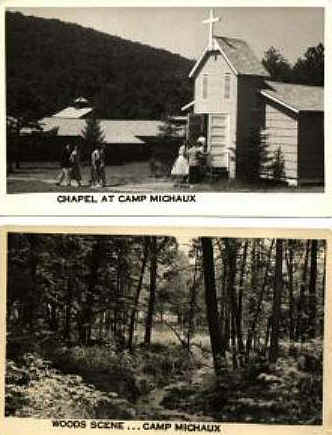
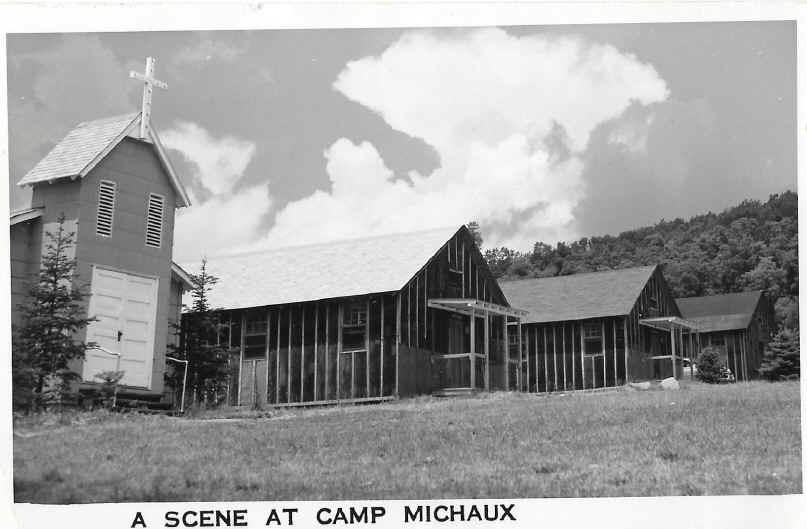
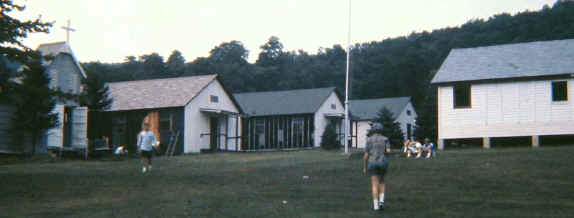
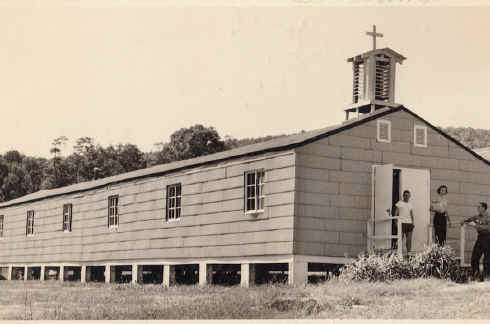
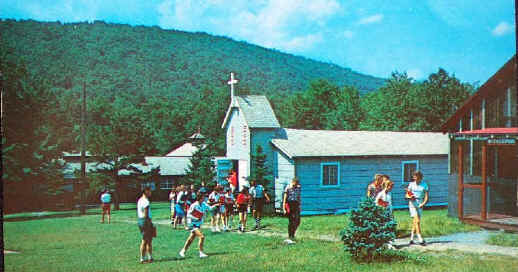
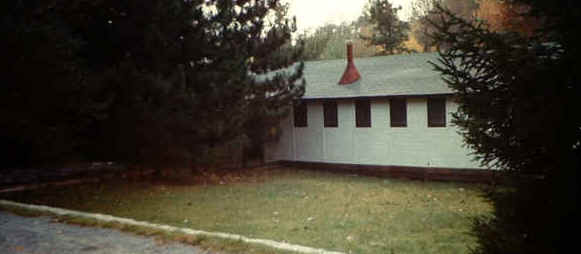
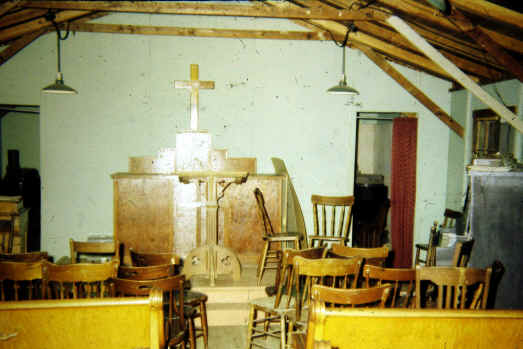
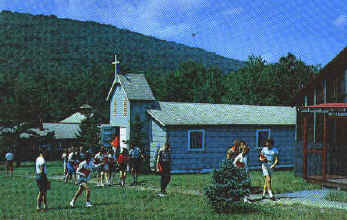
Showing construction details of the barracks. Choir practice was held here and the director taught us to sing "Let Us Break Bread Together" as 'When I fall on my face with my knees to the rising sun' - which is impossible to unlearn! Due to decay, the Chapel was torn down about 1970 and their are no remains. |
Looking south towards dinning hall. The Chapel was one of the CCC
and POW barracks but had new siding and entrance added. The
height of the trees can help establish the relative dates of pictures of
Chapel pictures. |
||||||
|
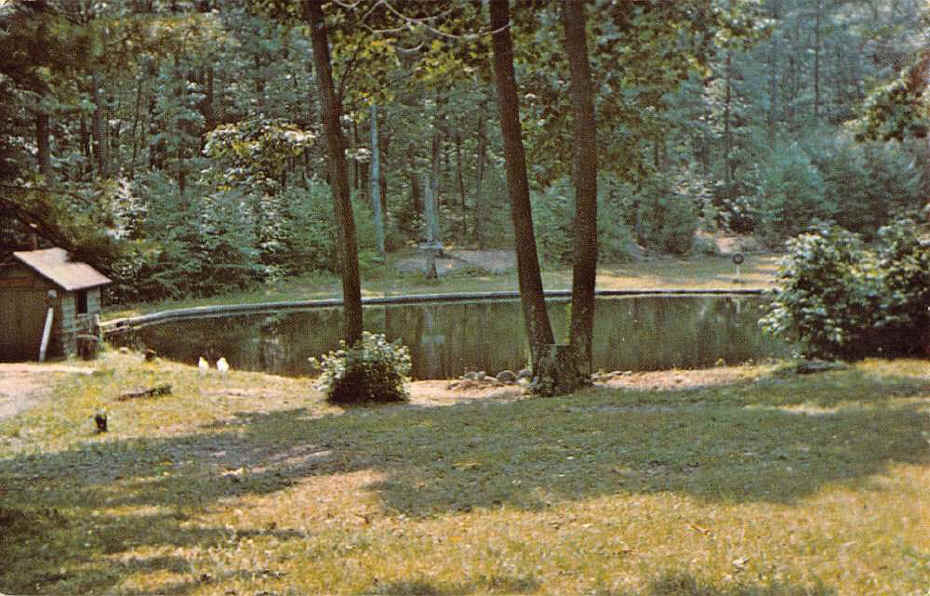
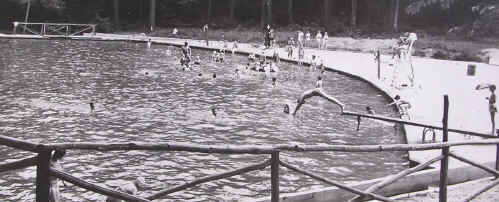
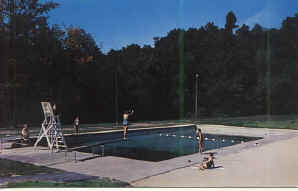
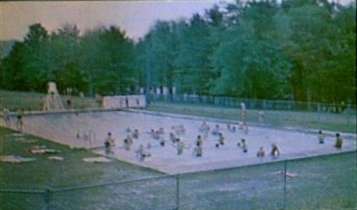
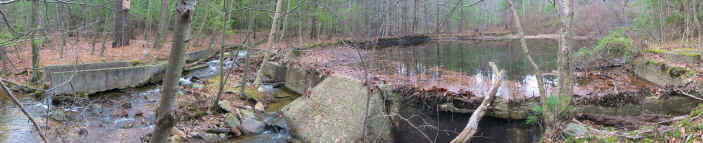
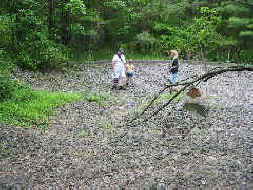
The diving board mounts at the end of the swimming pool that is now a swampy pond. It is one of the largest remaining features but the hardest to find! The remains of the pump and filters can be found under the pool deck. |
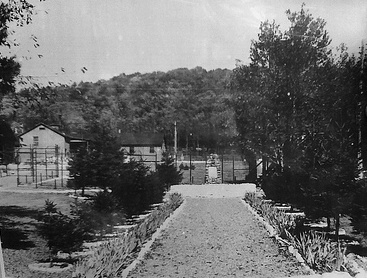
The "Pavilion" and "The Steps to Nowhere" are out of the picture to the left. The chapel is the building in the right background. Pool was completed in 1954. |
||||||
|
|
|
||||||
|
A 2009 "walker" says that he
checked the direction and it is dead on to true north. Magnetic
compasses have a 10 deg. declination at the camp. |
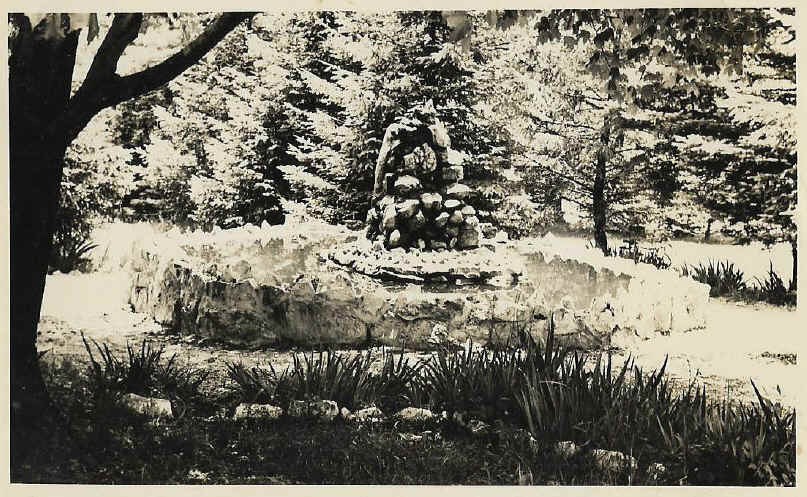
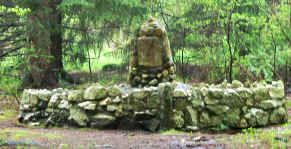
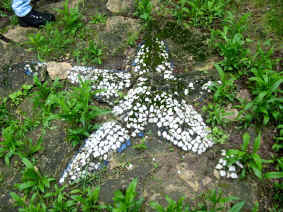
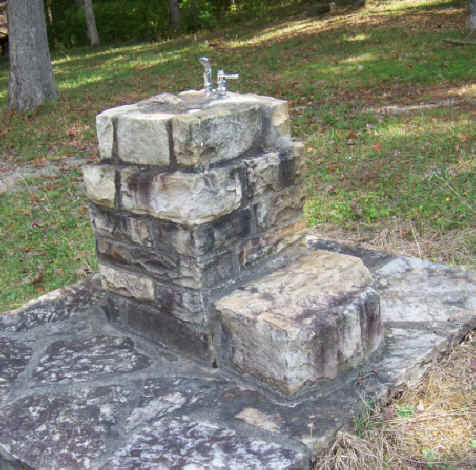
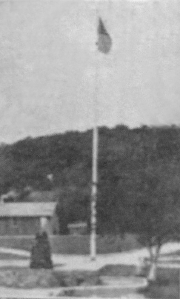
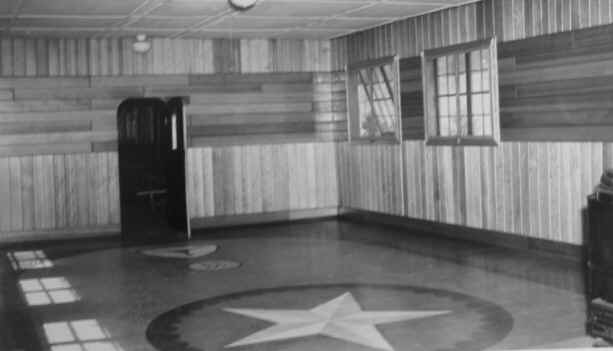
If you stand at the fountain and walk up into the clearing to the NW (see picture above), you can still find the "star" down the hill from the flag poll. There is a small hole in the center of the star but not big enough for a flag pole. No one know what it was for. Walk to the west to find the footers for the upper barracks. Past the barracks, the pool is down the hill. Up the hill is the "Pavilion" floor, the "Steps to Nowhere" and the Upper Service road.
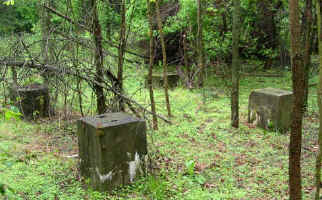
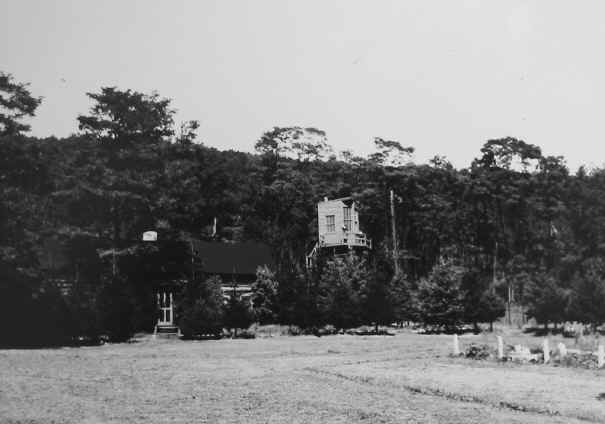
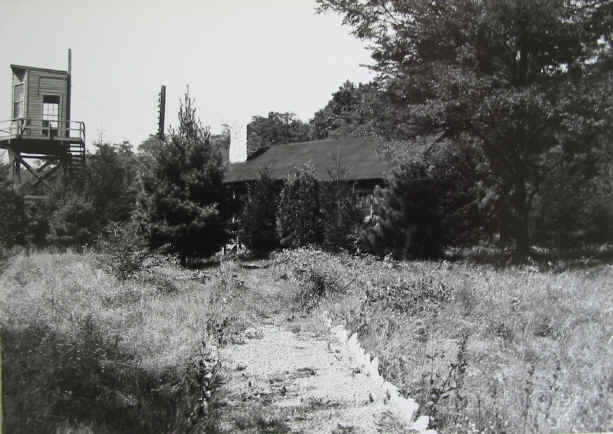
Looking north-west from main road. You can still locate the remains of three guard towers which will be four concrete blocks about 8' apart. One is located near the fountain and the other further up the hill near the service road.
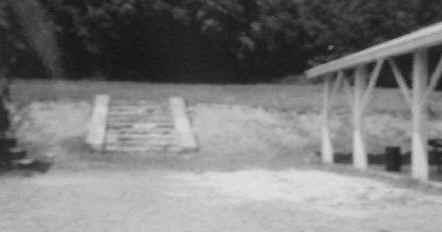
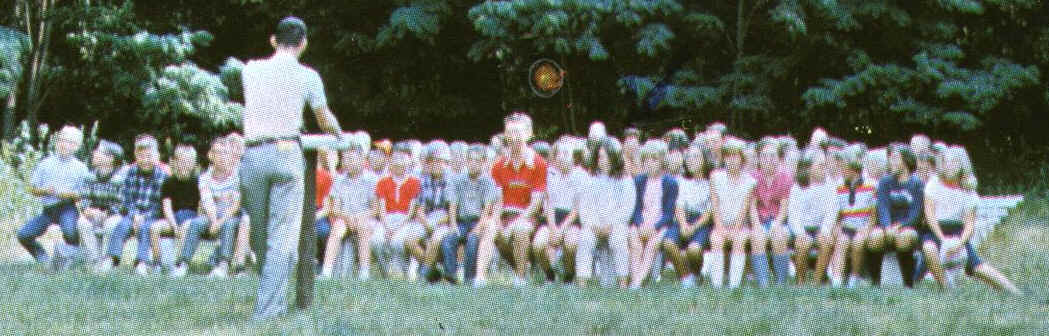
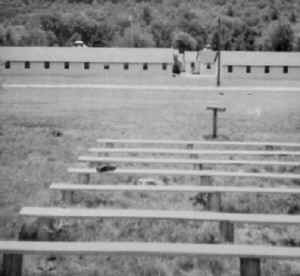
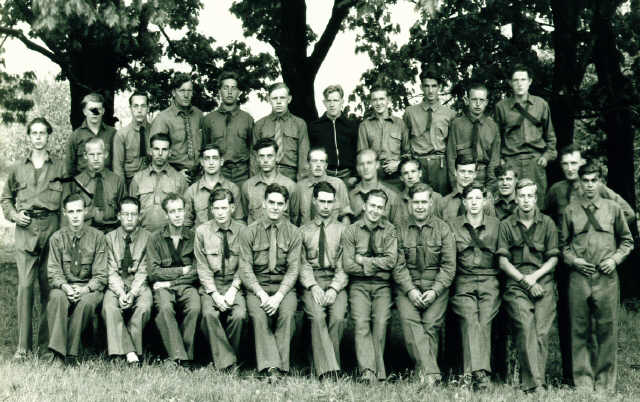
The steps where the group photos were taken can be found between the Pavilion floor and the Upper Service Road. They are so overgrown that they are easy to miss. The are just below the sign for the sign for the NWRF nursery north of the upper service road.. |
||||||
|
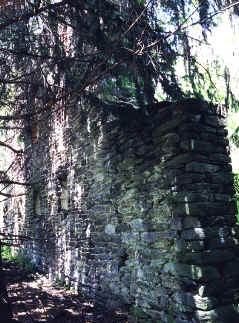
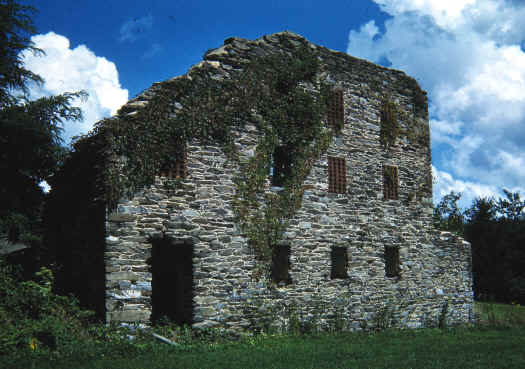
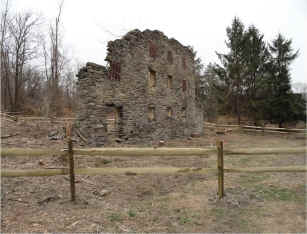
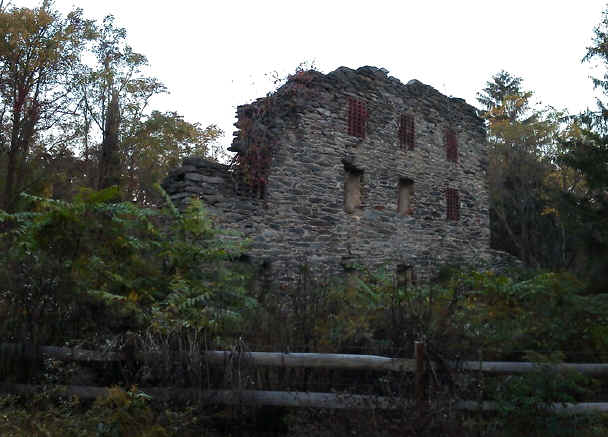
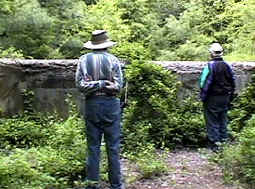
The wall still stands but was completely hidden by massive pine trees for many years! The area was cleared by the PA DCNR in the spring of 2011 It is located just north of the AT as it cuts across from Michaux Road to Bunkerhill Road. |
In 2009 the scrub has been cleared out and the trees trimmed but the wall is cracking and in danger of collapse. The cleared area is rapidly being overgrown again. |
||||||
|
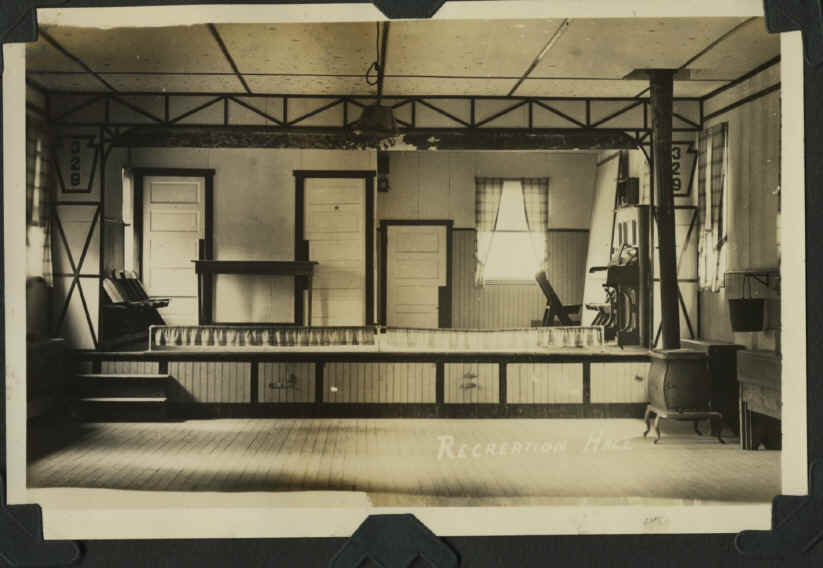
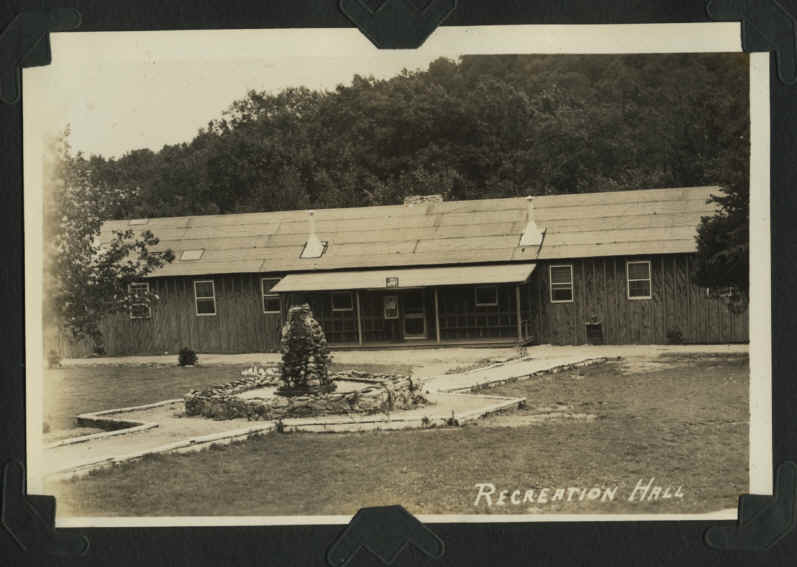
The chimney is connected to the old metal stove shown in the foreground of the adjacent picture. Remains of the concrete basketball court can be found behind the Recreation Center.
|
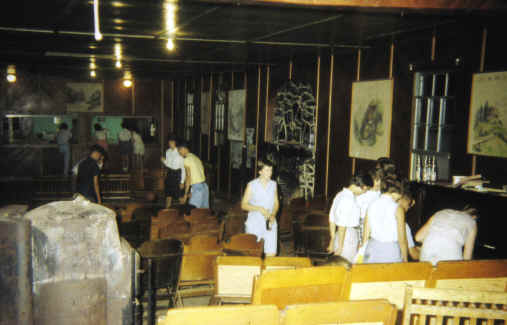
Here on the walls were displayed the best examples of the POW artwork. They were originally painted on the fiber board walls of the barracks and were removed and framed. Many were landscapes from Germany but some were of American subjects. The CCHS has acquired five of these paintings. |
||||||
| Do
you have any pictures? They say it takes a minute to find a special person, An hour to appreciate them, a day to love them, and then an entire life to forget them. |
|||||||
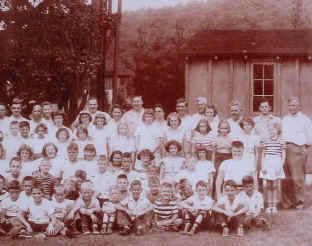
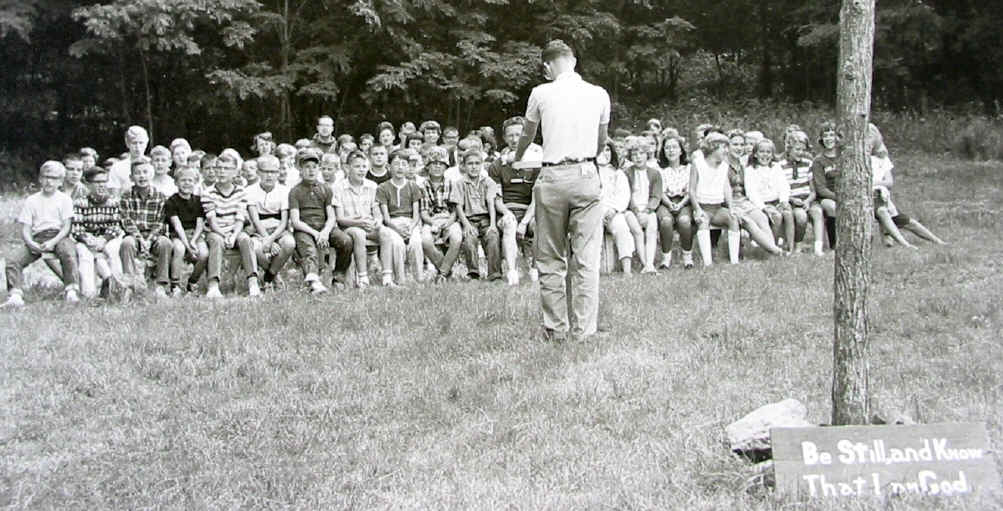
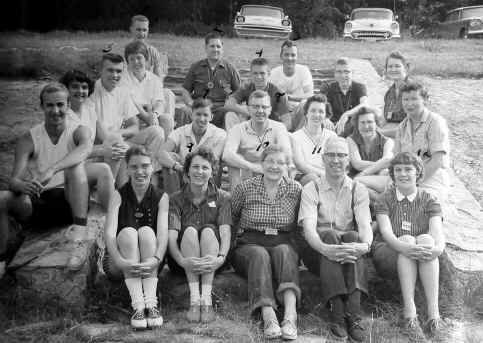
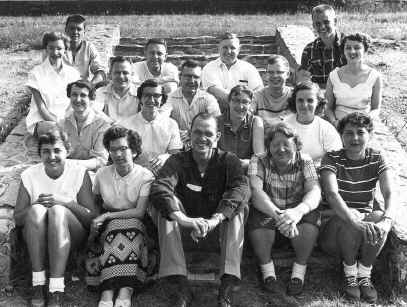
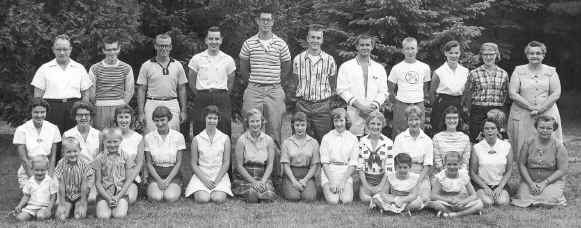
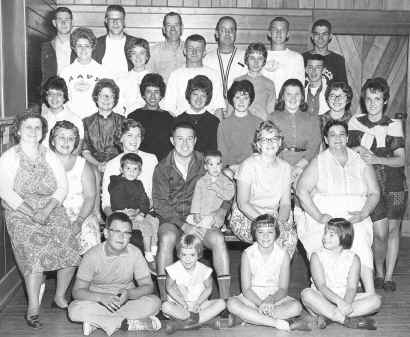
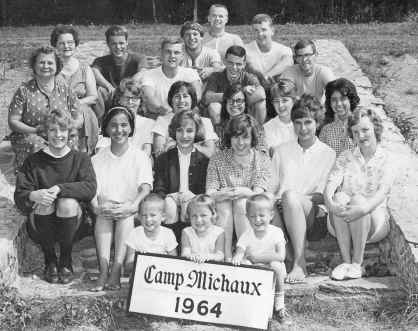
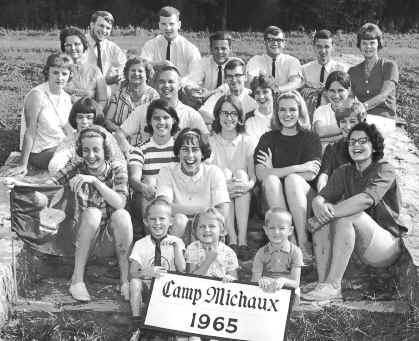
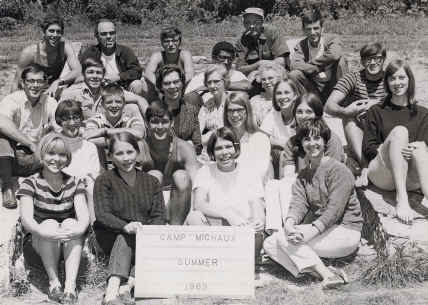
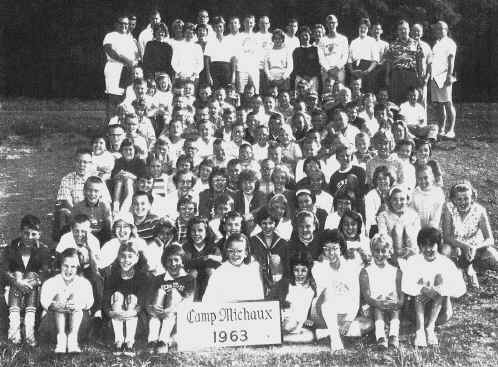
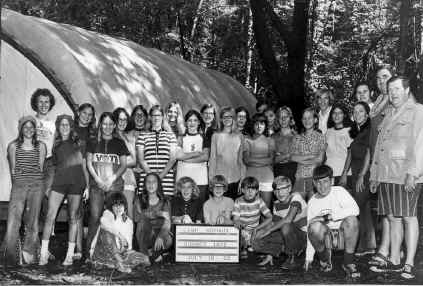
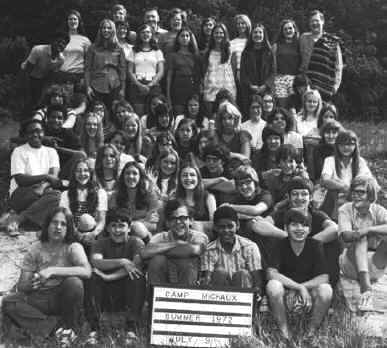
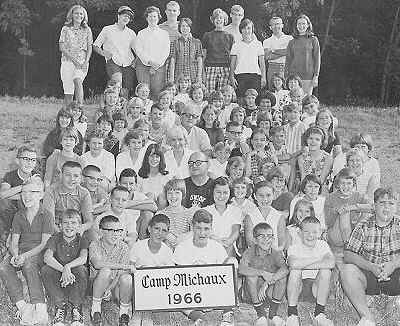
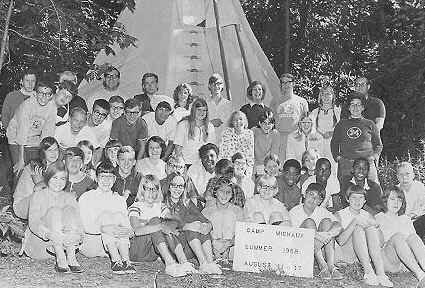
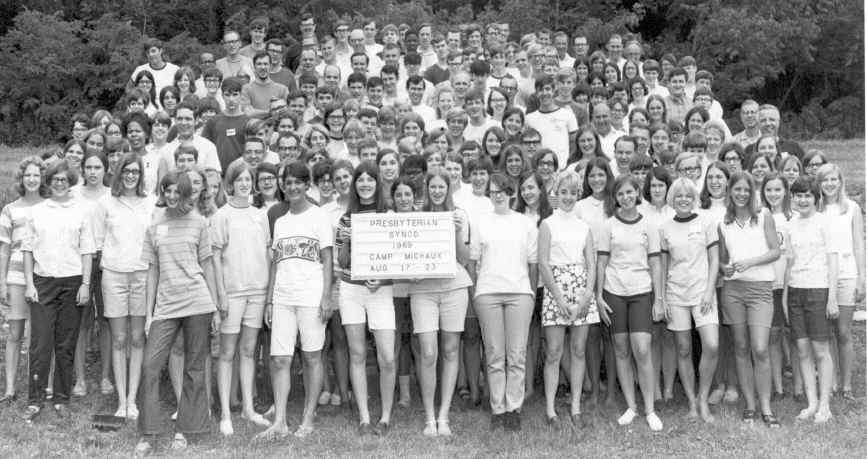
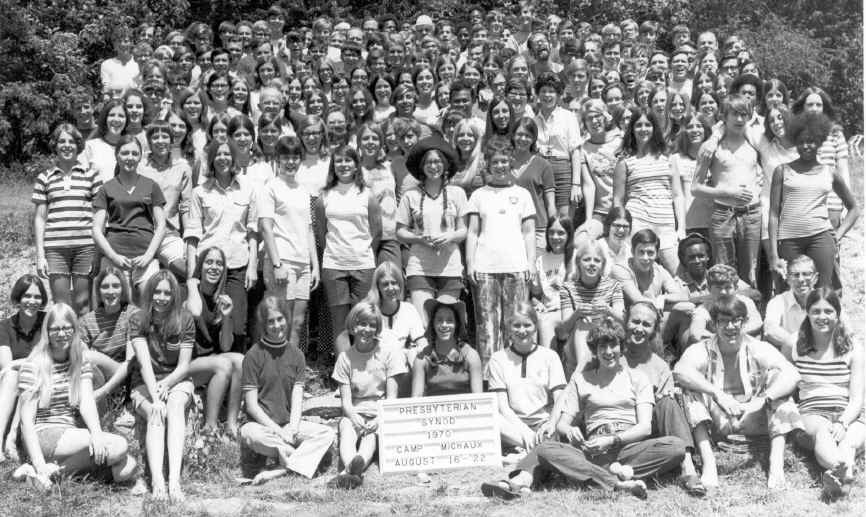
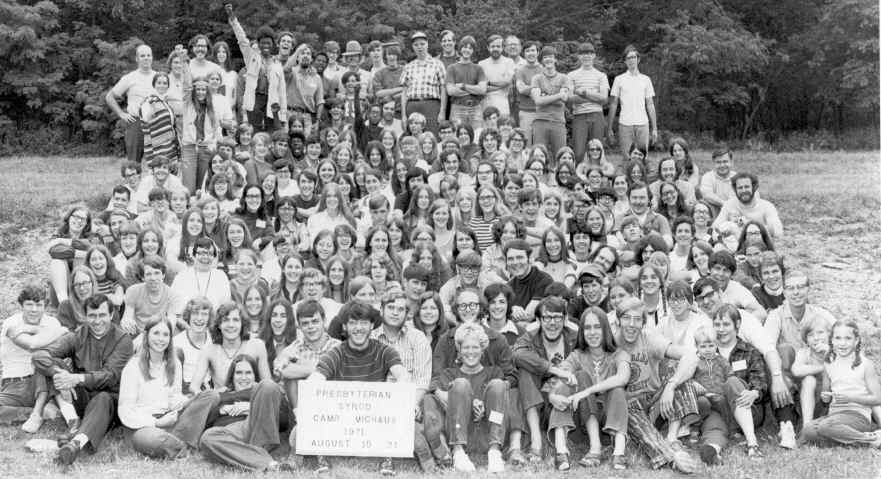
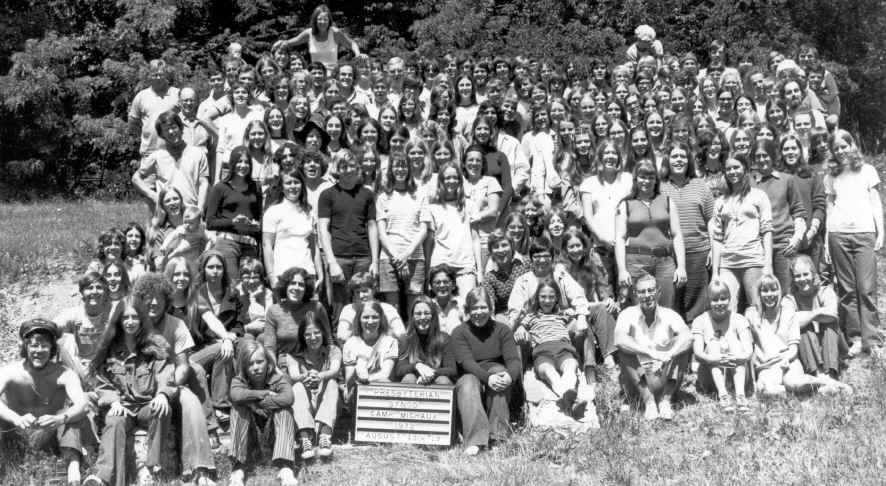
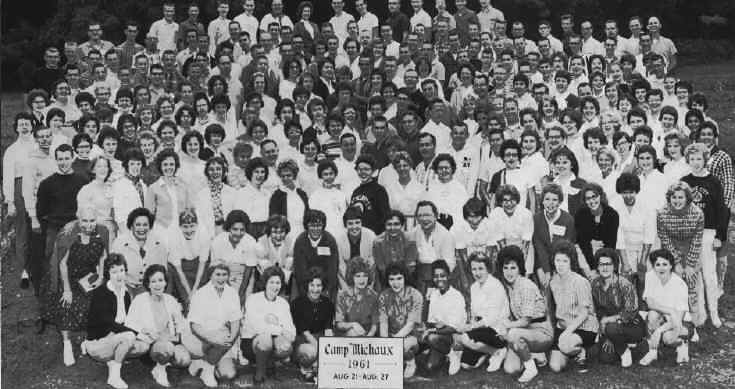 Presbyterian State Wide Youth Leadership Conference 1961 Aug 2-27? (Wrong dates since it was only a one week camp.) This is my camp picture the last year I was there. I'll be glad to e-mail you a CD with all the group pictures I have collected. If you have any group shots, please scan them and send them to me.
The brochure was reproduced from a copy that was sent to me by J. G. - Oct 2003 |
|||||||
|
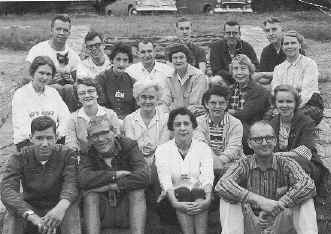
Camp Michaux Reunion
Hosted by: Gary Fisher (Squirrel) [email protected] Also present was Lisa
John, who at the time was a state park ranger working on a brochure and
walking trail of the camp.
|
|
"Just to let you know Lee I will
soon be sending you a bunch of group pictures from when I was a camper
in the 60's and a staff person in '71 & '72. I absolutely
love your site...thanks so much for keeping Camp Michaux alive!"
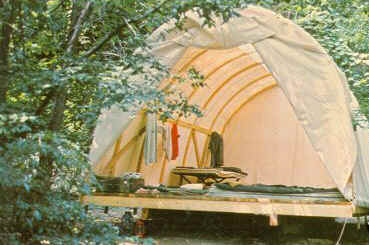
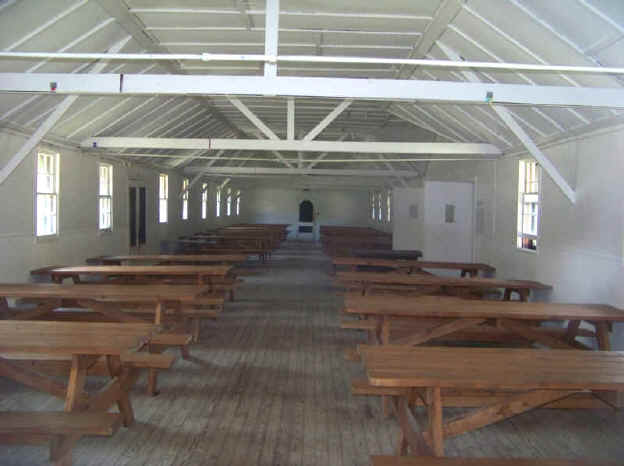
Greetings! I was a camper there in the middle Sixties, I am thinking 1965 or 66, staying in the barracks up the hill and then a two or three years later ( 67 or 68) in the "pioneer" area under canvas. I don't remember a lot of details about the barracks, other than being fascinated by some of the names and such carved into the superstructure of the building, eating in the mess hall, with as some else mentioned, the "bottomless" milk dispensers. I also remember one craft in particular, where we embedded flowers in what I guess was an acrylic plastic of some sort in a paper tray. I too remember the singing, vespers, and preparing small gathering areas in the woods, complete with rock lined walkways and dirt swept clean by tree branches. The Pioneer camping was different. I remember the names of two of the young adults that were our chaperones, Bill Metzger and girl named Connie. That year we dug a pit and roasted a whole suckling pig for the meal on Thursday, if memory serves me correctly. I also remember our band of campers walking through the woods one day and an individual stepped on a downed tree trunk instead of over it and stirred up a huge air force of hornets which promptly attacked everyone in our group. Then came the walk back to the infirmary with numerous stings, all of us "hurting puppies". It's a darn shame that the Churches let this site go. I've been to the Hartman Center and occasionally pass by there on trips to northern PA. It didn't have half the character that Michaux had. I will make it back to Michaux before I die just to see what I can recognize and remember. I do have a question. I remember a rectangular one story building, east of camp cover in tar paper with a couple of windows and a door next to a gravel road. That interesting thing was that someone had used a stencil of a "playboy" bunny head and painted a white "bunny" next to the door. Does anyone remember ever seeing such a thing in their travels around camp?
To answer this question, the barrack was named "Trail
Lodge", it housed the male staff. It was located in front of the
old barn wall along the AT. The life guards, and work crew stayed
there. In the center of the barrack was the "common" room,
with single crew quarters off both sides.
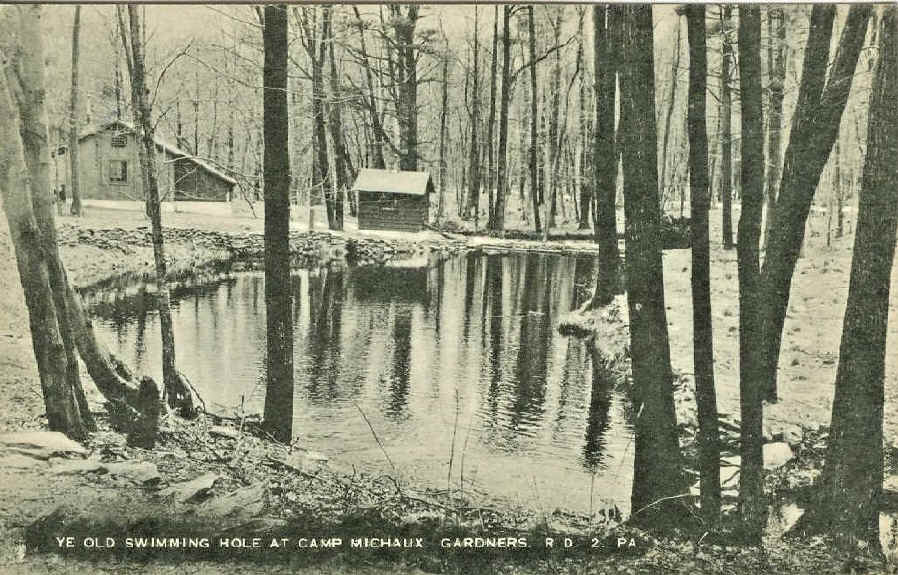
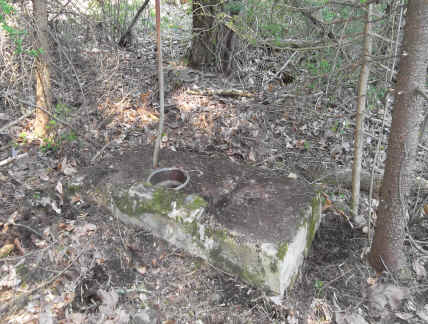
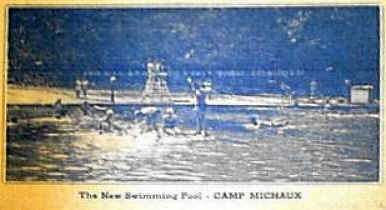
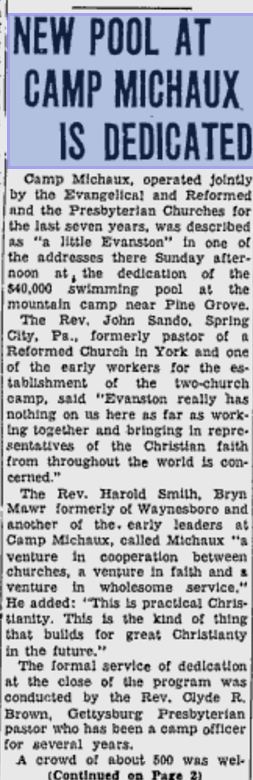
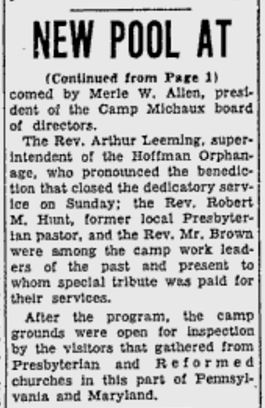
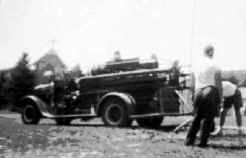
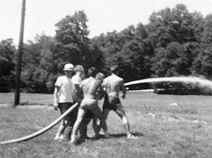
-- Gary Fisher, staff 68, 69 Dear Lee, Your surmise about the picture of the "old swimming hole" is correct. As I recall, the churches enlarged the pool, put in a sand bottom, sluiceways to channel in the water, concrete walls and a diving board sometime in the very early 1950's. The sluiceways formed a "Y" with Tom's Run about 100 yards upstream from the pool. One sluice channeled the Run and emptied back in to the stream bed below the spillway of the dam. The other sluice entered the pool at the side opposite the dam up toward the road. There were slots in the walls of the base of the "Y" so boards could be put in to control how much water went up each arm .You can see these sluices in the photo of the "new' pool. I can remember going to Michaux with my Dad when he was director of camping for the Mercersburg Synod of the E & R church in the late 40's and early 50's. I seem to recall the old pool . By the time I was a camper in 1953, I believe we used the "new" pool. This is all from memory which is subject to failure as I get older but those are my impressions. There might be a way to check all this out. At the time, capital improvements to Michaux were not part of the operating budget for the camp and were paid for by the judicatories involved. If the records still exist, they might be found by contacting either the Carlisle Presbytery or Penn Central Conference of the UCC (at that time Mercersburg Synod of the Evangelical and Reformed Church) to see if they have any record of capital expenditures in that time period. I don't recall the pump house in the location it appears in the postcard picture. There was a pump house to the left of the "new" pool as you faced it from the dining hall. It was between the pool and the incinerator and new office building. As far as I can remember, it had an inlet in the pool and was used only for pumping water through the fire fighting system. The building housed a pump with a 6 cylinder car motor that I can remember Bill Hockley firing up when we did fire drills. We accused him of goosing the pressure up on the pump to see how many of us crew members he could knock over as we held the fire hose. By the way, we used to enjoy those fire drills as it gave us a chance to take the old fire engine out for a spin. Sometimes we got halfway to Caledonia since we wanted to make sure the battery got a good charge. And of course we had to make sure the siren still worked. About the water supply, you are correct about it being
at the upper dam on Tom's Creek. When I was there, there was an intake
structure on the left hand side of the creek as you face the dam about
30 or 40 feet upstream from the dam. As I recall it, it was just a
square concrete box about 2 or 3 feet on a side with openings in it to
let the water in. I don't know when it was built. As I said, I don't
remember where the pump house was since I was not involved with that
part of the operation of the camp but I do remember the intake. It is
quite possible the water supply pump was in the building with the fire
pump and I just didn't pay any attention to it. As far as the tanks
go, at the time I was working there from 1958 to 1970 there was only
one water tank that I know of. It was located on the uphill side of
Michaux I still enjoy visiting your web site to see if there
is anything newt. Thank you for taking on this labor of love.
You've brought back a part of my
past. Bless you.
|
|||||||||||
|
Other Information About the Camp |
E-mail from GLZ at Michaux State Forest office:
|
|
A SHORT HISTORY OF CAMP MICHAUX |
|
|
Other Articles and Publications |
|
THE PRISONER OF WAR CAMPS LOCATED IN OR NEAR GETTYSBURG, PENNSYLVANIA, DURING WORLD WAR II 1944-1946 From "Prisoner of War Camp at Gettysburg" Gettysburg Discussion Group
German
POW pays nostalgic visit "German
POWs In Westminster"
Open house at Pine
Grove Park recalls days as CCC and POW camps
|
|
Other POW Camps in Pennsylvania German Prisoners of World War 2 - English version |
|
News Updates From Dave Smith
4/26/2025
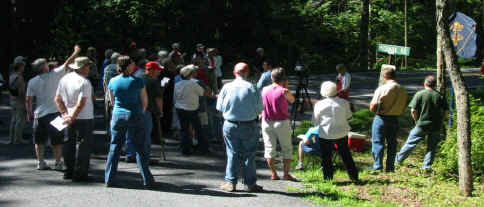
We had a successful work day (morning) at Camp Michaux on Saturday. We had five volunteers - Jim Boling, Kathryn Starner, Diane Oatt, Andre Weltman and myself. We spread some wood chips on wet portions of the trail, worked on the trail to the water tanks and moved two posts, #19 and an Arrow Post at the intersection of the poll trail and the main trail. Thanks to our 2025 volunteers. There is still work to do, but the trails are in good shape. David Smith On Sun, Apr 16, 2023 David Smith <[email protected]> wrote: Thanks to Andre and Diane Weltman, Vince Montano, Kathryn Sterner and new volunteer Denise Bryington for their work yesterday. We accomplished a lot with our small group for two hours until there was a serious thunderstorm that brought our work to a halt. Things eased up for the afternoon walking tour. Ten hikers showed up for that. We repaired the trail between stops 14 and 15 with gravel and wood chips. The major fallen tree near the mess hall was removed and the fallen trees and brush at the star were removed. Most of the brush at the recreation hall was removed and the POW flagpole base was cleared. Several of you mentioned being able to come to the camp after the workday, so here is a list that could be worked on: 1. Complete the work at the recreation hall -, clearing brush. 2. Upper gate base at stop 11 could be cleared. 3. Clear undergrowth in the area around the water tanks -, Stop 30. 4. Remove downed tree at the seepage bed - Stop 27 5. Remove standing dead trees at the CCC Education Building - Stop 25 6. Remove some undergrowth at the mess hall - Stop 21. This could include the CCC Officer's Mess just west of the main mess hall. 7. Clear alternate trail to the Tom's Run bypass and undergrowth in the former beach area at the lower dam. 8. Clear the area just south of the German Mess Hall - Stop 15 where an embankment marks the site of the roll call area for the prisoners. Several areas will need professional chainsaw work including the tree that is leaning across the entrance to the camp near Stop 7 and the partially fallen dead trees at Stop 17 that are preventing clearing of the latrine and bath house site. David
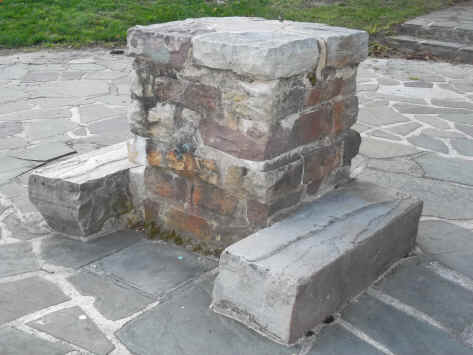
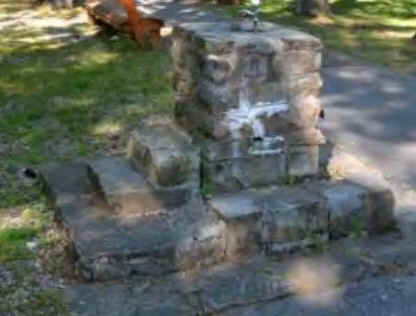
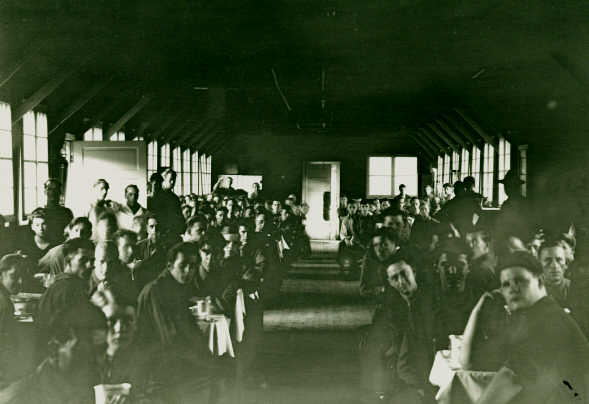
May 2020 During the past two to three weeks a few of us have been trying to get the trails and sites at the camp back in shape after a destructive winter. In addition, last years royering project to remove the dead vegetation following the previous herbicide spraying left many of the trails unrecognizable on the east and north sides of the Camp. Vince Montano, Andre Weltman and my wife and I plus an anonymous chain saw operator have made great strides in repairing the camp. The trails between Stop One and Four, and Stops Twenty-eight and Thirty have been cleared. Several downed trees at the mess hall and the interrogation building have been cut up as well as some along trails on the west side of the camp. In addition, Andre has repaired the walkway between Stops 19 and 21. Vince has re-cleared the German Mess Hall site at Stop 15 and uncovered the base of the gate structure at Stop 10. He also located the foundation of the small officers mess at the northwest corner of the main mess hall and uncovered a macadam walkway to the swimming pool. Brush at Stop 9 (recreation hall) and Stop 16 has been cut. Area still could be raked. Dead grass has been removed from the steps to nowhere. New trail to Youtz bridge behind the Recreation Building has been opened. One unfortunate problem has been cleared. Someone wrote their initials on the fountain. Thanks to some Lestoil and some Clorox, that problem has been solved and hopefully will not occur again. If any volunteers are looking for something to do you can select from the following list:
Stay safe and healthy. Don't forget your mask if you come to work. Anywhere from 5 to 7 cars are on the site anytime I have been there. David
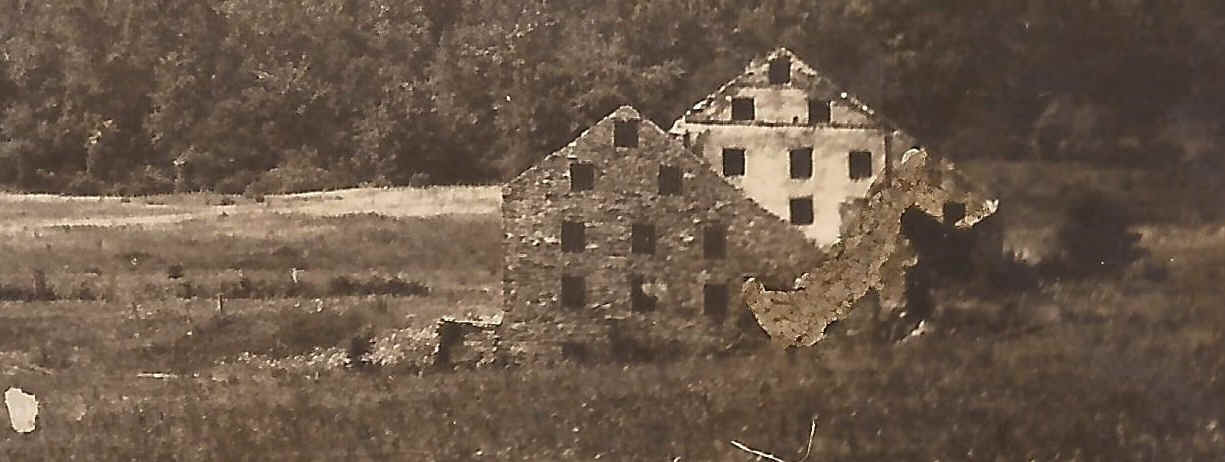
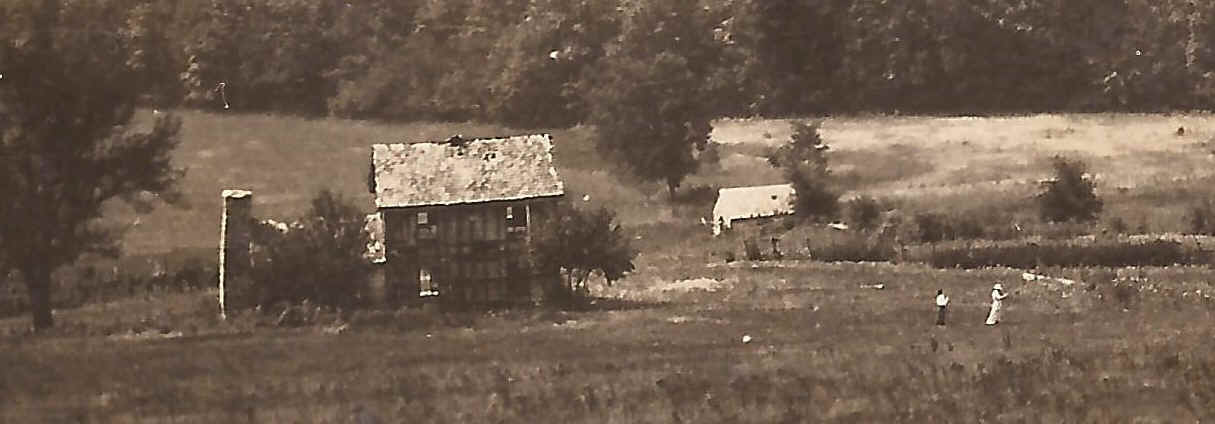
April 16, 2018 The volunteers I made note of were John Kehrle, Vince Montano, and Art Herrold in addition to myself. We had a new volunteer, Adin Otto, but he doesn't have an email. I neglected to make note of two other volunteers. If the two of you will let me know your names, I would like to make a record of it. Adin brought a photo post card c. 1913 that I had never seen before. I scanned it and made enlargements of two sections of the card that show the farmhouse and the barn. David
March 18, 2018 4/26/2025 We had a successful work day (morning) at Camp Michaux on Saturday. We had five volunteers - Jim Boling, Kathryn Starner, Diane Oatt, Andre Weltman and myself. We spread some wood chips on wet portions of the trail, worked on the trail to the water tanks and moved two posts, #19 and an Arrow Post at the intersection of the poll trail and the main trail. Thanks to our 2025 volunteers. There is still work to do, but the trails are in good shape. David Smith On Sun, Apr 16, 2023 David Smith <[email protected]> wrote: Thanks to Andre and Diane Weltman, Vince Montano, Kathryn Sterner and new volunteer Denise Bryington for their work yesterday. We accomplished a lot with our small group for two hours until there was a serious thunderstorm that brought our work to a halt. Things eased up for the afternoon walking tour. Ten hikers showed up for that. We repaired the trail between stops 14 and 15 with gravel and wood chips. The major fallen tree near the mess hall was removed and the fallen trees and brush at the star were removed. Most of the brush at the recreation hall was removed and the POW flagpole base was cleared. Several of you mentioned being able to come to the camp after the workday, so here is a list that could be worked on: 1. Complete the work at the recreation hall -, clearing brush. 2. Upper gate base at stop 11 could be cleared. 3. Clear undergrowth in the area around the water tanks -, Stop 30. 4. Remove downed tree at the seepage bed - Stop 27 5. Remove standing dead trees at the CCC Education Building - Stop 25 6. Remove some undergrowth at the mess hall - Stop 21. This could include the CCC Officer's Mess just west of the main mess hall. 7. Clear alternate trail to the Tom's Run bypass and undergrowth in the former beach area at the lower dam. 8. Clear the area just south of the German Mess Hall - Stop 15 where an embankment marks the site of the roll call area for the prisoners. Several areas will need professional chainsaw work including the tree that is leaning across the entrance to the camp near Stop 7 and the partially fallen dead trees at Stop 17 that are preventing clearing of the latrine and bath house site. David
On Sun, Apr 16, 2023 David Smith
<[email protected]> wrote: On 4/17/2022 1:43 PM, David Smith wrote: Some of you mentioned that you would be interested in going up to the camp in the coming weeks to do some additional work especially since you were not available for the work day. The following items would be helpful. Most only involved small saws, shovels, loppers and hedge trimmers. Let me know of any work you are able to do so I can take it off my list. Stop 2 - Farm House - clear re-emerging saplings and weeds. I am hoping at some point to clear the area west of the farmhouse where the two-story section 4-11-2021 David Smith Hi all, Spring 2021 I did my annual walk through the camp yesterday to determine how much cleanup will need to be done. As usual, there is a lot to do. I am proposing a work day on the morning of Saturday, April 10 from 8:30 to noon. We will need the usual tools including chain saws. However, first I need to report that the state historical marker which was showing signs of paint deterioration was removed the the State this winter and has been completely restored. Make sure to take a look at it when you come to the camp. It looks great! There are two main issues to address this year - restoring the trail system on the east side of the camp and removing fallen trees on the west side. Here is a list of what needs to be done. Hope to see you on the 10th, David
April 16, 2018 The volunteers I made note of were John Kehrle, Vince Montano, and Art Herrold in addition to myself. We had a new volunteer, Adin Otto, but he doesn't have an email. I neglected to make note of two other volunteers. If the two of you will let me know your names, I would like to make a record of it. Adin brought a photo post card c. 1913 that I had never seen before. I scanned it and made enlargements of two sections of the card that show the farmhouse and the barn. David
March 18, 2018
Hi all, April 2, 2016 Great work day yesterday. The weather cooperated and Diane and Bob, Art, Andre and I got a number of things done - although I spent five hours giving tours to a group of 15 and another group of 31. The following was accomplished:
Two sites continue to need work if time permits over the next few weeks including the German Mess Hall and the Commander's Office/Home. They only need re-clearing (loppers and hedge trimmers). Keeping up with the re-growth makes the job easier each Spring. Thanks to those who volunteered yesterday. March 11, 2016 Hi Gang,
Report about April 4 & 11 Work days -
2015. March 2015 I made my annual Spring inspection tour of Camp Michaux today. Basically, the trials are in good shape. There is very little clean-up needed to get them back in shape. Some work is needed on individual sites where regrowth of barbary and other invasive plants are obscuring the sites....
March 26, 2014
On Tuesday a group of leaders from a variety of state agencies met at the camp to discuss the state's intention to breach the two dams on the Tom's Run in the future. Both dams were examined carefully (in the snow) and the historic significance of each was discussed. The environmental leaders attending the visit believed it was possible to minimally disturb historic features and still restore stream flow to normal. This will be dependent on engineering assessments that will need to be done in the next year or so and the associated costs. These assessments will look at optional ways to accomplish the environmental goals while still being sensitive to the history of the area. March 15, 3014 I went up to the camp today and found it in amazingly good shape considering the winter we just went through (and I guess are still going through). We shouldn't have a lot of work to do to get it back in shape - we may not need four work days this year. I would like to open a short new trail from the main trail to the west end of the "old" swimming area. There are some interesting concrete features there that would be good to access, however it will involve some chain saw work to remove fallen trees and to get through some significant barbary growth. There is also a tree that needs to be taken down at the "new" swimming pool. Let me know when you will be available, particularly those of you with chain saws, so we can determine which of the Saturdays in April we should work. Discussions are ongoing regarding the use of goats and removing the dams. I will be attending two meetings the end of the month regarding this. During my visit today I noted that the lower dam is no longer functioning at all. Tom's Run has cut its own channel using the bypass channel erected by the church camp in 1946. Water no longer flows into the pond. I don't know if this will have any effect on the discussions regarding the dams or not. I'll keep you informed.
David
Feb., 2014 Dear Friends of Camp Michaux, April 27, 2013 work day Yesterday was a perfect day for working at Camp Michaux. Pat and Carl Leinbach, Vince Montano and I worked on reclearing and then expanding the cleared area at the Forestry Office/Interrogation Building/Michaux Lodge site. The work yesterday underscored the need to address the issues of invasive species and control of them with chemicals. I will discuss this issue further with Roy Brubaker, District Forester. Issues with minor vandalism to the marker posts continue. Two of the posts locate close to each other had been switched, and one of the new posts installed at the beginning of the month was turned upside down. We didn't reinstall the directional post removed (but found) earlier this spring. It is apparently necessary to use concrete in some of the post holes. I will try to do that this week. Thanks to all who helped this year. Vince and I toured the camp in the afternoon and identified potential sites for next year's work. Have a great summer. April 20, 2012
See Karl
Smith's Poster about the camp
Professor Maria Bruno
had the archeology students work in three groups. One group mapped an
area on the south of the camp
looking for evidence of native American use of the area. In
particular the students were looking for rhyolite
(used for tool making). Retired geology professor Noel
Potter accompanied the group. No specific rhyolite finds were made,
but the students encountered and mapped two charcoal
hearths. The second group focused on the middle of the camp
in the area between the main mess hall and the German POW
mess hall. Several items were found on the surface. The third
group focused on the farm area on the east end of the camp. A variety
of surface finds were located, photographed,
and removed for cataloging. April 13 Weekend
Thanks to Josh, Pat, Paul, Andre, Gary,
VInce and Dan for joining me today for a great work day at Camp
Michaux. We accomplished extensive additional clearing at the
farm house. You can almost picture the building that once
stood there. In the afternoon Gary, Vince and Josh cleared the
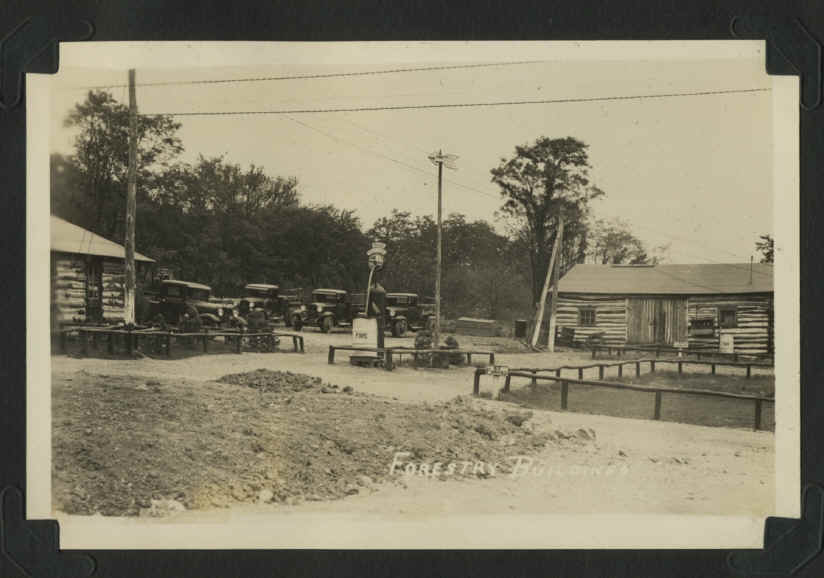
old CCC gas pumping station for the first time. We knew where it
was, but getting to it was quite difficult. Having it cleared
adds one more location to view. I had six people on my 1:00
tour of the camp.
Looking ahead to next week, the
archeology class will be there, so if you want to see archeology in
action, come out between 8:30 and 12:30. Any of you who can
come to work, we will select a site away from where the students are
working and do additional clearing.
The wooden post with a directional arrow
near the farmhouse has again been removed. This time we
couldn't locate it and the person who removed it carefully disguised
the post hole after removing the post. I hope this is the full
extent of the vandalism although I found several posts had been
realigned so it would be difficult for people following the
self-guided tour to locate them.
On a final note, I revised the walking
tour guidebook this week. I hope to have it posted on line at
the CCHS website this coming week. The revised version
corrects information in the original that needed changing based
on evidence located since 2011 and includes the new optional
trail to the water tanks.
April 6 Weekend
Josh Capp and I were a small but effective
work crew yesterday at Camp Michaux. We installed three new post
markers along the extension of the trail to the water tanks,
cleared the steps near the CCC Education Building, and cleared an area
to the west of the farm house in hopes of locating a well, cistern or
outhouse. We didn't locate any of those features but did uncover
a stone and concrete path. Also found were a horse shoe and the
broken top of a 19th century bottle. I will be updating the
walking tour book that is posted on line so that those interested can
access the new section of trail.
While walking around the camp we found our
first evidence of vandalism. Those of you familiar with the
posts installed two years ago know that in addition to the 27 numbered
posts (now 30), there were three posts with arrow markers indicating a
change in direction of the trail. We found two of those three
posts had been removed. Josh spotted one of them along the side
of the trail and we reinstalled it. The other one near the
German prisoner's mess hall was not found. Fortunately, all the
other posts are still in place.
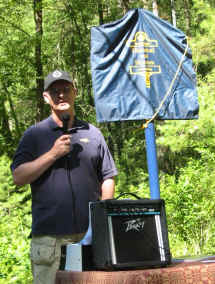
March 10, 2012 I did a walk through the camp this morning and am
happy to report that the Michaux State Forest staff has been busy again
at the camp. The deteriorating CCC sign has been either fully restored
or replaced and a protective roof placed over it. A similar protective
roof now covers the Camp Michaux sign as well. A new sign designates the
barn wall and protective coverings have been placed over the two signs
giving credit to the South Mountain partnership. Thank you Roy and crew. 11/7/2011 National Register - the nomination for the National Register was returned with a long list of required changes. I plan to continue to work on it over the coming months, but since there is no deadline, and the changes require additional research and an entire new set of photographs and maps, I am going to approach it more slowly than I did the first submission. John Bland - the
author of The Secret War at Home... has moved to Texas. Before
leaving, he turned all his files over to the Historical Society. I
am now continuing his work to enter all the names of the prisoners in a
database. The list now contains 4000 names up to the end of
October 1944. That leaves the remainder of 1944 to complete and
all of 1945. As with the nomination, I will work on it a slow
pace. CCC sign - the official
CCC sign at the camp is deteriorating. I am trying to find out who
is responsible for the sign. I am hoping it can be repaired.
If any of you have any ideas regarding who may be the appropriate
contact regarding this, let me know. 7313 Germans 4/10/2011 March 18, 2011 April 16, 2011 - Hi Friends
of Camp Michaux, April 25, 2011 - Hi Friends
of Camp Michaux, April 27 Thanks again for everyone's help. David Smith David L. Smith Dave Smith's History of the Camp
|
 |
Pine
Grove Furnace State Park
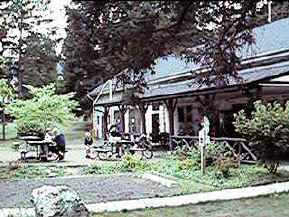
The Pine Grove Furnace Camp Store is a welcome retreat at the midway point of the AT to rest and dine. Six to ten people each week complete the challenge -- to eat a half gallon of Hershey Ice Cream at one sitting! Stop here for lunch on the porch when you visit the area. We had only two scoops of Moose Tracks |
|
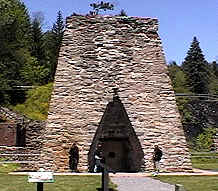
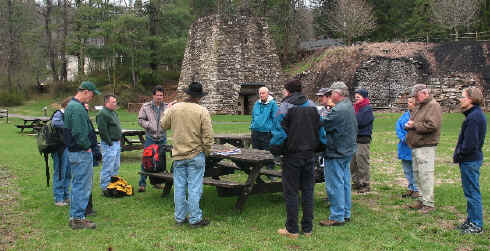
The History of Pine Grove Furnace The Furnace at Pine Grove is one of the best preserved in the state. The furnaces to the south such as those in Caledonia State Park were destroyed by Gen. Early's Confederate troops as they marched on Gettysburg. Also see the Cornwall Iron Furnace |
 |
|
|

 Vince Montano
![Ways to Hide in Winter by [St.Vincent, Sarah]](hideinwinter.jpg)
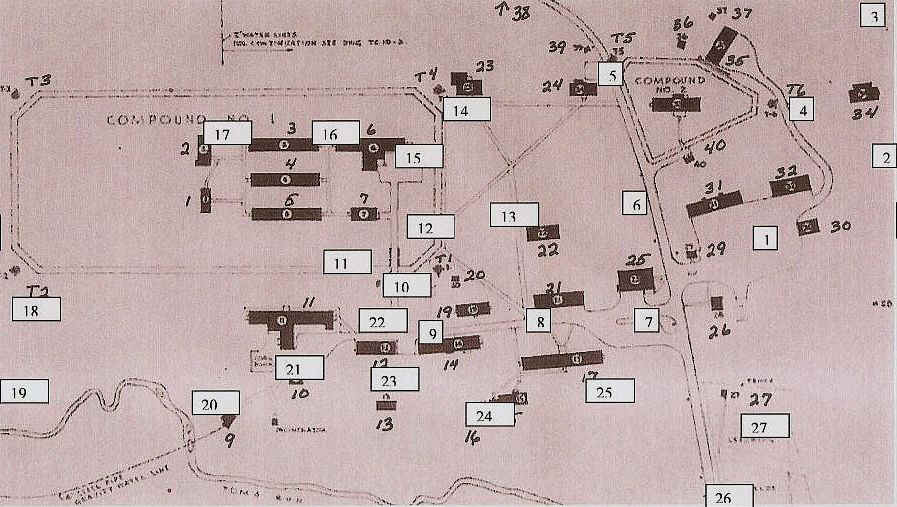
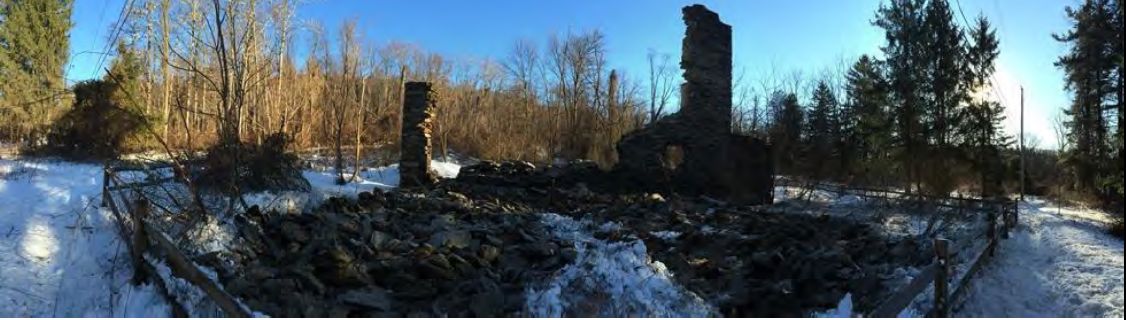
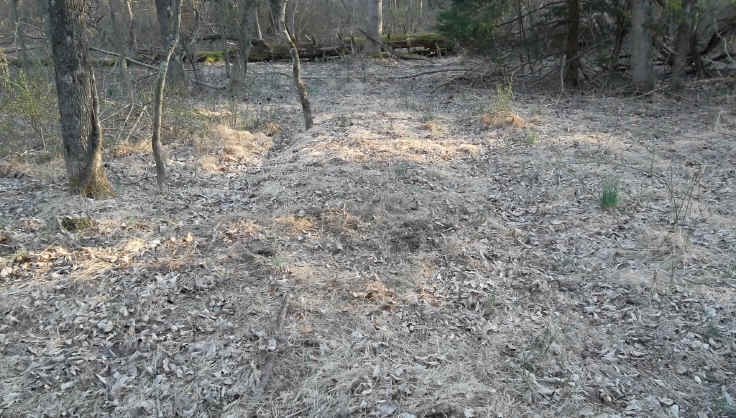
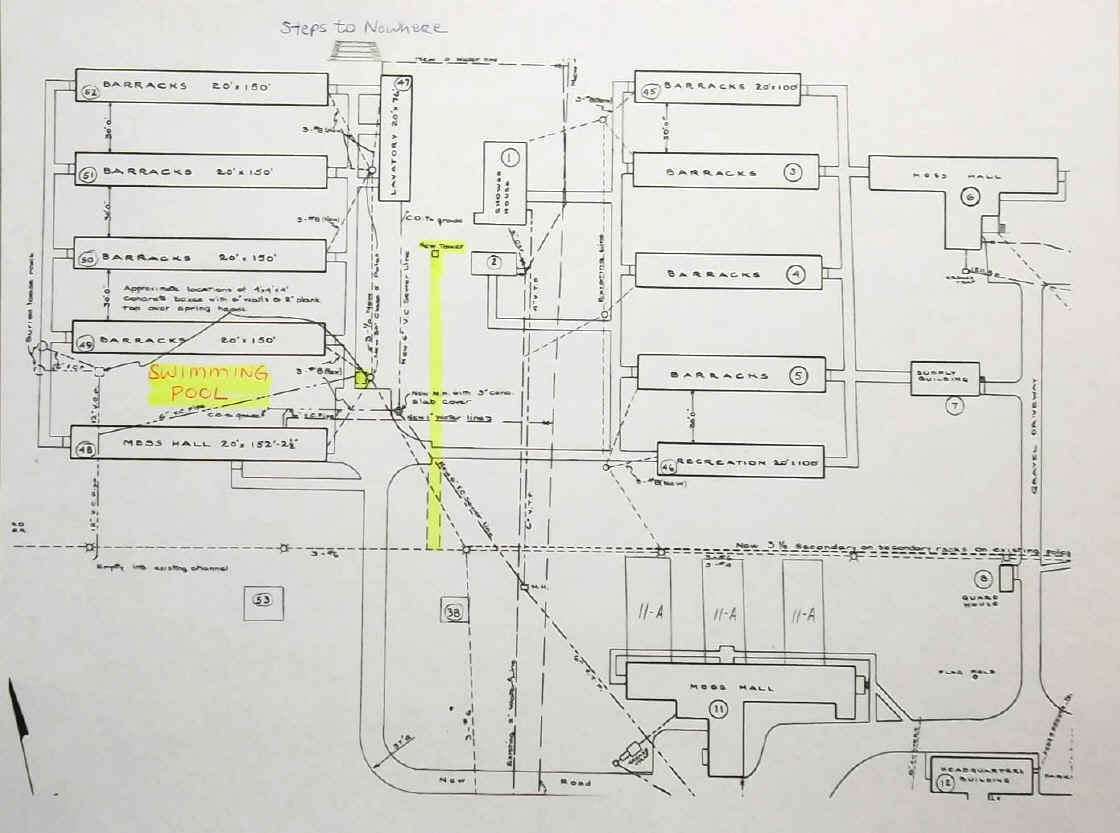 Map Showing the Fence Location.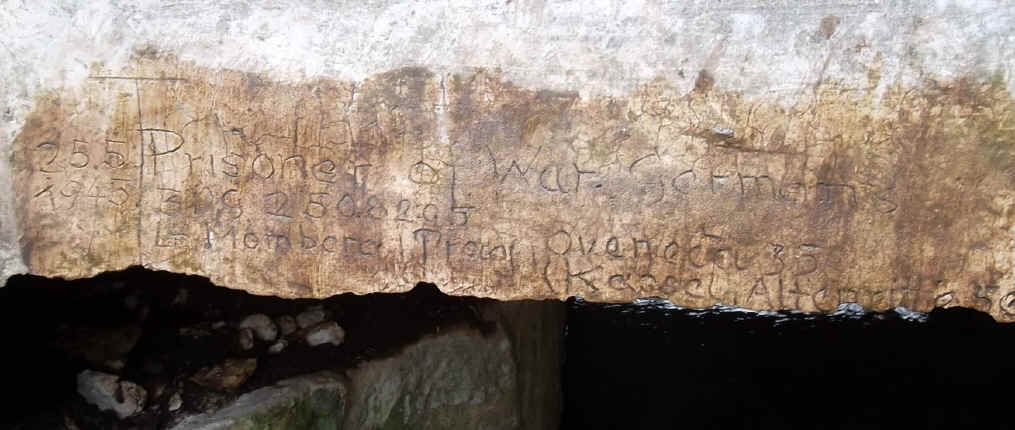


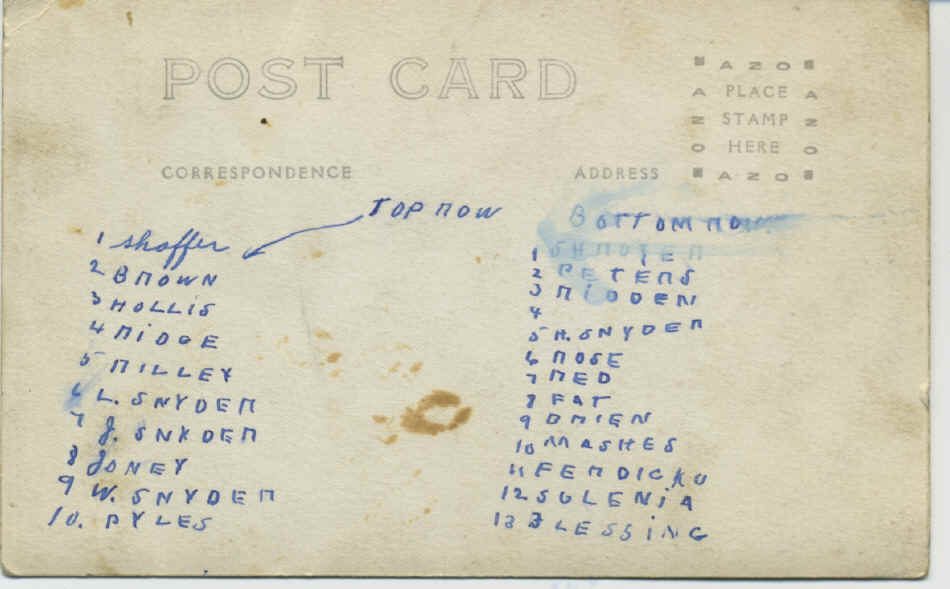
 I
I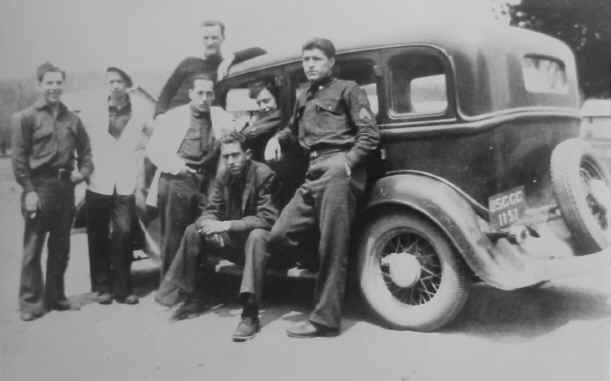
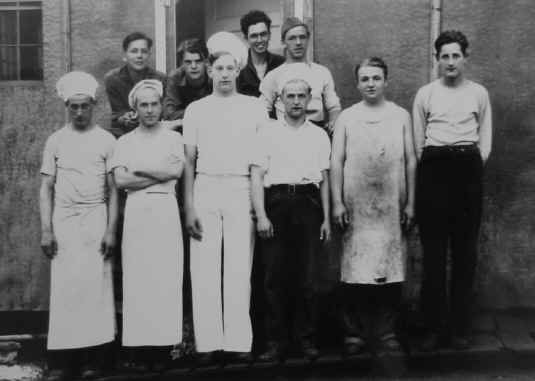

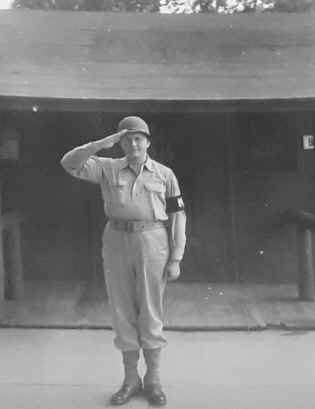
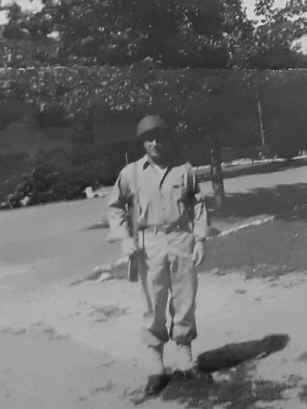
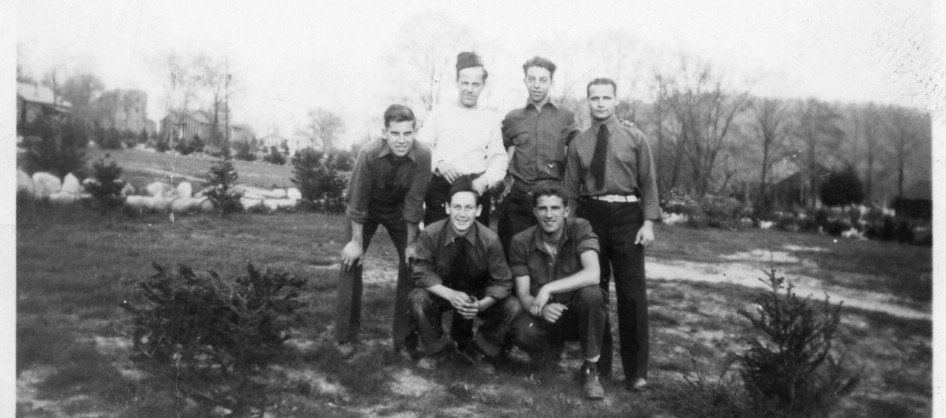
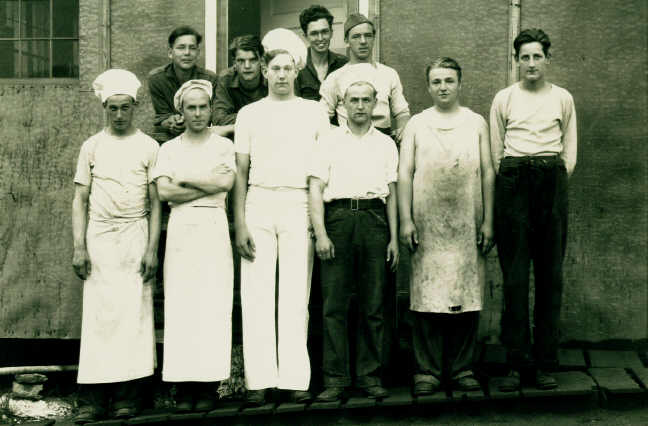
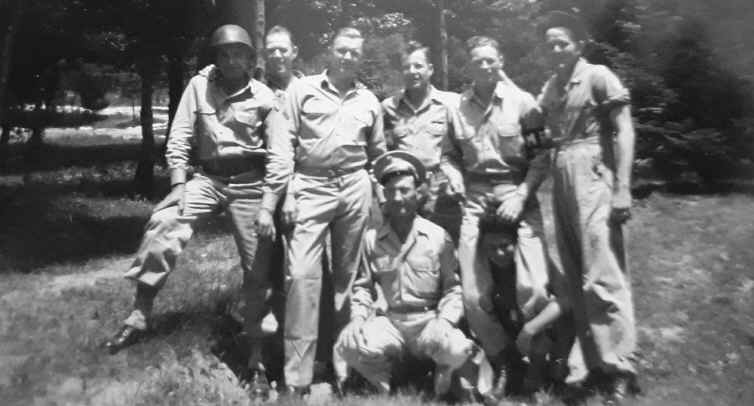 L/R: David Michele, Pop
Valter, Feneult, Webler, Dallas Bartram, Otes Cole
L/R: David Michele, Pop
Valter, Feneult, Webler, Dallas Bartram, Otes Cole